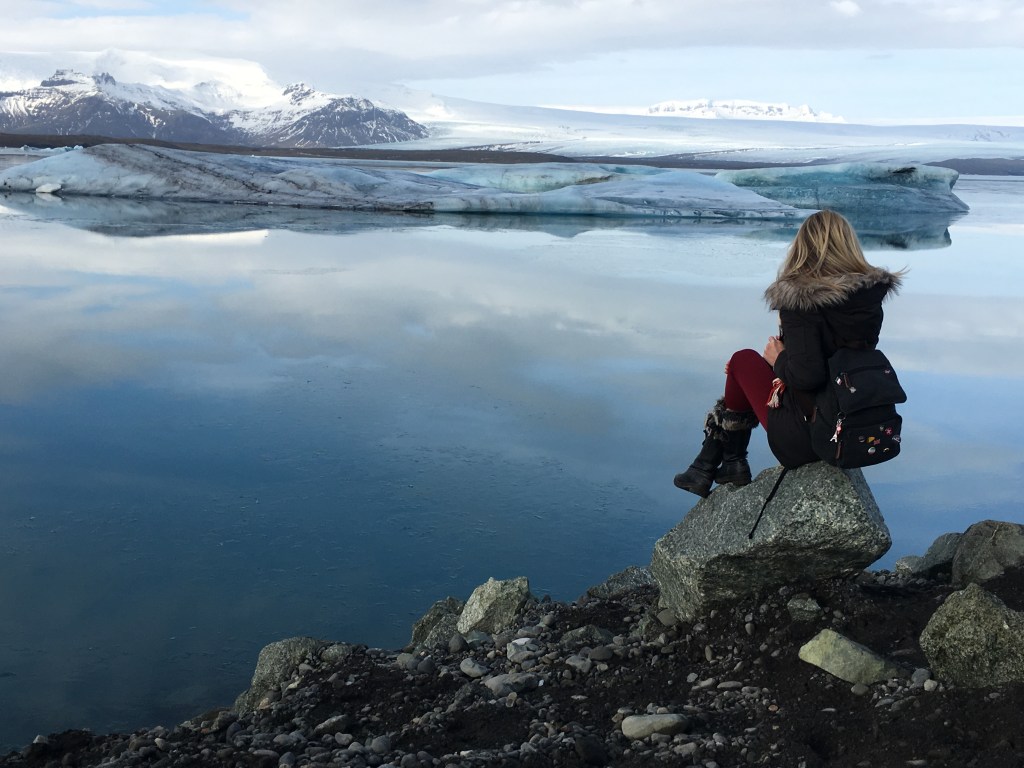
If I had to choose between visiting Iceland’s southern region and driving the Golden Circle Loop, you’d find me here. This area was filled with some of the most incredible creations of nature I have ever seen in real life. If you can afford to spend some extra time in Iceland, this is definitely the place to enjoy a few extra pitstops, although it will logistically be more complicated than some of the other destinations closer to Reykjavik.
This entire area really gives you a taste of how diverse and rigid volcanic aftermath is. As you drive along the coast, you will see everything from volcanos off in the distance, to fresh lava fields, to ancient glaciers, black sand beaches, and wildlife that has managed to find a way to survive in these unforgiving landscapes.
How to get around
After flying into Keflavik airport and getting into the city of Reykjavik, you have to organize your own transportation to get to this part of the island. Most people end up renting a car, but it is also possible to see this area via a tour guided company. Handling everything on your own gives you a lot more flexibility as to how much time you spend and what you can do at each location, but handing the reigns over to a tour company will allow you the opportunity to relax as a passenger and often comes with good recommendations and guide information.
Where to stay
You really only have one option. Find a smaller lodge somewhere around the area and stay a couple nights out in the middle of the wilderness (but in the comfort of a heated room, of course). Lodges can be small, family-owned businesses or larger corporate entities around some of the more popular sights. Reservations are mostly necessary in advance, and there may or may not be a restaurant in-house. However, the views out your window will likely be pretty spectacular.
Where to eat
At the most touristy locations like Gulfoss, there will be restaurants or shops with plenty of options. Less trafficked spots will probably not have any services. Plan ahead as to whether you will need to pack out a lunch depending on your daily activities. Note that there are gas stations all over the island that will also typically have something you can eat as well.
The weather
It should be noted that the weather anywhere in Iceland is wildly unpredictable and often harsh. Be sure to check the forecast before your adventure and pack accordingly. Winters can be very cold and windy, while summer can be very mild and enjoyable.
Searching for the Northern Lights is an extremely common activity around the island, yet in addition to perfect conditions, it still requires some bit of luck. You can check the aurora forecast, but unless the sky is perfectly clear, you still might miss them.
Winter and summer offer two very different Icelandic experiences. The country experiences extremely long, dark winter days and short, dim summer nights. The infamous lights can only be seen when the sky is dark, with the best times between the autumn and spring equinox, peaking around the winter solstice. Summer brings some other opportunities to the area though, the weather is supposed to actually be quite nice and the days are much longer.
What to expect
Glaciers are everywhere.
- Skaftafell/Vatnajökull National Park – Give yourself plenty of time here. It is a HUGE park which consists of an absolutely massive glacier and some really pretty waterfalls such as Svartifoss and Iceland’s tallest volcano. Some hiking may be required to reach the viewpoints, but nothing too strenuous (unless you’re trying to get somewhere extremely remote).
There is no shortage of seashore along the Southern Coast. Beaches in Iceland differ from an ordinary, tropical shoreline because they consist instead of black sand from the volcanic eruptions. The way the waves crash onto the beach even sounds different.
- Jökulsárlón Glacier Lagoon/Diamond Beach – Probably one of the most unique beaches you could ever visit. After larger pieces of the nearby glacier break off, they get tossed around in the ocean and wash up on the black sand. The large chunks of ice give the illusion of diamonds, which is this place’s claim to fame!
- Reynisfjara/Black sand beach – This place is extra special in the summer because it’s puffin nesting season, and you can go see the little pufflings when they’re hatching! (Side note, you can try puffin at some restaurants, like as a meal, if you’re into that.) Do not go in the water. The surf is notorious for sucking people out to sea!
Volcano stuff is basically everywhere you look.
- Scenic green lava walk – A very unique pitstop to get out and stretch your legs. Because the island is basically just the result of a series of volcanic eruptions, it doesn’t have dirt and soil everywhere, and it takes hundreds of thousands of years for things to grow in an area covered in hardened lava rocks. Here you can see a giant area where moss is beginning to thrive, almost like it is blanketed in green snow.
- LAVA Centre – The interactive volcano museum is a fun and informative way to spend a morning or afternoon, as well as grab some lunch! Learning about the terrain will also help you to appreciate how unique this place really is.
Iceland has no shortage of waterfalls. There is an estimated 10,000 of them scattered around the island. Here are just a few in the area, just remember the closer you get to the base of the falls, the wetter you’ll get!
- Skogafoss – Probably one the most famous. There’s also an awesome out-and-back hike which is 16 kilometers (or 10 miles) in total distance.
- Seljalandsfoss
- Gljúfrabúi
- Kvernufoss
Other stuff, in case you need more ideas…
- Solheimasandur Plane Wreck – This was launched into popularity due to it’s appearance in a Justin Bieber music video. A US Navy airplane crashed here back in the 70s and now apparently you can hike there (about 4 miles or 6.5 kilometers) or take a shuttle for a small fee. It’s currently on my bucket list.
- Dyrhólaey Arch/Beach – Beautiful view.
I used a tour company for this entire area, so everything was booked ahead and all transportation was organized ahead of time. This area is very remote and I highly recommend doing additional research if you plan on doing this area on your own. Whichever method you choose, it will be beautiful!
Did I miss anything? Tell me about your adventures around the Southern Coast in the comments below!
Happy traveling!



 Laura the explora: the blog
Leave a comment