
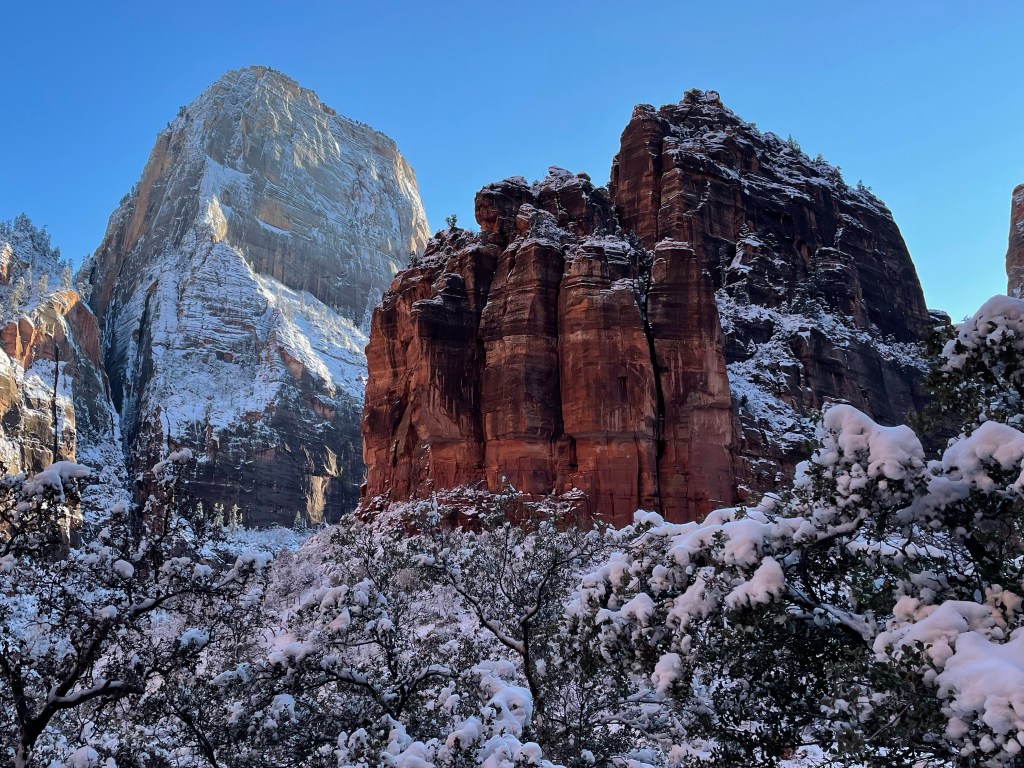
Perhaps Utah’s most popular National Park (the state has five total!), Zion will enamor you with its majestic towering red cliffs and peaks visible from just about everywhere within the park. The most popularly visited section consists of a canyon which frames the Virgin River for a portion of its total protected length of about 160 miles. Hiking to the top of the chain-lined Angels Landing trail really threw this place into the spotlight with the help of social media as it offers daredevils an opportunity to stand on the edge of a cliff and stare straight down from hundreds of feet above the canyon floor on a narrow ridge.
The most commonly trafficked area is from its south entrance on the outskirts of the small city of Springdale, Utah. Services within the park are primarily limited to its Visitor Centers and the occasional trailhead restrooms. Reception is spotty and unreliable deep in the canyons and carrying a park map (offered complimentary with your entrance fee) is an absolute necessity if you’ve never visited the park before. If you go without a specific plan, head to the main Visitor Center by the Springdale entrance during operating hours and talk to a park ranger about your options. They are there to help you make your adventure the best they can, but be mindful as to not take up too much of their time so they can help other people, too!

When to go and how long
Zion gets all the seasons, and while summer tends to be the most popular time to visit likely due to people being more available, it is extremely hot outside and strenuous activity is not recommended. When visiting during those toasty days, the Narrows is probably your best bet for a good time (more on that later). Spring is lush and green, fall is gold and rusty, and winter usually brings at least some snow. Regardless of the season, this place is gorgeous, and if you enjoy walking around in nature, spring and fall are both usually a perfect time to visit due to the more mild temperatures.
Depending on what you want to do, a couple days is plenty of time to immerse yourself in this place, and if you love hiking you could easily spend a long weekend here and not run out of things to do.

Where to stay
You have a few options for staying in or around Zion National Park.
Within the southern region of the park, there are two campsites: South Campground and Watchman Campground. There is one other place for camping during the warmer seasons called Lava Point Campground which exists in a different region of the park. If you plan on camping, consider making a reservation long in advance to guarantee your spot. The size, location, and type of campsite will determine your fee, but expect to spend around $20 per night for the most basic sites (as of January 2024). Prices are scheduled to increase in 2025.
The Zion National Park Lodge is the only hotel located inside the park and will cost you a few hundred bucks, but the location is truly spectacular and comes with a lot of other perks, such as being able to drive your own vehicle inside the park during the busy seasons (most visitors are restricted to the park shuttle during these times).
The city of Springdale has a variety of quality hotels which can be a bit pricy due to their close proximity to the park entrance (the majority of them are all pretty new). There are some smaller inns available as well, but they are not exactly cheap either. The location of all of these hotels is beautiful, and outside of most windows you will have at least some view of red rock cliffs.
About 30 minutes drive down the UT-9 highway, the city of Hurricane may have some less pricy options available, as well as an additional 20 minutes past that in the city of St. George.
Zion is at minimum an hour commute from any major cities. The park is:
- 1 hour to the east of St. George
- 1.5 hour northwest of Kanab
- 2.5 hours to the east of Las Vegas
- 4.5 hours to the south of Salt Lake City
- 4.5 hours northwest of Flagstaff
If you wanted to turn this into a stop on a road trip, Zion is near these other major landmarks:
- 1 hour to the west of Grand-Staircase Escalante National Monument
- 1 hour to the east of Snow Canyon State Park
- 2 hours south of Cedar Breaks National Monument
- 2.5 hours southwest of Bryce Canyon National Park
- 2.5 hours northeast of Valley of Fire State Park
- 3 hours to the west of Horseshoe Bend
- 3 hours to the north of the northern rim of the Grand Canyon (which is only accessible from mid/late spring to fall)
- 3.5 hours southwest of Capitol Reef National Park
How to get around
You are pretty much going to have to drive to Springdale regardless of where you’re coming from. There is no major airport in the town and the closest regional one is in St. George, Utah, which is about an hour’s drive away. If you are flying in, you will need to rent a car, although there is now a new public transportation route that will get you into the town of Springdale from St. George.
Once you arrive in the city of Springdale, you will have to find somewhere to park the car, and parking is limited. If you are staying at a hotel, you can park there and leave it there during your stay while you ride the shuttle. There are parking meters you will have to pay for by the hour located anywhere in town. Wherever you end up, the city of Springdale has a free shuttle that runs from spring to fall to get people to the park from many of the major hotels so you don’t have to park in their parking lot which typically fills up by mid morning during the busier seasons.
If you are only visiting for the day or driving back and forth from Hurricane/St. George, you can park at the Springdale Visitor Center so long as there are spots available. During busy weekends and summer tourist season, you will likely have to wait for a spot. It is a massive parking lot but it does get crowded early. There is usually a long queue of guests already waiting for the first shuttle of the day. Going before sunrise is ideal if you would like to avoid the lines during the warmer times of year. If you are not able to get a spot, you can try to find parking elsewhere in Springdale at a parking meter and take the local town shuttle, OR you can try again (tomorrow?) and explore something else in the area (see the list of other nearby landmarks above). Unless you are going to Zion in the wintertime, I would highly recommend you have a plan (and a backup plan) before you go to the park.
Zion National Park does not allow passenger vehicles back in the canyon for the majority of the year (unless you have reservations at the lodge). Instead, the Zion Shuttle Bus is how you are going to explore this place. (Admission is charged at the park entrance. Check the website to see the current rates.) After you park but before you hop on the shuttle, decide what areas you want to explore or hikes you want to go on so you can get off at the appropriate bus stop. It varies by season but typically operates within the hours of sunrise to sunset. There are a few weeks in the middle of winter it doesn’t operate at all, and during those times they do allow cars back in the canyon because very few people visit at that time of year and it wouldn’t make sense to operate the shuttle. It takes about 45 minutes to get from the first stop (Visitor Center) to the last stop at the end of the canyon (Temple of Sinawava). The distance is just under 8 miles, so check the schedule for the last bus on their website to make sure you don’t miss it and have to walk back after dark!
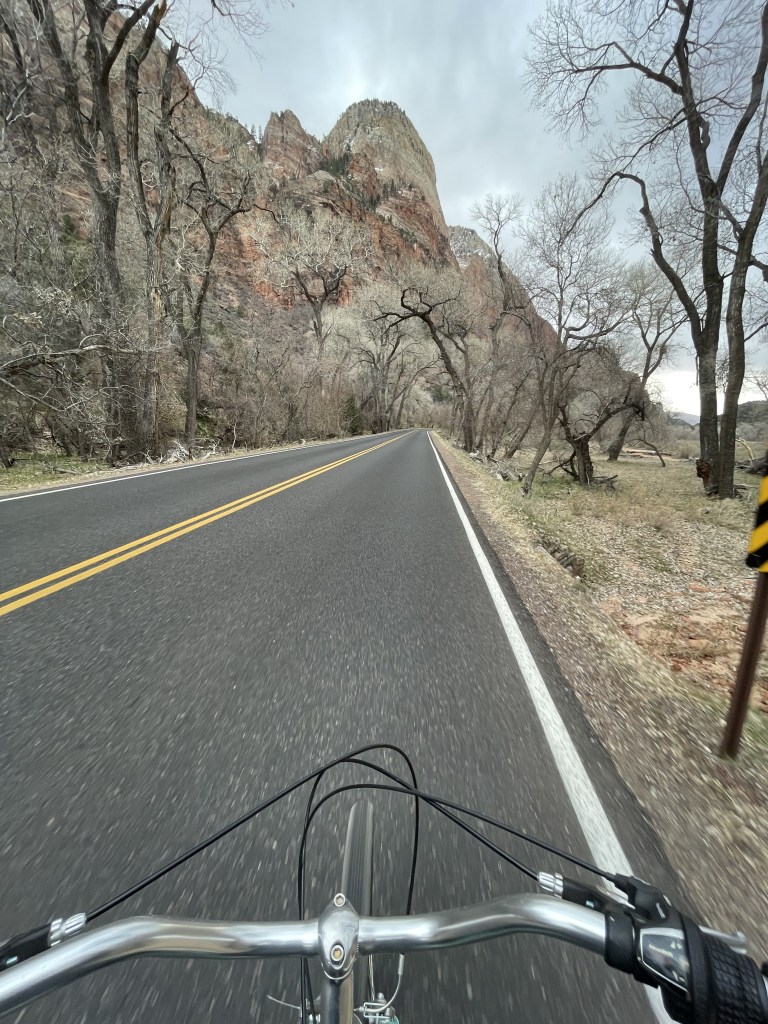
An alternative way to see the park is to ride an electric or regular bicycle. You can rent these in Springdale. You can cycle on the main canyon road and get to the bus stop areas on your own, BUT please be mindful of vehicle traffic and be aware the shuttles have the right-of-way. You are cycling uphill to get back into the canyon, but cruising downhill when exiting. Bikes are essentially the only way to get to the major trailheads without the shuttles with the exception of the small window when the shuttle does not operate during the winter, which means if you are looking to do a sunrise hike during the busy season, you’re either walking to the trailhead in the dark or riding a bike.
What to eat
There are tons of small local restaurants in the city of Springdale, as well as a few fast food options and grocery stores. I haven’t had a bad menu item yet from the Zion Canyon Brew Pub located by the park visitor center. (I especially enjoyed their pomegranate sour beer.)
When going into the park to explore, planning ahead and packing a lunch for the day will save you a few bucks and a trip out of the park and back to Springdale on the shuttle. The only place you can purchase food inside the park is from the cafe and grill located at the Zion Park Lodge.

Hiking Angels Landing
Angels Landing is one of the park’s most popular activities, and to manage the traffic on the trail you are required to make a reservation prior to doing so. In the final section of this strenuous 5.5 mile hike, the path is so narrow that it gets very congested, like a bottleneck, making it rather dangerous for people to get around each other, so you end up waiting for people to move by one by one, taking turns. They implemented this permit system to cope with the immense increase of daring hikers.
Angels Landing permits are issued a couple months in advance by the season, and there is a day-before lottery system for last minute permits. They do check these permits every day, all the way from sunrise to sunset, though I suppose you wouldn’t need a permit for this hike if you do it in the dark (like as a sunrise adventure, if you can get to the trailhead). The trailhead is at “The Grotto” shuttle bus stop and the hike includes nearly 1,500 feet of elevation gain while offering epic views of the canyon. There are regular restrooms at the Grotto and a few pit toilets near the top for emergencies. The path up to the landing is mostly paved and only the final part with the chains has you directly on the rocks.
Make sure you bring enough water, and also check your shoes for decent tread on the bottom. People have fallen from these cliffs to their death. Please be careful, this is not a joke, it happens almost annually.
[Note: I take a lot of questionable risks and I would NOT recommend this hike in wet conditions. I lost my grip while there was a rain/snow mix and messed up my knee, and was dangerously close to something much worse. If that’s not enough to convince you, there’s usually not a view from up there in those conditions anyways since you’re basically in the clouds! Scout Lookout and the West Rim Trail are excellent risk-free alternatives.]

Walking the Narrows
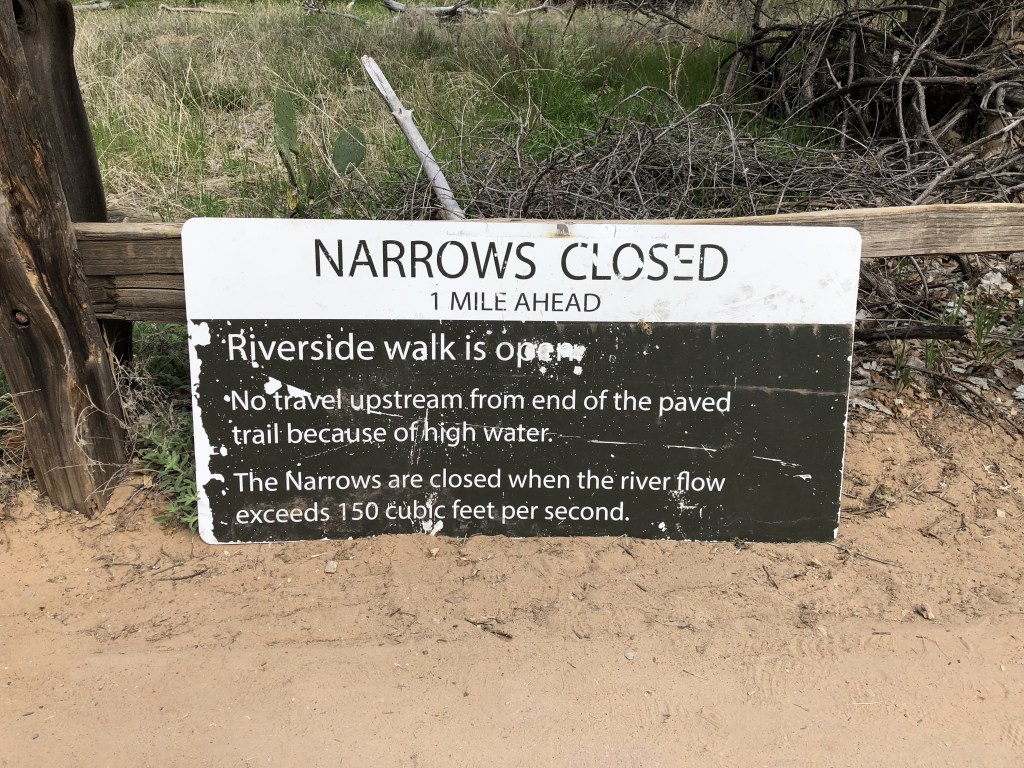
Summer is extremely hot around here, and hiking some of the more strenuous trails may not be the best option. From the final shuttle bus stop at “Temple of Sinawava,” the trailhead for the Narrows begins at the tail end of the Riverside Walk, which branches off from the main road and parking lot. After the short walk, the “trail” turns into the Virgin River, and you may walk through the canyon directly in the water where depth can vary from ankle to shoulder depending on the amount of water in the river and where you step. To avoid that, move slowly and test the ground in front of you before you take a step. You can rent walking sticks, water suits and shoes, and other items that might aid you on this journey from various equipment shops in Springdale, but they are not necessary. (Although I would recommend some sort of water shoes regardless.)
This is an out-and-back trail, but you can turn around whenever you want, and it goes back for probably ten miles or so. (I’ve never been to the end.) Always check the conditions at the Visitor Center before you go, as if there is rain in the forecast, this walk is not advised because flash floods are a real risk, and occasionally the water level is simply too high or the flow is moving too fast. This adventure is extremely popular in the summertime and will likely be very crowded unless you’re going very early or very late in the day. You are also limited to the shuttle times, so make sure you’re at the bus stop before the last bus departs back to the park entrance!

Other stuff to do
Hiking, biking, and walking around are probably the only major things to do here, which means this place is probably not for you if you are just looking for a relaxing vacation.
Stargazing is also a great activity since there are no major cities nearby (Zion is an International Dark Sky Park, and Springdale is an International Dark Sky Community, which basically just means they make significant efforts to reduce light pollution like using less bright bulbs in street lights).
If you are not able to get a permit for Angels Landing, it’s way too crowded, or the conditions aren’t appropriate to do the two most popular hikes mentioned above, there are tons of other options you can do. Here are just a few options, but also check with a park ranger to see if they can offer you suggestions better suited for your needs and interests. (I have not hiked all of these yet.)
- Emerald Pools (several options of various lengths, accessible from multiple trailheads, generally easy/moderate trails)
- The Watchman (about 3 miles, moderate in difficulty, views from the beginning of the canyon, the Watchman, and of the town below)
- Pa’rus Trail (about 3.5 miles from the Visitor Center to the 3rd shuttle stop and back, parallels the road, easy and mostly flat, and it’s okay to bring your pet on this one!)
- West Rim Trail beyond Angels Landing (trail breaks off from Angels Landing Trail so you don’t do the chain part, then follows the canyon for about 15 miles to Lava Point, strenuous)
The park also has the Zion Human History Museum located at the second shuttle bus stop nearest the entrance of the park. Here you can learn about the people involved in the inception of this park as well as the native people who inhabited this land before them. There is also information on the geology and local flora and fauna. This makes an especially excellent stop on a hot summer day because it’s air-conditioned!
In the city of Springdale you can find a variety of souvenir and art shops to look through while you’re taking a break from exploring the park.
Unfortunately, Zion isn’t the best place to bring your dog. They are currently restricted to the Pa’rus Trail ONLY and MUST be leashed.
While the south side of Zion National Park is no doubt its most visited, there are other areas to explore as well. Visitors can drive through the park from the south entrance in Springdale towards the east entrance on Zion-Mount Carmel Highway. This road may be closed after major snow storms in the winter until they have an opportunity to clear it. There are no facilities over there (except an occasional pit toilet). It is very remote, and I have been fortunate enough to see bighorn sheep somewhat frequently in this area during dusk hours.
Please respect the speed limits on all roads and watch for wildlife!
The northwest side of Zion National Park is primarily only visited in the warmer times of year as well because of the snow and icy conditions in higher elevations. On this side of the park you will find the Kolob Visitor Center, some more remote and rugged exploring opportunities (including canyoneering options), and some other less frequently trafficked hikes. I have not been to that side of the park yet, but what I can say is that it is not as developed as the Springdale area, and that you’ll be closer to the “wild” there.
Southwestern Utah is packed with so many outdoor activities, and Zion is really just one tiny blip on the map. There is a little bit of something for everyone regardless of your outdoor skill level, and guided hiking and jeep tours are also available from private parties for individuals who cannot or do not feel comfortable exploring nature on their own, although they can be a bit pricy.
Have you been to Zion National Park before? What was your favorite spot? What else should people know about this place? Let me know in the comments below!
Happy traveling! 😃
(And always remember to follow #leavenotrace principles!)
(this post was last edited and updated on February 4, 2025)



 Laura the explora: the blog
Leave a comment