Sitting atop the caldera of a dormant supervolcano, Yellowstone introduces visitors to some of the inner workings of the Earth at the surface. Get face to face with a buffalo (from the safety of your vehicle!), watch a geyser burst over a hundred feet into the air, inhale the intoxicating scent of sulphur at a massive hot spring, feel humbled by the powerful sounds of waterfalls crashing on rocks, and let nature be your therapist as you soak in the views of the valleys below. Scientists say this entire place is a ticking time bomb that has the potential to decimate the western half of the country if and when it decides to erupt again someday, how fun!
Yellowstone National Park is not only the first ever of the the US National Parks, but it is also one of the most visited, usually landing somewhere in the top 5 annually. This place is massive and has a wide variety of attractions that are spread out around the park which encompasses the entire northwestern corner of the state of Wyoming. To see it all would take way more than one day, and it is very common for people to spend multiple days here, especially with their family.
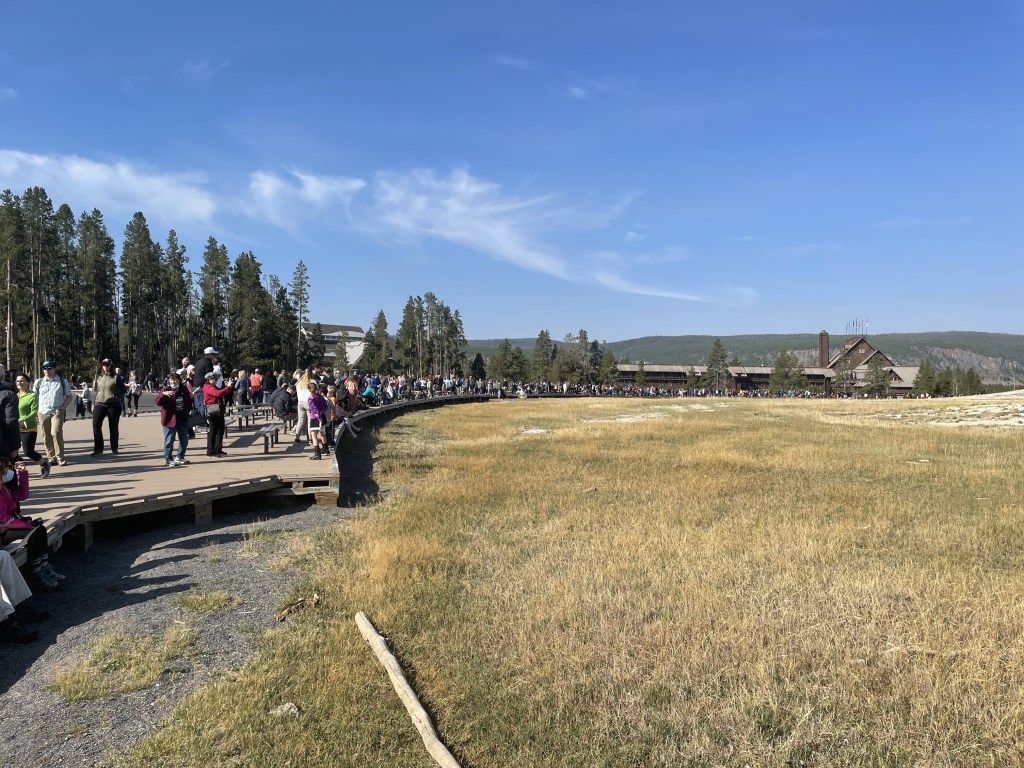
The most commonly visited area is probably near the Old Faithful geyser, because while that alone demands everyone’s attention, there is also a large store, restaurant, and multiple lodges. Park services elsewhere include a handful of visitor centers as well as several ranger stations, museums, and other information stations. The park hosts a few small village areas that have lodges, shops, restaurants, campgrounds with varying amenities, marinas and more. Pit toilets can conveniently be found at most trailheads.
Reception is unpredictable in a lot of the park, but usually you can get a reliable signal around the visitor centers and village areas. Carrying a park map (offered complimentary with your entrance fee) is an absolute necessity. If you go without a specific plan, head to the nearest visitor center during operating hours and talk to a park ranger about your options. They are there to help you make your adventure the best they can, but be mindful as to not take up too much of their time so they can do their jobs and help other people, too!

When to go and how long
Summer is by far the most popular time to visit this park. Although you can truly experience all four seasons here, most of the park isn’t really accessible or open during the winter. Roads are not cleared of snow and some of the entrances also close down (and reopen after the snow melts in the springtime). Mountain area weather can be unpredictable in the shoulder seasons (fall/spring). Late spring and summer typically decorate the landscape with wildflowers, and colorful foliage can generally be enjoyed briefly during the fall. It does get pretty warm here in the summer, but not nearly as hot as a desert might be. Be aware that during the warmer times of year, there are lots of thirsty mosquitos and other little annoying gnats. I would argue that spring and fall are far more enjoyable in general because the crowds are typically lighter, and for the most part much of the park remains open. Do check in advance before your trip as opening and closing dates vary by year.
ALWAYS check the weather before you go and prepare for conditions ahead. For example, if you do not have chains for your car and there is a snow storm on the way, it might be better to come back some other time. If you are not prepared or comfortable driving in stormy conditions, it is always best to reschedule your trip instead of putting yourself or others in danger.
To fully experience Yellowstone, you will need at least a couple of days. There is at least a week’s worth of stuff to do for a lover of nature and science around this area. Keep in mind that some of your time here (if you visit in summer) will likely be spent looking for parking, or parking far away and walking to the attractions. During the height of tourist season, the single lane road that loops through the park gets congested and often times you are moving at a crawl speed just to pass by the main attractions (especially around the southwestern rim of the park).
Overcrowding is a real problem regardless of when you go, but this place really is worth the visit…
Where to stay
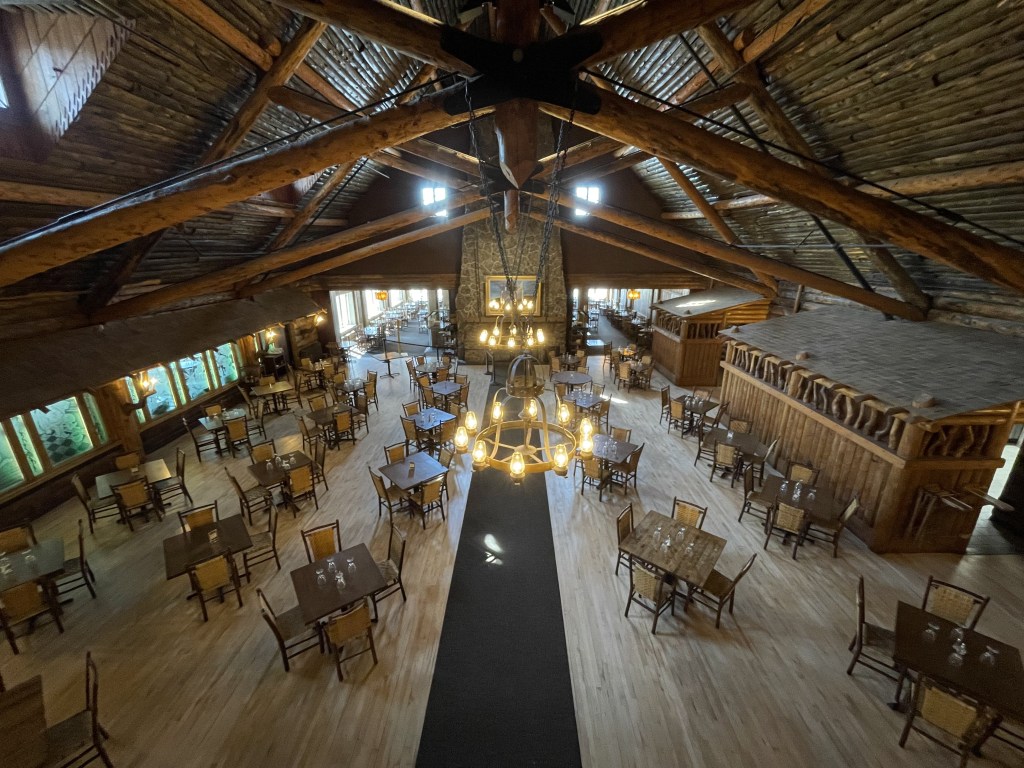
Where you stay is really going to depend on what you want to do within the park and what’s available when you’re trying to book. Regardless of when you go, advanced reservations are recommended, and most options are on the expensive side.
Yellowstone National Park is home to 9 lodges scattered around the park in 6 different regions:
- the Old Faithful geyser area in the southwest part of the park has 3 options (Inn, Lodge, and Snow Lodge, the two latter include cabins)
- Grant Village in the south hosts one Lodge
- Lake Village in the southeast has 2 options (Lodge/Cabin hybrid and more Cabins)
- Canyon Village in the central east hosts one Lodge/Cabin hybrid
- the Tower Junction area in the northeast hosts the Roosevelt Lodge (Cabins)
- the Mammoth Hot Springs area in the northwest corner hosts a Lodge, which also includes cabins
Click here to see a map and additional information on the park’s lodging options.
If you are planning to stay somewhere outside the park, these nearby cities also all have a wide array of lodging options, from nice hotels and cute little inns to your average motel, but some do come with a commute and the closer ones don’t have many options.
- Gardiner (15 minutes north of the northern entrance)
- Bozeman (2 hours north of the northern entrance)
- Jackson (1.5 hours south of the southern entrance), check out my Jackson post here
- West Yellowstone (20 minutes west of the west entrance)
- Idaho Falls (2 hours southwest of the west entrance)
- Cody (1.25 hours east of the east entrance)
Yellowstone has 12 major campgrounds:
- Two in the south: Grant Village has 429 sites (full amenities) and Lewis Lake has 84 sites (pit toilets only)
- Two in the southeast: Bridge Bay has 431 sites (some amenities) and Fishing Bridge RV Park has 310 sites (full amenities)
- Two in the middle: Canyon (central east) has 272 sites (some amenities) and Norris (central west) has 111 sites (basic amenities)
- One by the western entrance: Madison has 276 sites (some amenities)
- Two in the northwest: Indian Creek has 70 sites (pit toilets only) and Mammoth has 82 sites (basic amenities)
- Three in the northeast: Tower Fall has 31 sites (pit toilets only), Slough Creek has 16 sites (pit toilets only), and Pebble Creek has 27 sites (pit toilets only)
Click here to see a map and additional information about the park’s campgrounds.
A variety of backcountry camping options can also be found all over the place in the park itself as well as the surrounding national forest regions. Backcountry camping will definitely help lower your costs if you already have the equipment you need to survive with the basic facilities that may or may not be offered at nearby campgrounds. Check the availability of specific campgrounds on their individual websites and check if you need to obtain a permit in advance.
How to get around
Personal vehicle required. Check out the park map here. (Switch from Standard to Brochure mode in the upper left corner of the map to see more tourist information.)
Getting to and around Yellowstone is easy if you already have your vehicle. There are five entrances: north, south, northeast, east and west. The west and south are generally the most heavily trafficked (Old Faithful sits between them). If you are flying into the area, the nearest international airport is 2 hours north of the northern entrance in Bozeman, and the closest regional airports are in Cody (1.25 hours east of the eastern entrance), Jackson (1.5 hours south of the southern entrance), and Idaho Falls (2 hours southwest of the west entrance). Renting a car is a necessity if you are flying in. Availability is limited in the busiest seasons and reservations are recommended.
Getting anywhere in the park must be done by a long, single lane road in the shape of the number “8.” Check this page on the NPS website for any seasonal or construction related road closures prior to planning your trip. The only way to experience the park in the winter is by over-snow vehicle (like a snowmobile).
The Bundu Bus is a larger tour bus service that offers rides to Yellowstone and some other spots in the American West, and the Bundu Bus schedule is linked here.
All paved roads can be traveled by bicycle if that is your choice method of transportation. If you are driving, be conscious of this and share the road!
Plan to spend a lot of time in your car sitting in traffic, whether it’s waiting in line to get in or out, or just to park near some of the famous attractions. Driving the full loop alone without stopping takes upwards of 4 hours due to the 45 mph speed limits in most areas. There is no public transportation in the park and overcrowding is a real problem. I don’t know what the best way to handle this problem would be, but it would be cool to see some sort of train one day… (maybe? 🤔)
Food and money
Food inside the park is rather expensive because of its remoteness (everything is imported from somewhere else) and seasonal availability. Save money by stopping at a grocery store and packing some food for lunches before you enter the park. There are plenty of general stores and restaurants scattered all over the park if you’d rather just spend the money, just be sure to check the operating hours in advance and anticipate long lines.
If you don’t have any dietary restrictions concerning meat, I would absolutely recommend trying an elk or bison burger while you’re in the area!
Lodging here is very pricy, and is likely going to cost you a couple hundred dollars per night minimum. (The lodges are all good quality.) You can attempt to save money by staying outside the park, which will vary depending on which areas within the park you are planning to visit. All hotels and motels in the area are going to cost more than average.
Campgrounds have set rates that are higher than average.
Private tours can be purchased from various sellers and will cost hundreds of dollars per person for a full-day trip.

What to do
A LOT. I’m going to break this down into six parts based on the “8” shape of the park’s road system. It takes about 20-60 minutes to get from one region to the next on the loop. Many landmarks are close to the road, but some may require a short walk to get to. Parking is limited and you may have to wait for a spot or park far away from certain attractions and walk along the road. (Note that there are more landmarks than just the ones listed below.)
*NORTHEAST* (Open year-round.)
Park Services: Tower-Roosevelt Backcountry Office, Lamar Ranger Station, gas station, dining options, general store, horseback riding, stagecoach tours
Attractions: Petrified Tree, Tower Fall, Lamar Valley, Crazy Creek Falls, Calcite Springs
Activities: Go fishing (permit required), Mount Washburn Bike Trail, Day Hikes in the Tower & Northeast area
*NORTHWEST* (Open year-round.)
Park Services: Albright Visitor Center, Indian Creek Warming Hut (winter only), gas station, dining options, general store, medical emergency services, post office
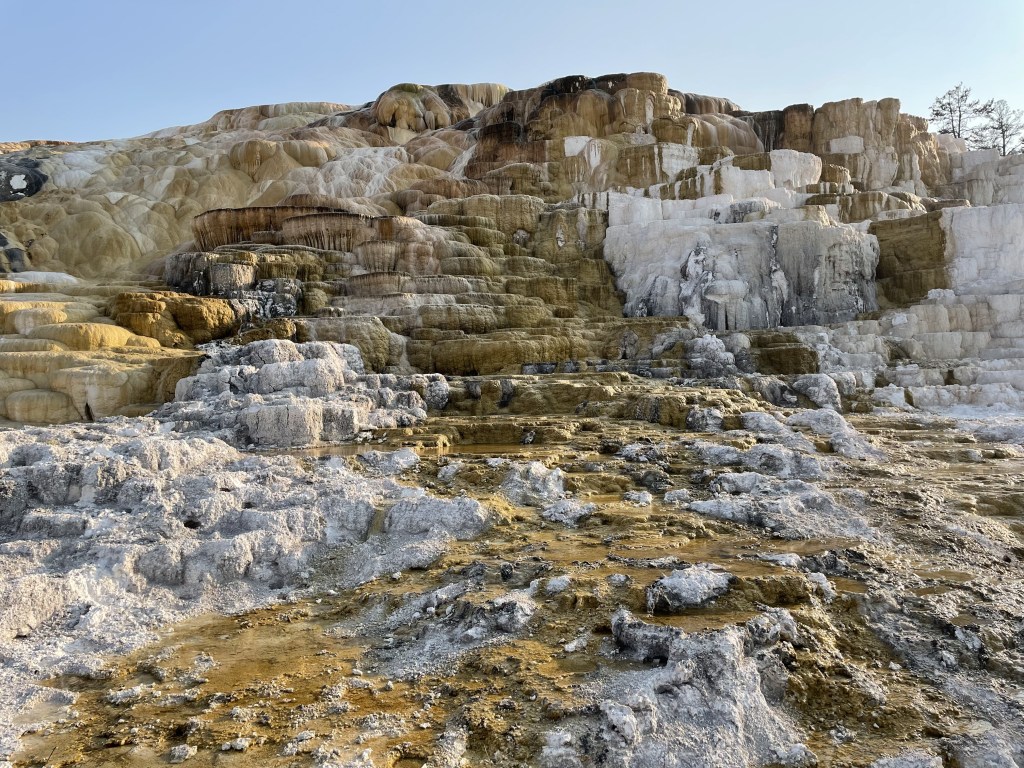
Attractions: Mammoth Hot Springs Terraces
Activities: Go fishing (permit required), Bunsen Beak Loop Bike Trail, Abandoned Railroad Bed Bike Trail, Day Hikes in the Mammoth area
*CENTRAL EAST* (Only accessible spring to fall, check NPS website for dates.)
Park Services: Canyon Village Visitor Education Center, gas station, dining options, general store, horseback riding, post office, bear-spray rentals
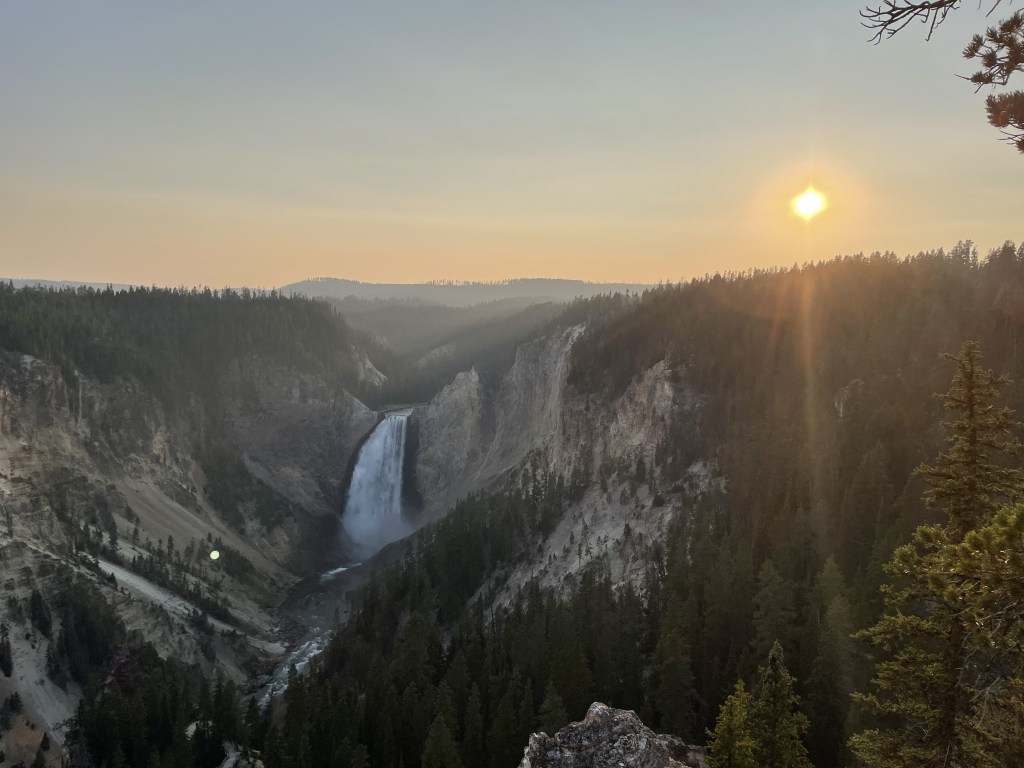
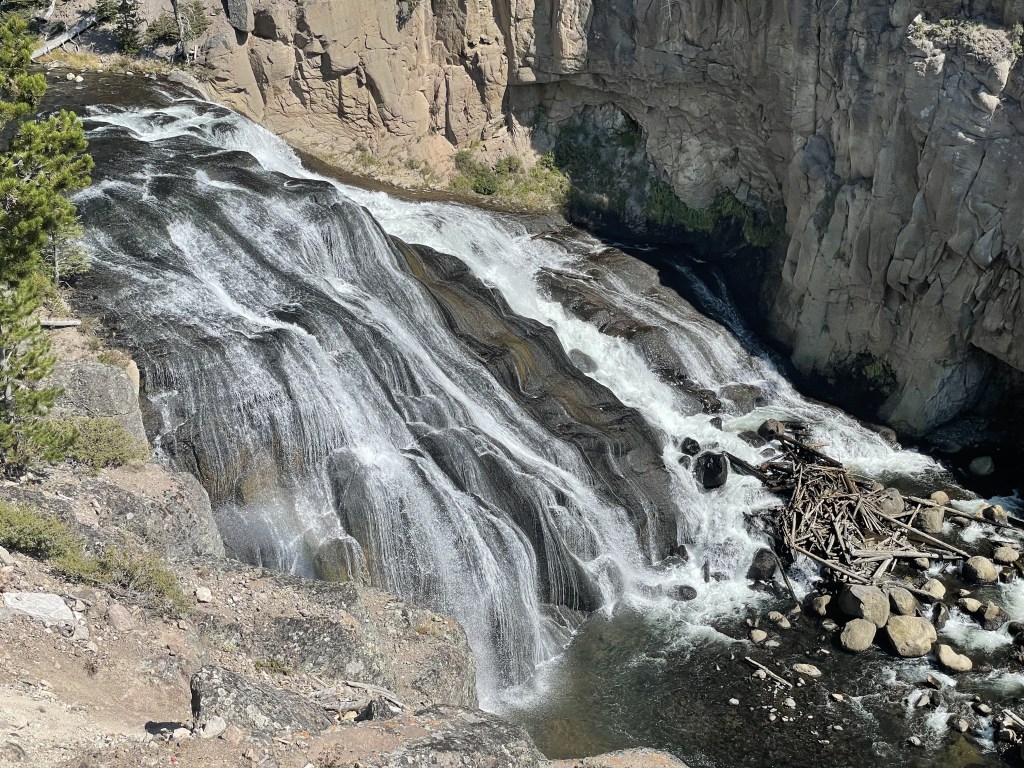
Attractions: Lower Falls, Upper Falls, Washburn Hot Springs Overlook, Grand Canyon of the Yellowstone, Inspiration Point, Artist Point
Activities: Day Hikes in the Canyon area
*CENTRAL WEST* (Only accessible spring to fall, check NPS website for dates.)
Park Services: Madison Information Station, Norris Geyser Basin Museum and Information Station, Museum of the National Park Ranger, Madison Warming Hut (winter only), West Yellowstone Visitor Information Center
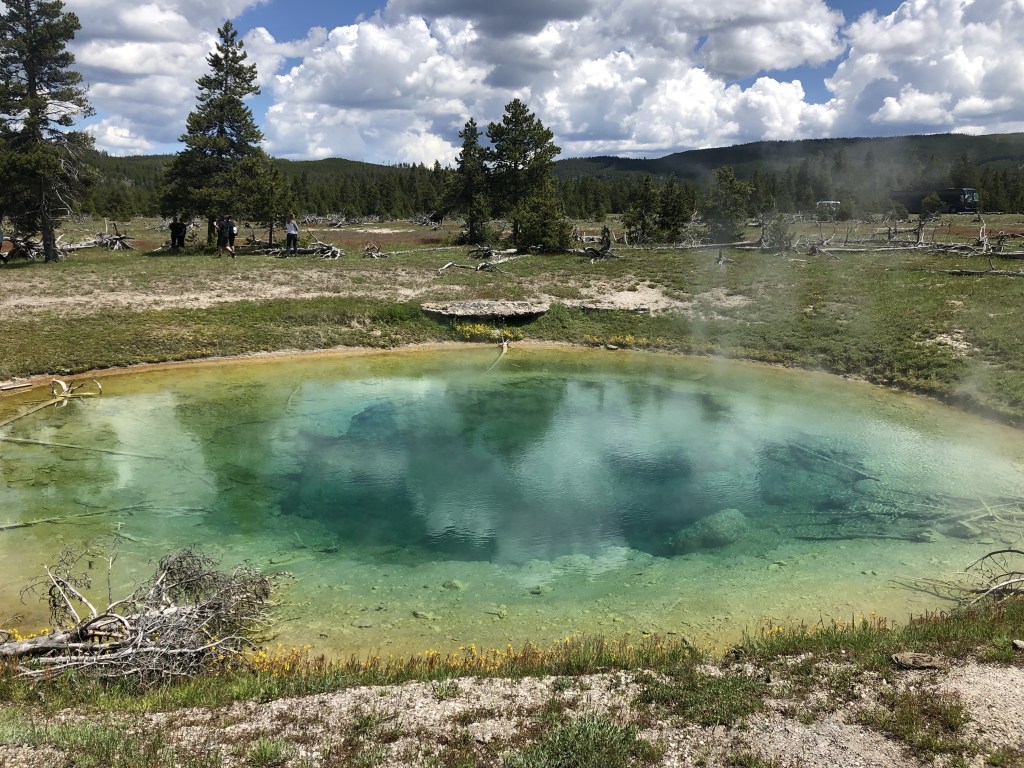
Attractions: Two Ribbons, Firehole Falls, Gibbon Falls, Beryl Spring, Monument Geyser Basin, Artists Paintpots, Norris Geyser Basin (Steamboat Geyser), Virginia Cascade, Roaring Mountain, Obsidian Cliff, Beaver Lake
Activities: Riverside Bike Trail, Day Hikes in the Madison area
*SOUTHEAST* (Only accessible spring to fall, check NPS website for dates.)
Park Services: Grant Village Visitor Center, West Thumb Information Station, Fishing Bridge Museum and Visitor Center, Bechler Backcountry Office, Snake River Backcountry Office, Grant Backcountry Office, Fishing Bridge Warming Hut (winter only), West Thumb Warming Hut (winter only), gas station, dining options, general store, medical emergency services, vehicle servicing, marina and boat launch and rentals, post office
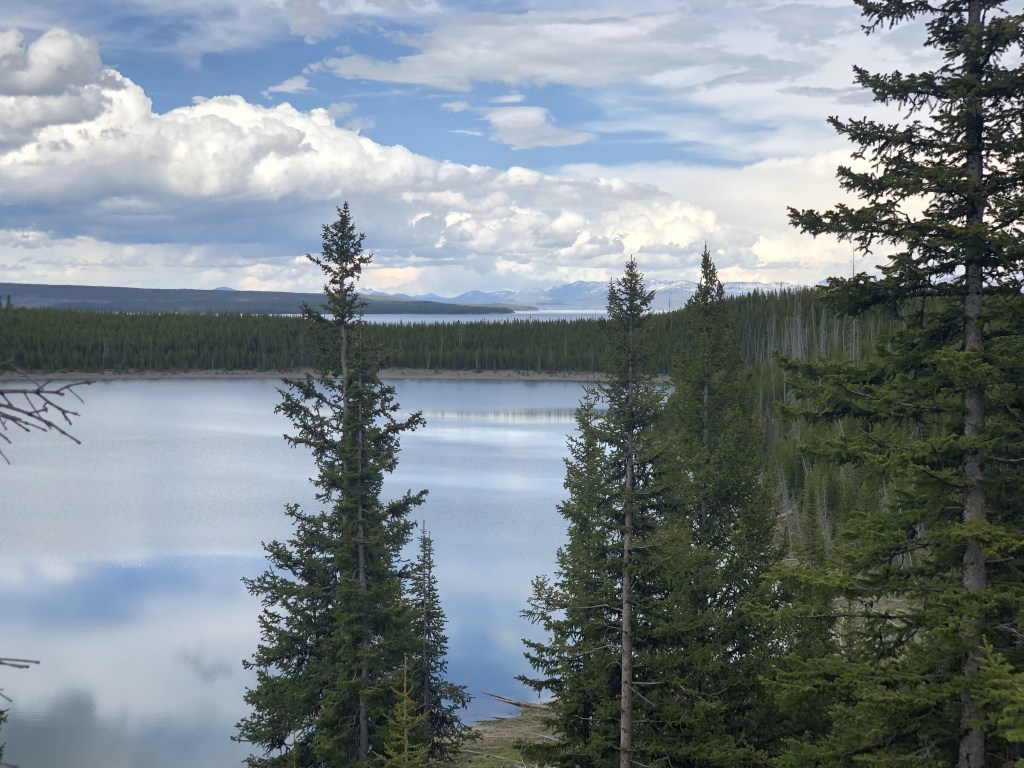
Attractions: Yellowstone Lake, Natural Bridge, West Thumb Geyser Basin, Mud Volcano, Sulphur Caldron
Activities: Go fishing (permit required), Old Lake Road Bike Trail, Natural Bridge Bike Trail, Take a scenic cruise on Yellowstone Lake ($21 pp as of April 2024), Day Hikes in the Lake & Fishing Bridge area, Day Hikes in the Grant & West Thumb area
*SOUTHWEST* (Only accessible spring to fall, check NPS website for dates.)
Park Services: Old Faithful Visitor Education Center, Old Faithful Backcountry Office, Yellowstone Tribal Heritage Center, gas station, dining options, general store, medical emergency services, bear-spray rentals, bike rentals, post office, warming yurt (winter only)
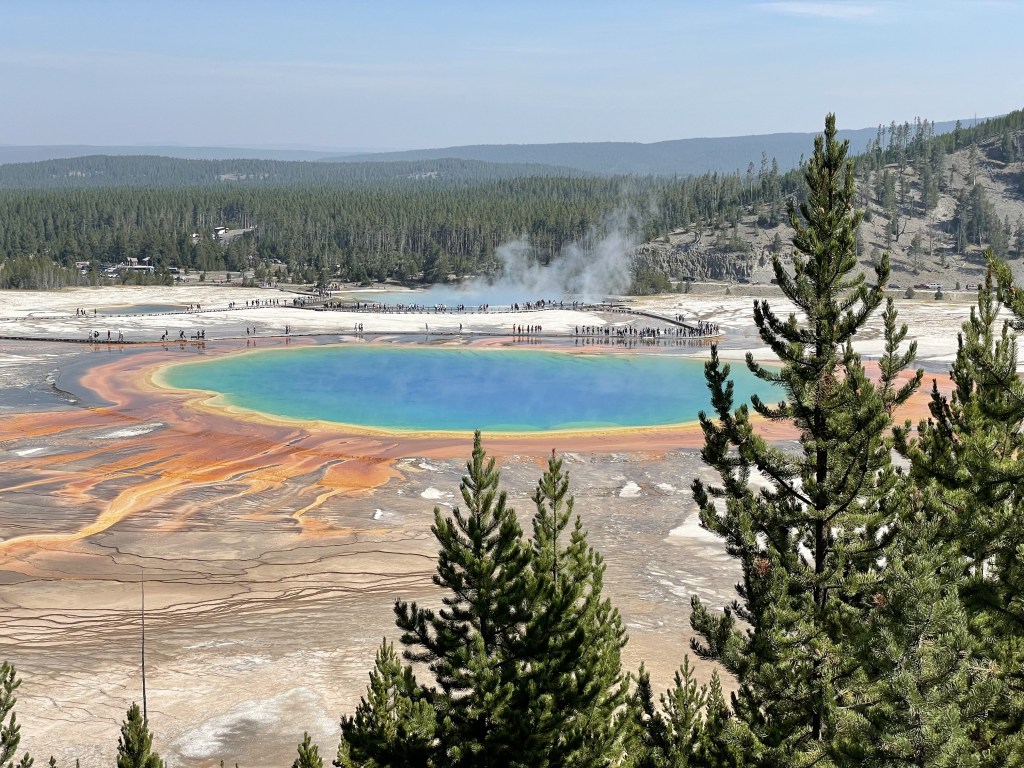
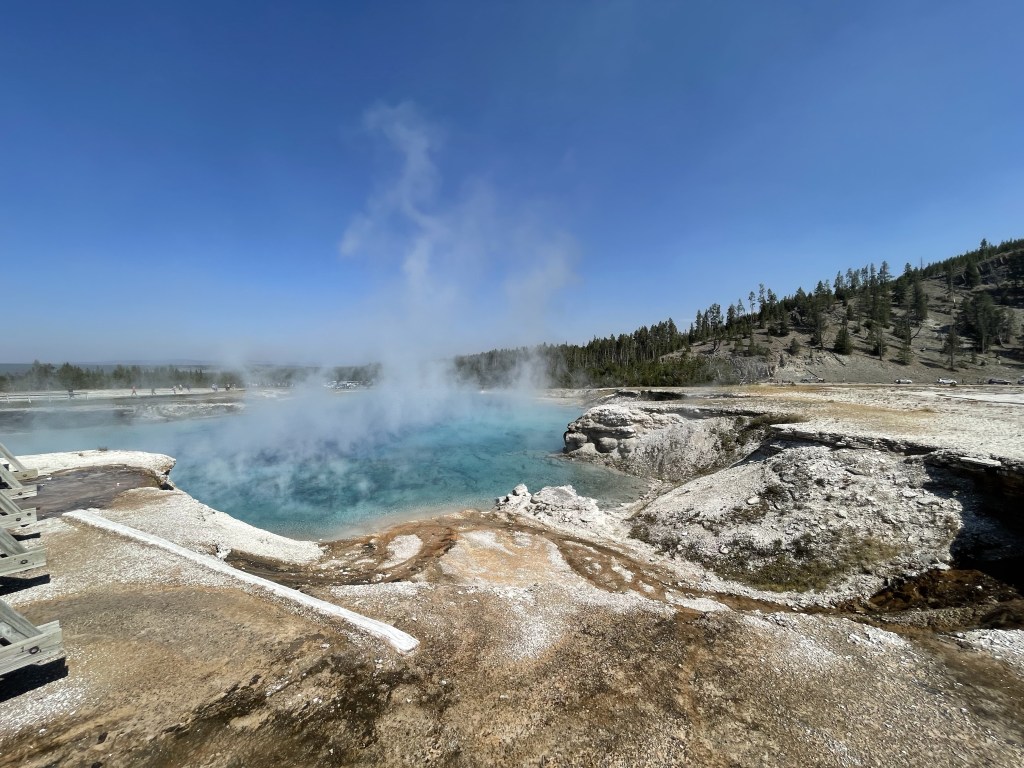
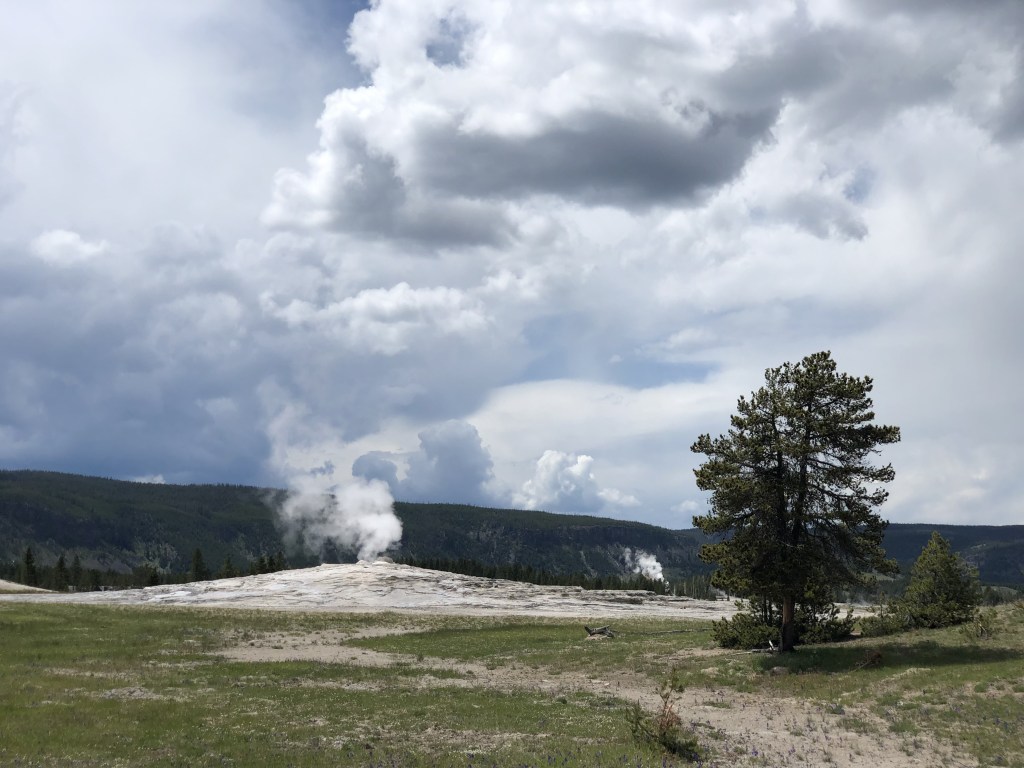
Attractions include: Lower Geyser Basin (Fountain Paint Pot, Great Fountain geyser), Midway Geyser Basin (Grand Prismatic Spring), Upper Geyser Basin (the famous Old Faithful geyser, boardwalk to a dozen other geysers), Continental Divide Line, Biscuit Basin, Black Sand Basin, Fairy Falls, Mystic Falls, Lone Star Geyser
Activities: Go fishing (permit required), Old Faithful to Morning Glory Pool Bike Trail, Lone Star Geyser Bike Trail, Fountain Freight Road Bike Trail, Day Hikes in the Old Faithful area
Other stuff you can do anywhere in the park
- Backpacking (permit required)
- Have a picnic (tables are all over the place on the sides of the road, bring your own lunch)
- Go animal watching (from a safe distance, or stay inside your vehicle)
- Photography (literally every direction you look, commercial use may require a permit)
Yellowstone also offers a variety of guided tours year-round. Check the Yellowstone Vacations website to see what tours they offer, or check out this page on the NPS website for a complete list of activities and guided tours with other private vendors.
Leaving the park
I feel the need to include this as its own section because I don’t think anyone realizes before they go just how much time you will be spending in your car if you choose to exit the park at the end of the day (sunset), especially during peak season (summer). When the sun goes down, everyone who doesn’t have lodging or camping inside the park funnels out the single lane roads at the same time. It’s almost like leaving a concert or sports event. I once left through the western entrance after sunset and spent close to two hours waiting in the line to get out of the park. This is not uncommon at some of the other entry points either, particularly the north and south, but the west definitely gets the worst of it.
To best avoid this chaos if you must exit west, try to plan your trip in such a way that you are leaving mid- to late-afternoon. Otherwise, be sure to download your playlist or a few episodes of your favorite podcasts in advance, and maybe bring an extra snack! You always have the option of sitting in a parking lot after dark waiting for the craziness to die down, or trying to dine in at one of the restaurants. (IF they have any space…)
A few other tips
My top 5 things to do in Yellowstone in alphabetical order include:
- Grand Canyon of the Yellowstone – Artist Point is a popular lookout which has a nice view of a waterfall, and it’s just a short walk on a paved trail. There are a few other lookouts to view this canyon.
- Grand Loop Road – Spend the hours driving around the entire loop, the views will have you staring out the window in awe all day long. If something catches your attention, pull out in the next available parking area and go on a little adventure. Make sure you have a full tank of gas!
- Grand Prismatic Spring – While you can walk around it directly on a boardwalk, the best viewpoint is to the overlook by short hike (a little over a mile total, up and back), but it’s totally worth it to see the massive pool of steaming water with rainbows of colors of thermophiles from up there, they’ll have you questioning things you think you know about nature!
- Mammoth Hot Springs Terraces – Another boardwalk trail that takes you around some really stinky sulphur and bubbling pools of hot water.
- Old Faithful – Perhaps the most well-known attraction in the park, the repeated eruption (averaging about once every 90 minutes or so) invites crowds to sit and enjoy the predictable geyser with a snack from the nearby stores and restaurants. The parking lot is massive but you’ll still be waiting for a spot during peak season! There is also a boardwalk trail to a bunch of other geysers in the basin here.
There’s a lot more stuff worth checking out, but if I only had one full day, I would try to squeeze all of those things in. If you’re planning a trip, you can break up the loop into two days and stay somewhere inside the park for a night.
If you are visiting Yellowstone as part of a road trip, I would recommend also checking out Grand Teton National Park (located at the southern border of Yellowstone National Park’s boundary, my comprehensive post linked here) and Jackson (1.5 hours south of the southern entrance, my detailed post linked here).
This is not the best place to bring your dog. Unfortunately they really aren’t allowed anywhere other than paved surfaces (like roads and parking lots) and some campgrounds, and cannot be left unattended.
BE BEAR AWARE! I have been all over the country and had more bear encounters in Wyoming alone than all other states combined. They will *probably* not bother you personally, but they may try to take your food. Follow the park’s recommendations as to how you can protect both yourself and the wildlife.
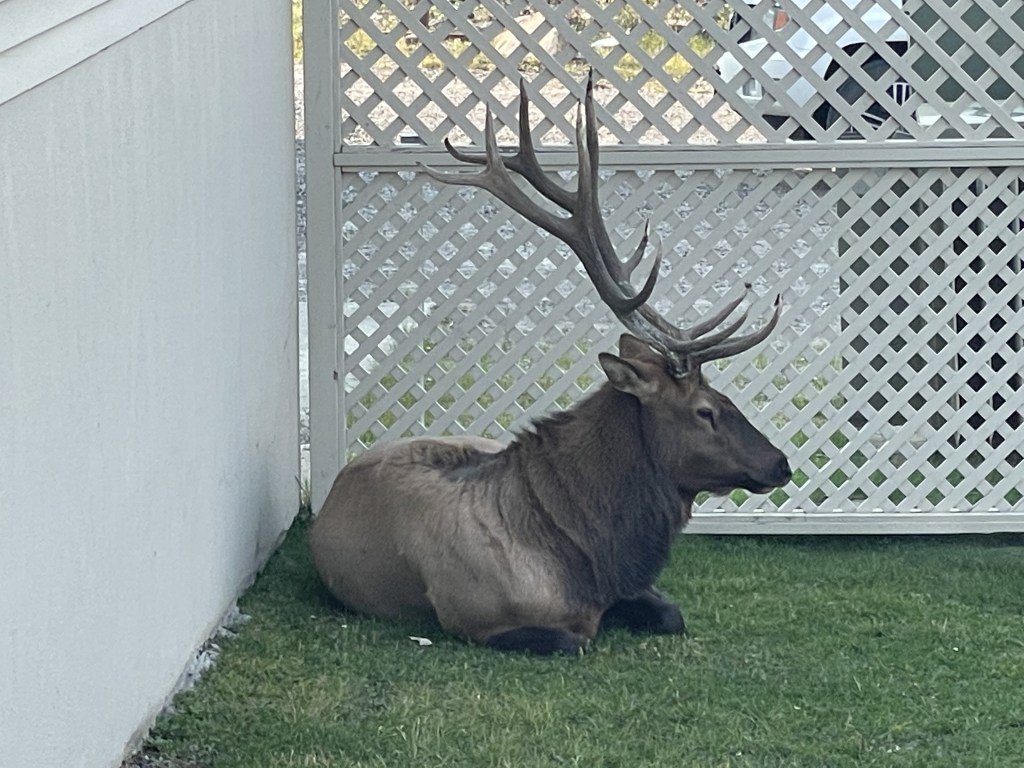
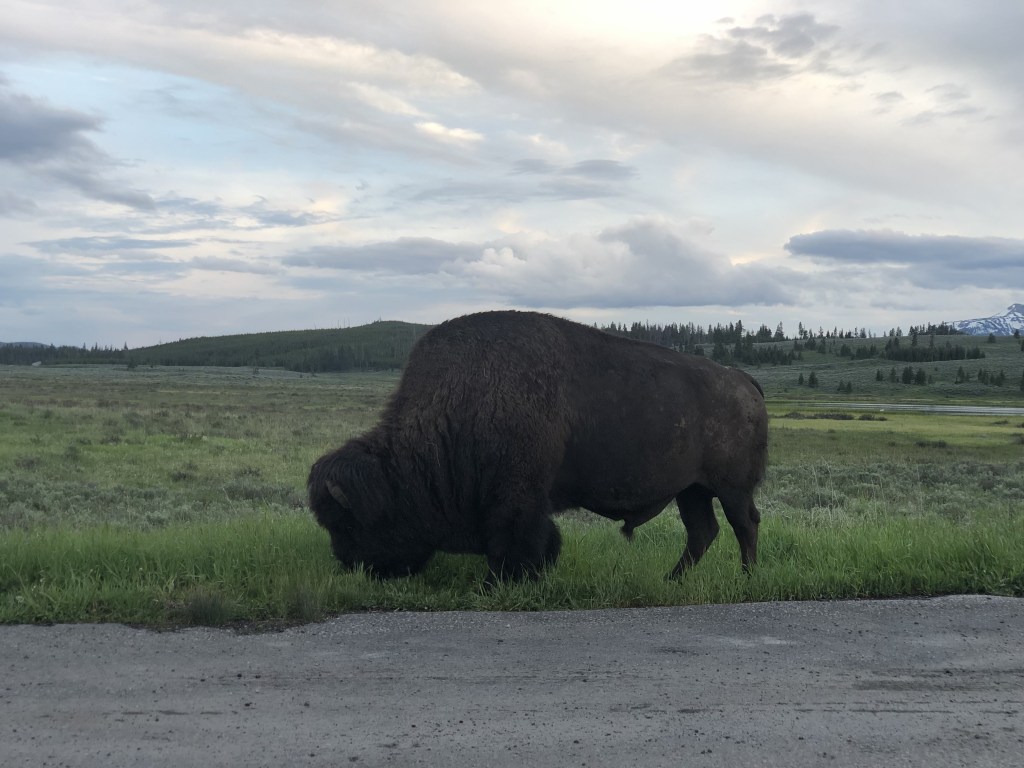
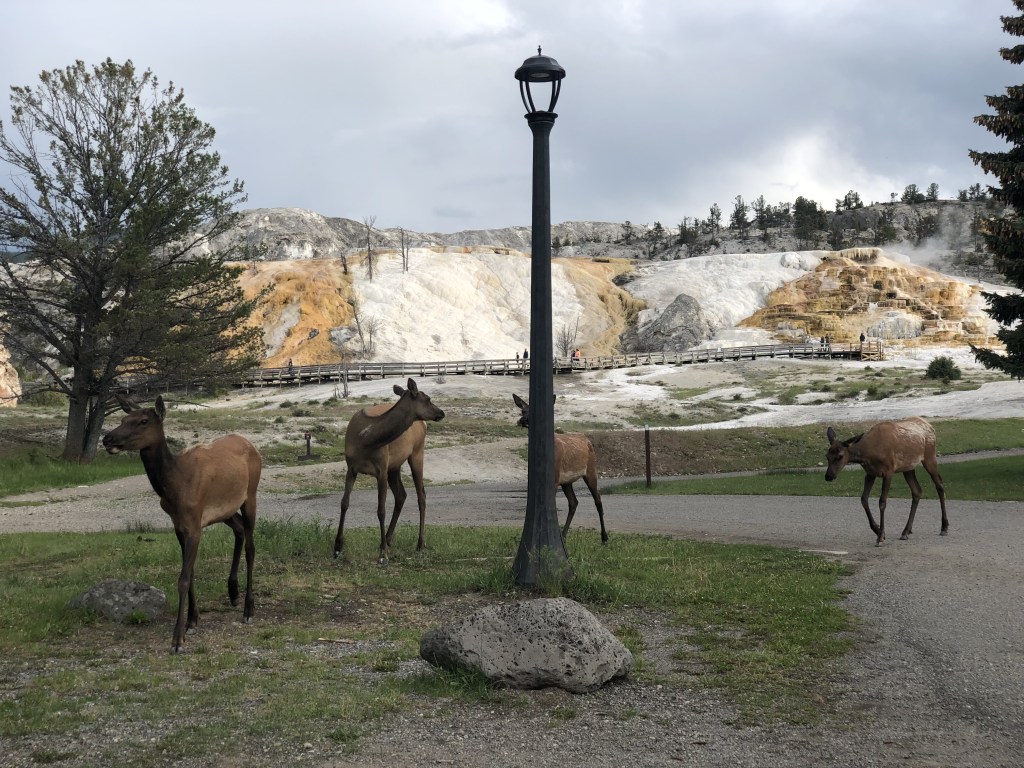
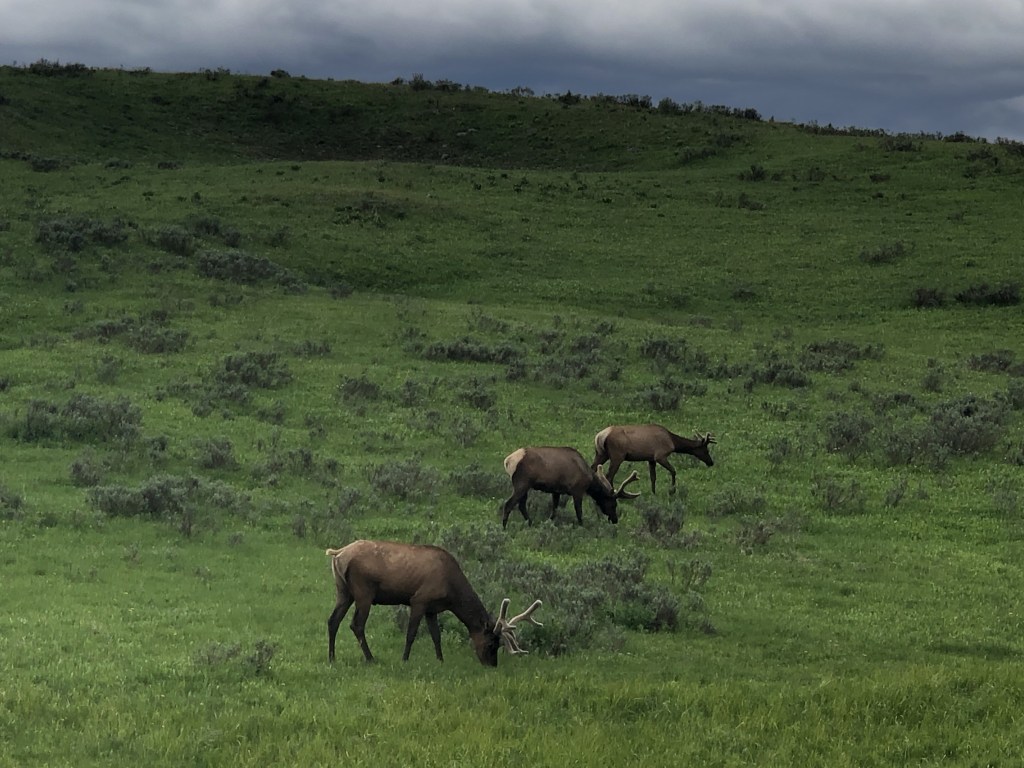
While we’re on the subject, yes animals are beautiful and even seem harmless, but please give them their space and drive slow in case they dart out into the road. Even I have fantasies of cuddling with a big, fluffy bison, but I keep enough distance so that they can live their life in peace. They are adapting to our increased presence in their home (just as the bears are). I have watched bison and elk look both ways before crossing the street. Sometimes animals will walk close to you, but DO NOT make advances in their direction. The last thing we need to see is another Harambe situation. Check the visitors centers for information on the proper amount of distance they recommend from the creatures here. Animal watching is a major draw to Yellowstone, and you can increase your chances of animal sightings during dawn and dusk. There are no certainties that you will have encounters while you are there, but most visitors do at least once.
My thoughts
Overall, Yellowstone is a really great way to experience the wild in a controlled manner. I would highly recommend this for a family vacation with kids because it makes a great learning experience and a way to expose them to aspects of nature they would otherwise only see on television or in movies and documentaries. My parents took our family here when I was a teenager and I am still very grateful for that experience. As an adult it is even more fascinating.
Have you been to Yellowstone National Park before? What was your favorite part? Do you have any tips for dealing with the crowds? Let me know in the comments below!
Happy traveling! 😊
(And always remember to follow #leavenotrace principles!)
❤️
keywords for search purposes: [idaho, usa] [montana, usa] [wyoming, usa]



 Laura the explora: the blog
Leave a comment