
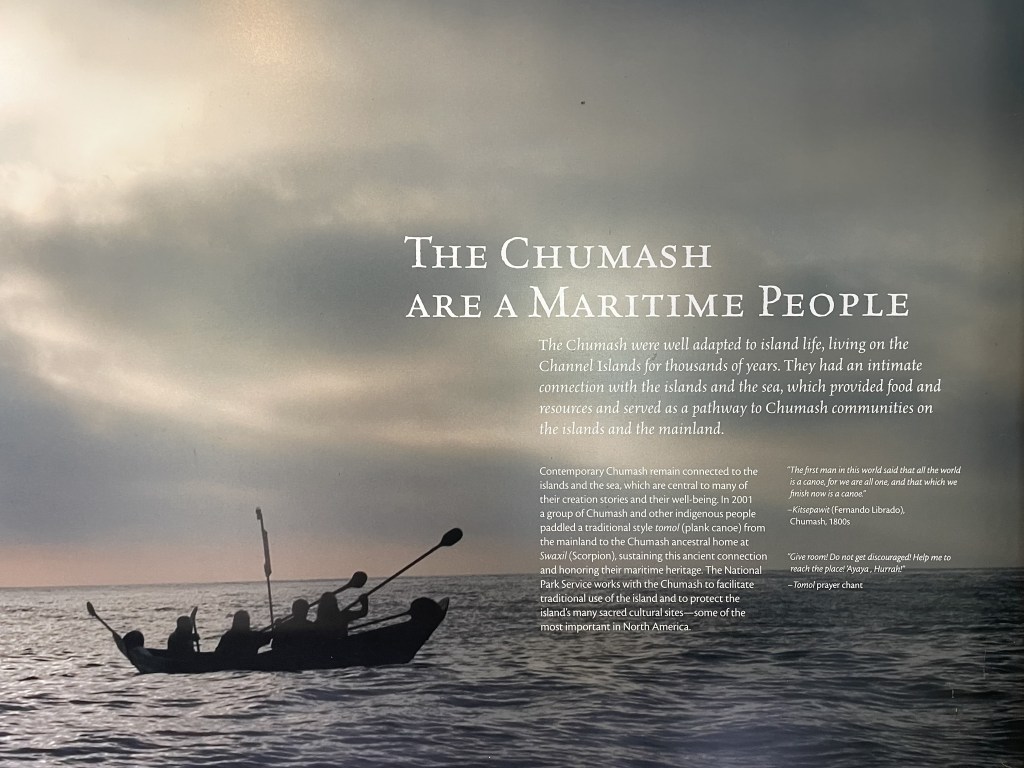
A solitude lover’s dream, Channel Islands National Park is a surf and turf wonderland full of breathtaking views and secluded beaches. Adventure seekers can float through the shallow waters on their kayaks around arches and into caves, and from many hiking trails, the doorways to many sea caves can be seen from the edges of the cliffs above. Chumash people thrived on these lands for thousands of years by running a trade operation with the mainland, but were later pushed out by the Spanish and forced into missions. Ranchers and the US Navy took over, which almost completely destroyed the ecology of these islands, and rehabilitation is underway but there is still work to be done. They are now protected by the NPS, and the habitat is being restored back to what scientists believe it to have been before it was taken over by modern humans.
The Channel Islands are one of the lesser visited national parks, which like many others that are not visited often, may be due to logistics. While the Channel Islands archipelago consists of 8 total islands, the protected park itself is comprised of only 5 of them, as well as some of the shallower ocean waters beyond their beaches. The other 3 are excluded for different reasons: San Clemente and San Nicolas Islands are still owned and used by the US Navy (they tested bombs and trained troops on all the islands during WWII), and Santa Catalina Island is a popular privately-owned tourist destination known for its resident herd of bison (my post on that place is coming soon).
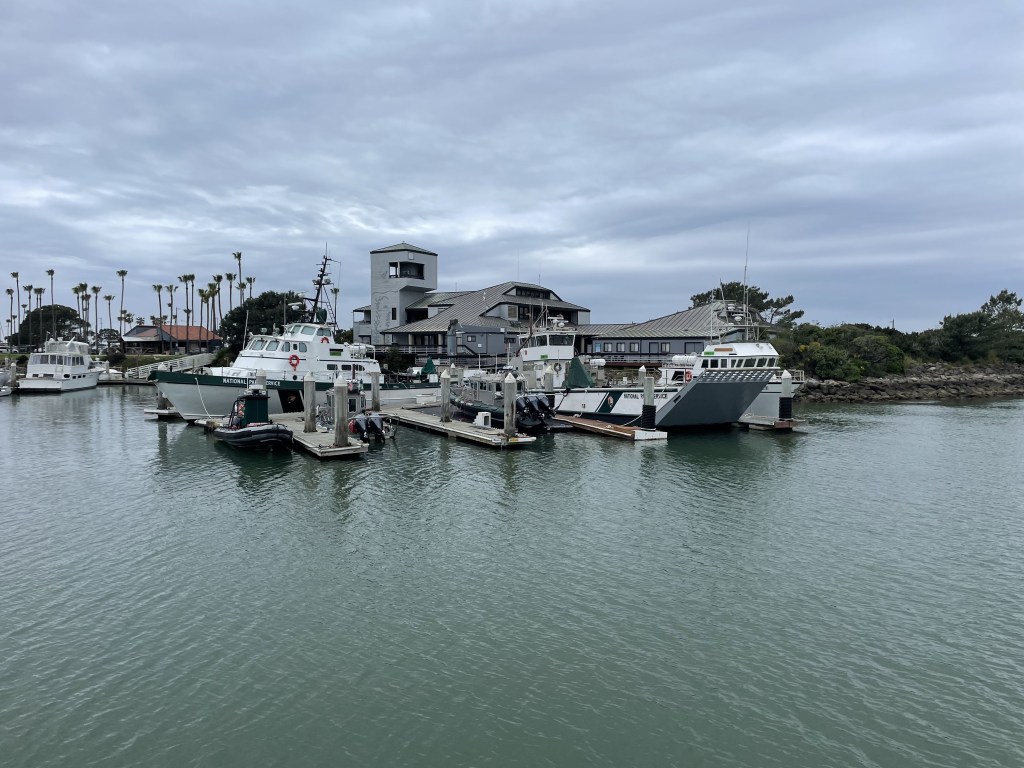
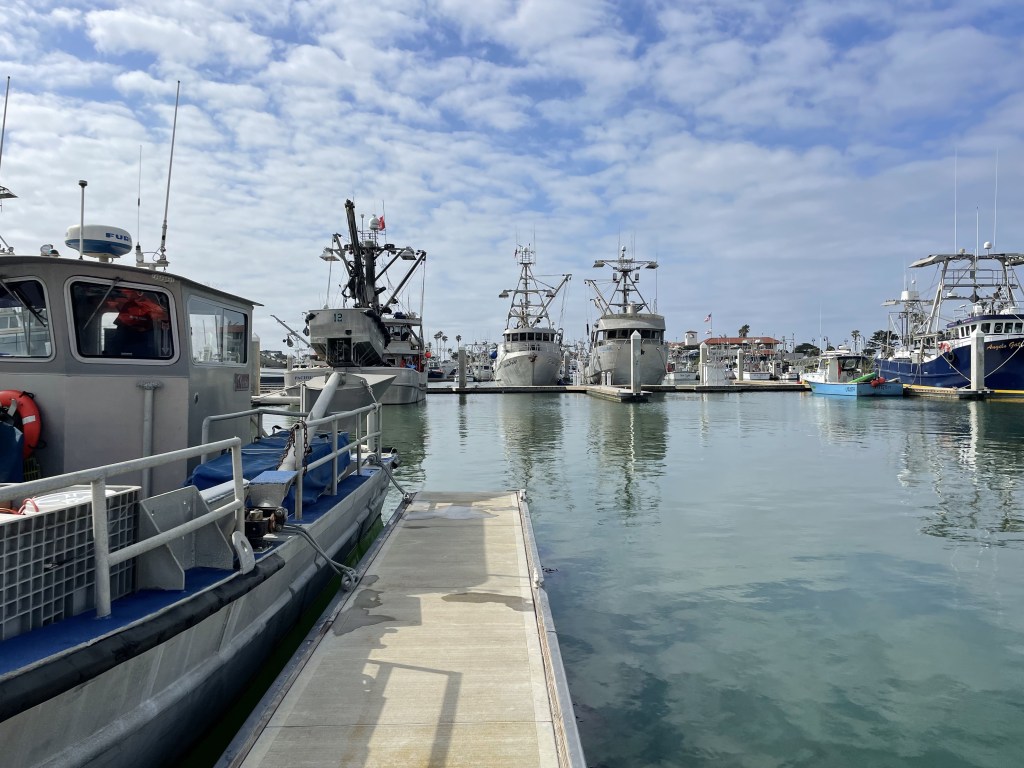
Santa Cruz Island is the largest and most visited tourist spot among the 5 park-protected islands. On all of them, guests will find very minimal services which may or may not include small visitor centers or ranger stations, and pit toilets. For the most part, the only way to get to any of the islands is by boat (although there are helicopter pads in the event of a serious emergency). Back on the mainland in Ventura Harbor is the main visitor center and gift shop.
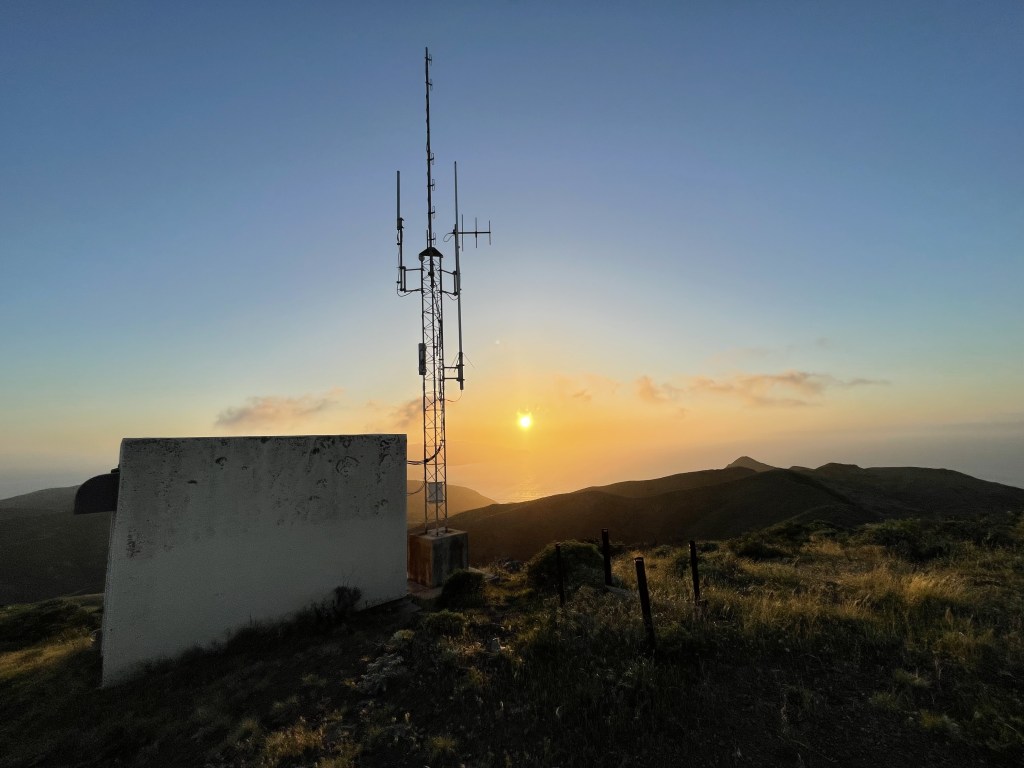
Reception is trash on all of the islands because they’re out in the middle of the ocean; however, you can typically get a weak signal from some of the higher elevated spots on hiking trails that face the mainland or from the harbors by which you arrived. Wifi is also available at all the visitor centers during operating hours, but the main visitor center is located on the mainland in the harbor of Ventura. Carrying a park map (offered complimentary at any of the visitor centers and near some piers) is recommended. If you go without a specific plan, head to the mainland visitor center during operating hours before you embark and talk to a park ranger about your options. They are there to help you make your adventure the best they can, but be mindful as to not take up too much of their time so they can do their jobs and help other people, too!
When to go and how long
This destination can be visited during any season, but per my conversation with one of the rangers, summer is the best. The “mediterranean” climate doesn’t change a whole lot throughout the year temperature-wise, but during the majority of the year it is chilly and extremely windy. Temperatures generally fluctuate in the winter with highs around 60 F and lows around 40 F (~15.5/4.5 C), and summer days are generally around 75/50 F (~24/10 C). Fall and spring land somewhere in between, and this is usually when locals visit because the summer crowds are gone.
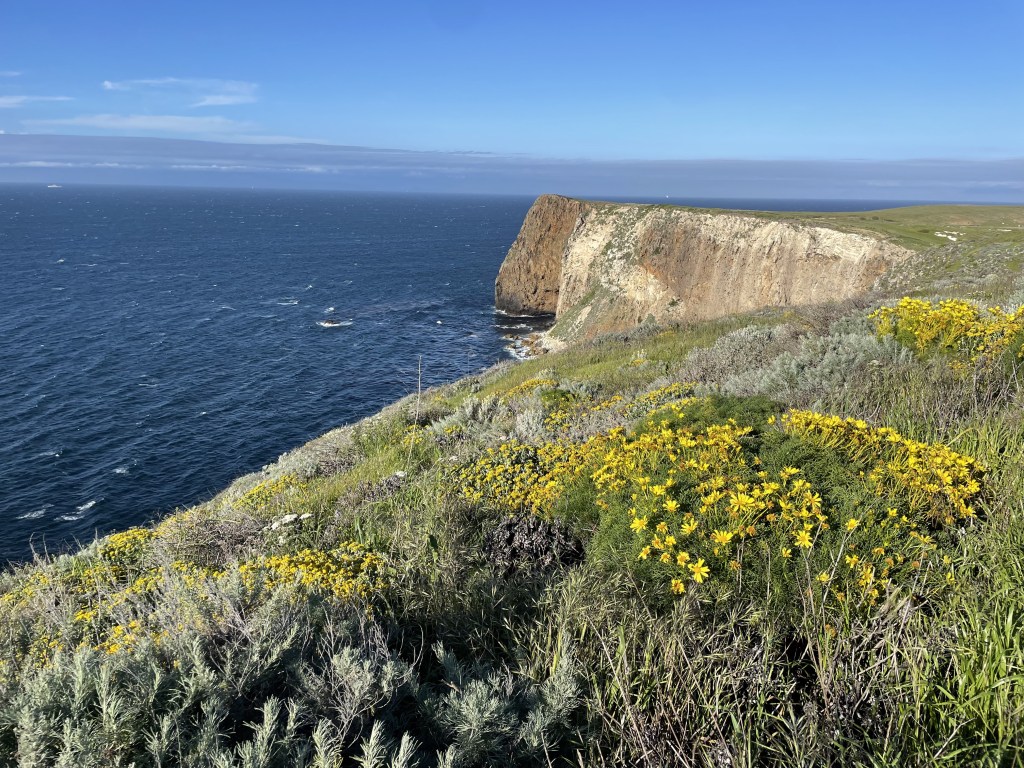
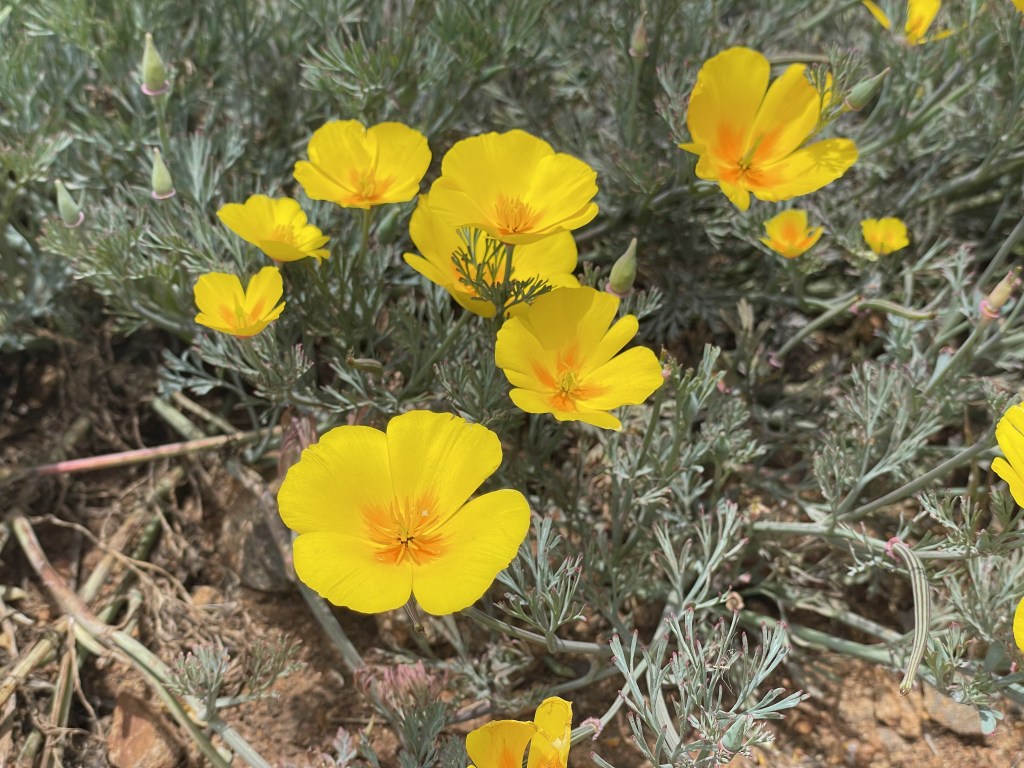
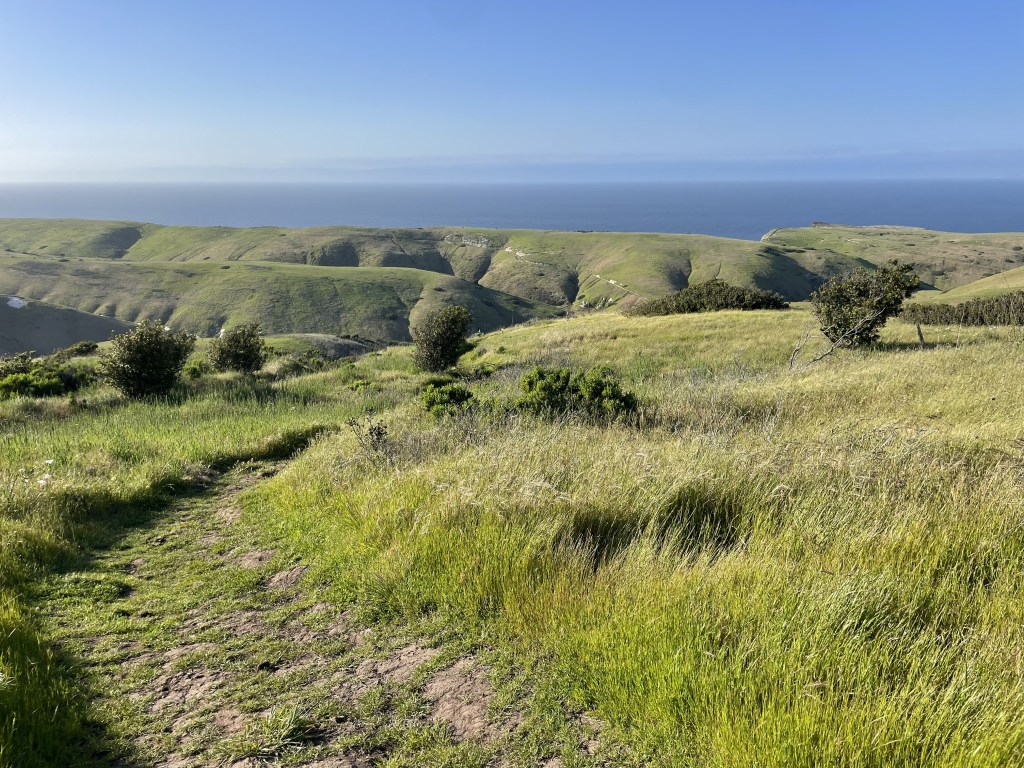
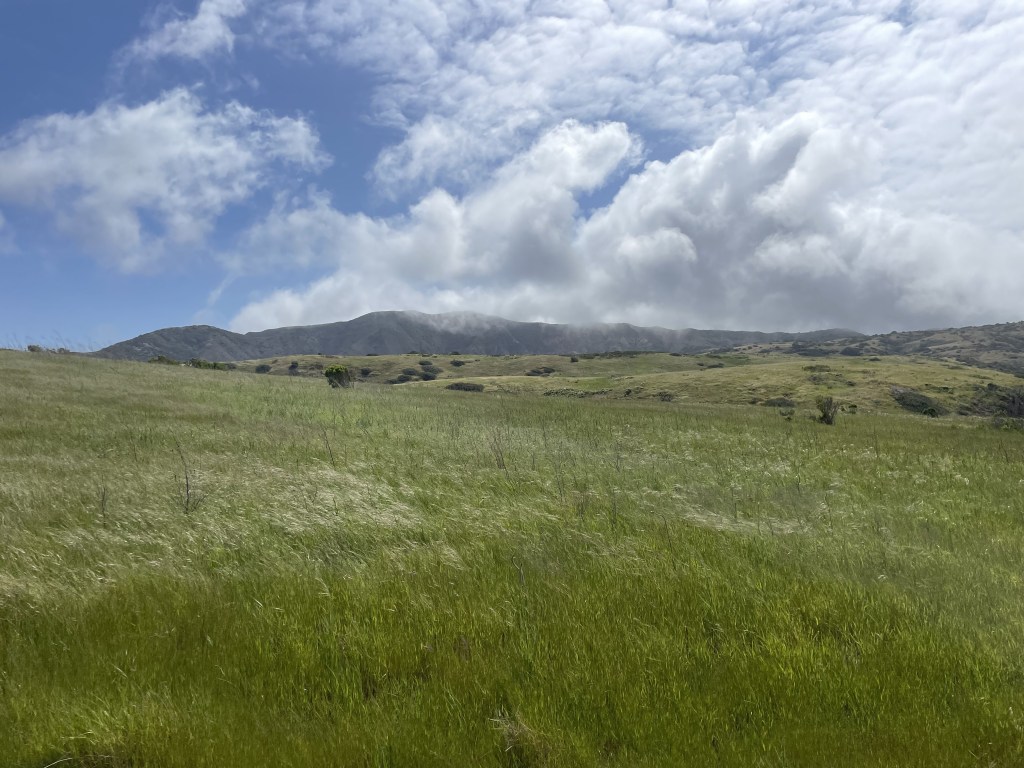
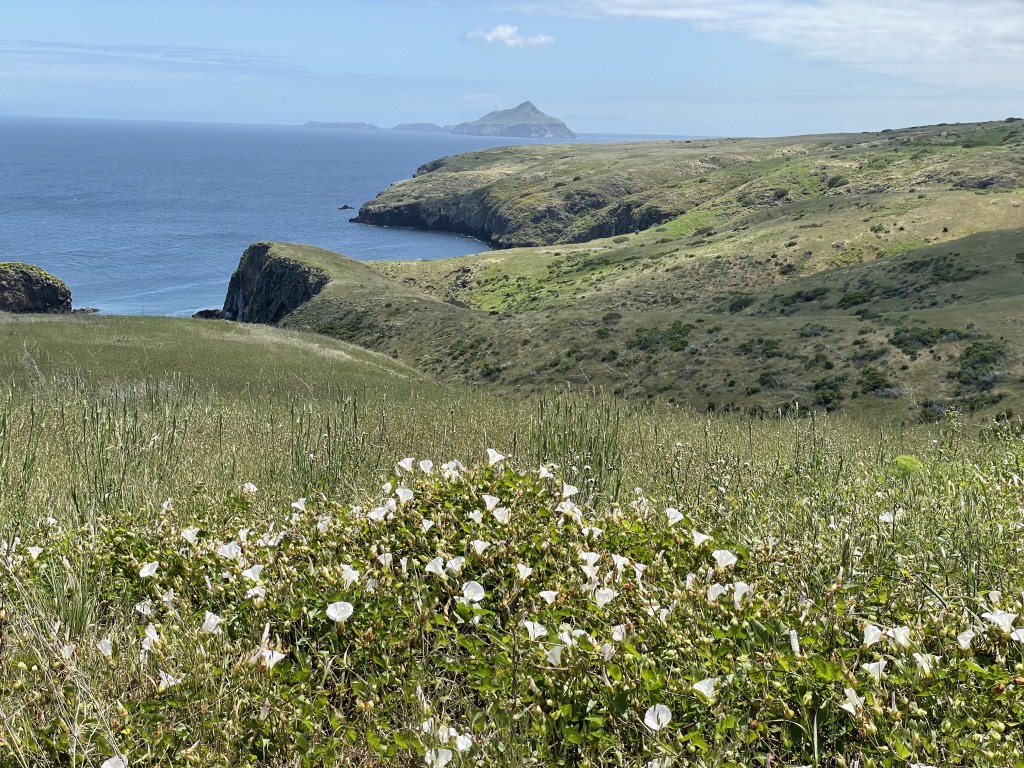
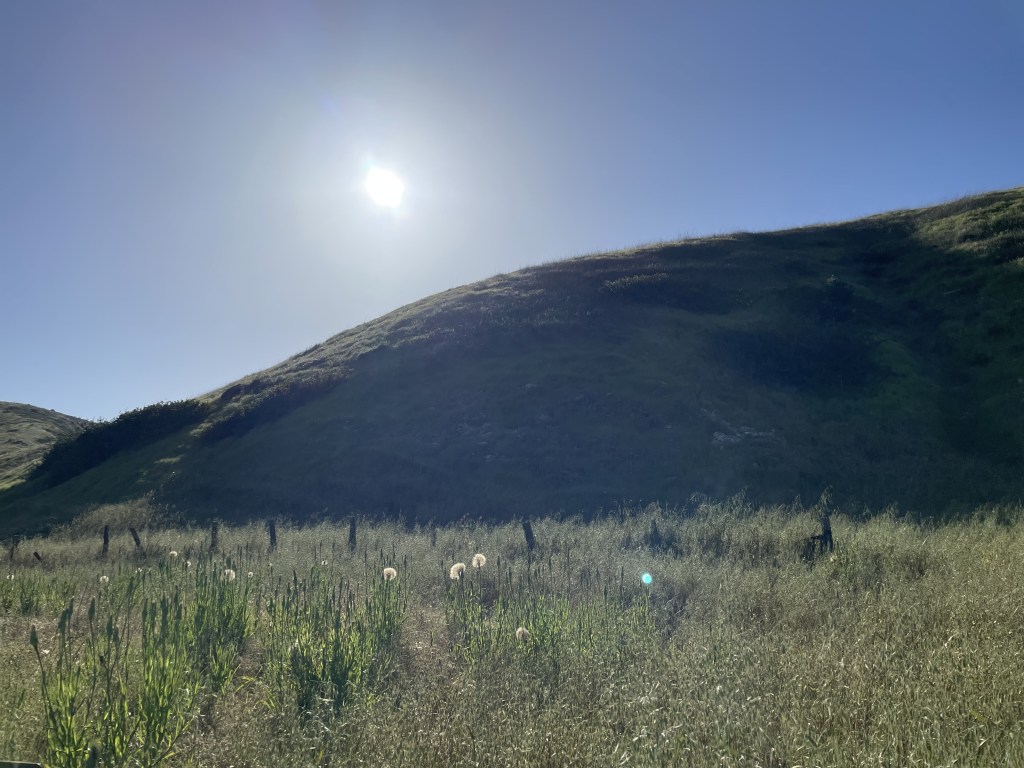
The hills are covered in lush green meadows in the spring, beginning from late winter through early summer, then turn to brown and stay that way for the rest of the year into the next rainy season. There are lots of colorful little wildflowers all over the place in spring/summer. Harsh winds result in the islands being pretty dry for the majority of the year, and the severity varies by season, being more extreme in the cold months. Fog is common year round, especially in the mornings until the marine layer burns off.
Always check the weather before you go!
Each island requires a different amount of your time and attention. Visitors either arrive and depart same day or camp overnight on any given island.
Anacapa Island is typically a same day adventure (but you can camp there). It is only about 1 square mile and per my conversation with one of the park rangers, you can explore the whole thing in a few hours. The journey to get there is 1.5 hour each way from Ventura.
Santa Cruz Island is a 1 hour boat ride from Ventura. You can scratch the surface with a same day adventure, but camping overnight is recommended if you can get a campsite (it is highly competitive). This is the most popular island and holds the most amenities for guests.
Santa Rosa Island is best enjoyed as a multi-day adventure. Because the boat ride takes several hours from the mainland, it wouldn’t give you much time to explore if you tried to go there and back in the same day. It seems that about 3 days here is most common.
For the most part, San Miguel Island and Santa Barbara Island are closed to the public at this time.
Where to stay
If you are doing a same-day trip, there are tons of hotel and camping options on the mainland near the harbor in the city of Ventura, which is about 1.5 hour drive northwest of Los Angeles.
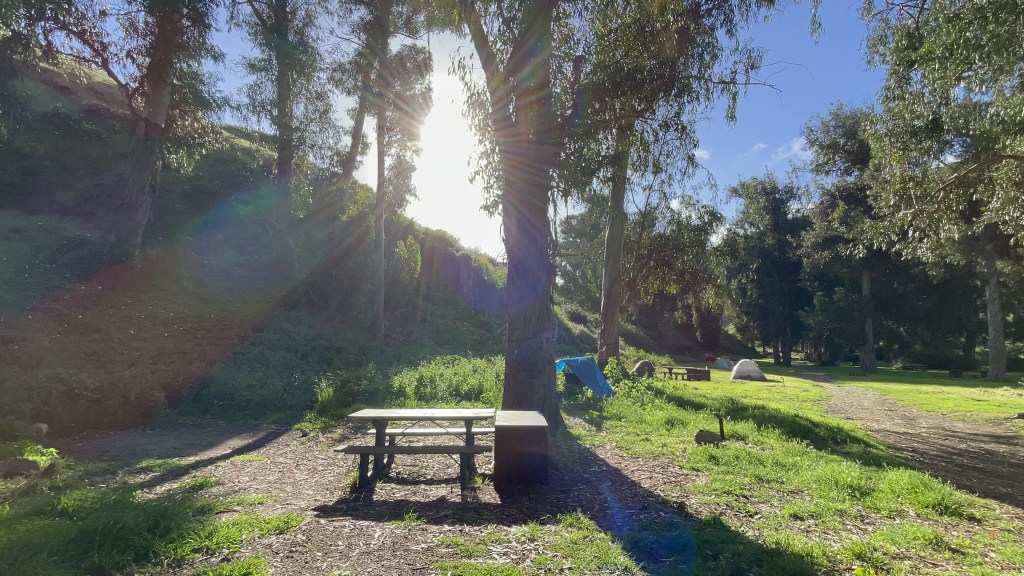
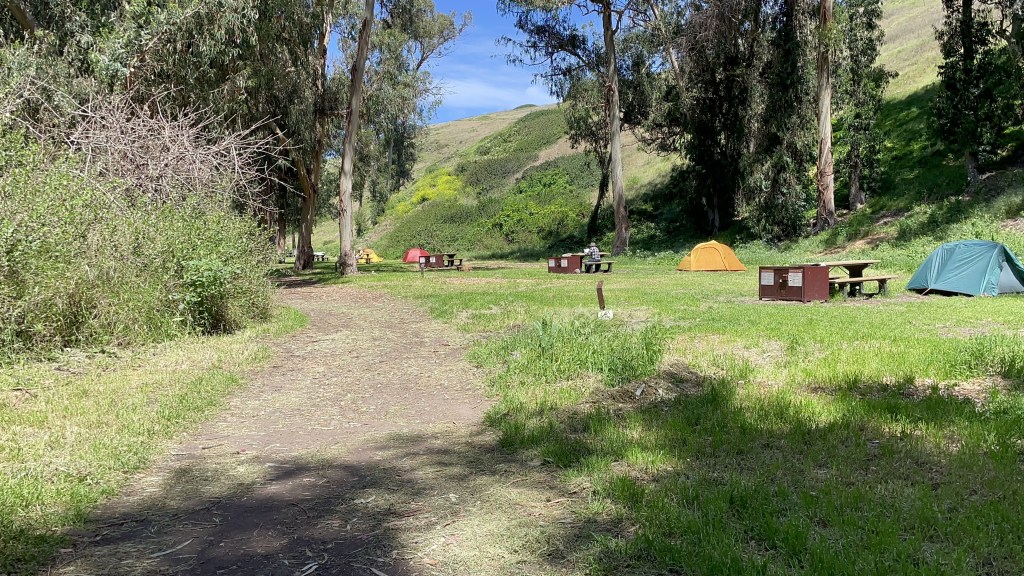
The only way to stay overnight on any of the islands is reserving a campsite in advance. Unless you are doing a same-day trip, the boating company WILL NOT issue you a ticket for your journey without proof of a campsite reservation. There are no hotels on the islands and all campsites are primitive, meaning the only amenities are pit toilets and lock boxes to protect your supplies from the island critters. You must bring all of your gear and meals with you.
Anacapa Island has one small campground that consists of 7 total sites.
Santa Cruz Island has two campgrounds:
- Scorpion Canyon has 31 total sites. Located on the eastern side. Potable water is also available there.
- Santa Cruz Del Norte Backcountry Campground has 4 total sites. It is a smaller campground which must be backpacked to (nearest to Prisoners Harbor, about 3.5 miles).
Santa Rosa Island has two camping options:
- Water Canyon Campground has 15 sites. It is a 1.5 mile hike to the campground from the pier. Potable water is also available here.
- For the extremely adventurous backcountry camper, there are 3 dispersed camping areas scattered around the island’s beaches. They are only accessible during very specific times of the year to protect the local wildlife.
How to get around
By foot (walking) or by arm (kayaking), once you arrive on the islands. The only vehicles are owned and operated by the NPS or by the ranch residents and workers.
To get to any of the islands, you will need to ride over on a boat, although there is technically an airstrip on Santa Rosa Island for which I cannot actually locate any publicly offered flights.
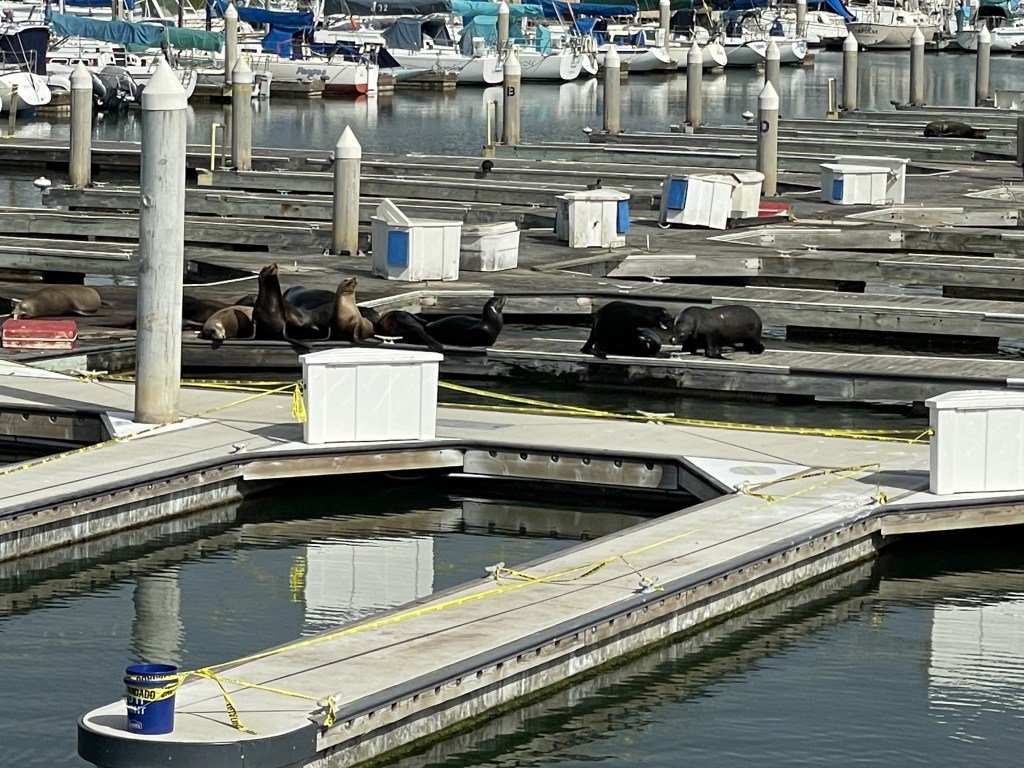
The park works with the boating company Island Packers to bring tourists back and forth from the island. You must book both your trips (departure/return) in the same transaction and prices vary by age of traveler, which island you are traveling to, and whether or not you are carrying camping equipment. Check the Island Packers website for rates and reservations. Open-ended ticket stays are not issued. There are currently 4 options available from harbors in both Ventura and Oxnard:
- Santa Cruz Island (Scorpions Cove) – most popular
- Santa Cruz Island (Prisoners Harbor) – more remote
- Santa Rosa Island (Becher’s Bay)
- Anacapa Island (East End Landing Cove)
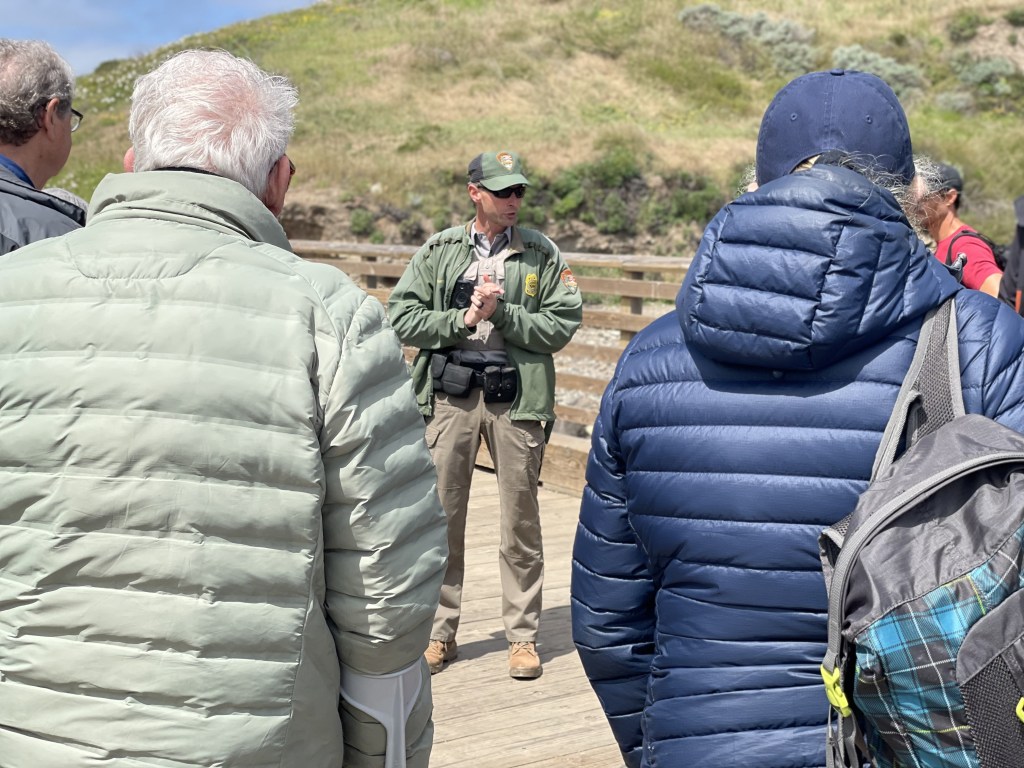
Upon your arrival to any island, a park ranger will provide you with an introduction to the area and anything you may need to know. Note that trip times are subject to change and may be cancelled without warning due to inclement weather. This means you could potentially get stuck on the islands longer than you planned to, so be prepared for anything!
Technically you can get to the islands by private boat as well, but you must request a permit in advance from the NPS to dock anywhere. Check this page for more information.
Food and money
There is no food available for sale on any of the islands, so it is necessary to pack a lunch at the very least for a day trip, and to pack what you would need for several days if you are camping. There may a small selection of snacks available for purchase on the Island Packers boat ride over to the islands, while supplies last.
Some areas of the islands don’t have potable water available, so it is important that you bring water to drink as well, or at least check to ensure whether it is available where you are headed in advance. Campers often carry gallon-sized jugs with them.
Campsites are pretty cheap at $15/night for regular sites and $40/night for large group sites (where available).
Unless you are planning to take a guided kayak tour, your transportation fare to the island will be your biggest expense. Unlike the majority of national parks, this park does not charge an entrance fee. There is free parking available in the harbor from which you depart (Island Packers will provide further instruction as to where exactly to park upon your arrival).
Kayak tours are extremely expensive, and will cost upwards of $100 per person even for the shortest adventure, going all the way up to about $300 for the longest one. You do have the option to bring your own kayak and for a fee Island Packers will transport it to the island for you (advance reservations required). If you don’t have your own kayak, there are many options for kayak rentals on the mainland, and prices will vary greatly by where you rent from.
My round-trip boat fare to Santa Cruz Island (Scorpion) was $88 for myself and all my camping gear. I found this to be pretty reasonable, all things considered. With two nights of camping, my 3-day adventure cost a total of $118, which is pretty great for a simple vacation if you ask me.
What to do around Santa Cruz Island
There is usually a reason why places are more popular than others, and this island (specifically the Scorpion area) is the most frequently visited region of the park. However, since there are two different harbors on this particular island, I will break this section into two parts:
*Scorpions Cove (East Santa Cruz Island)*
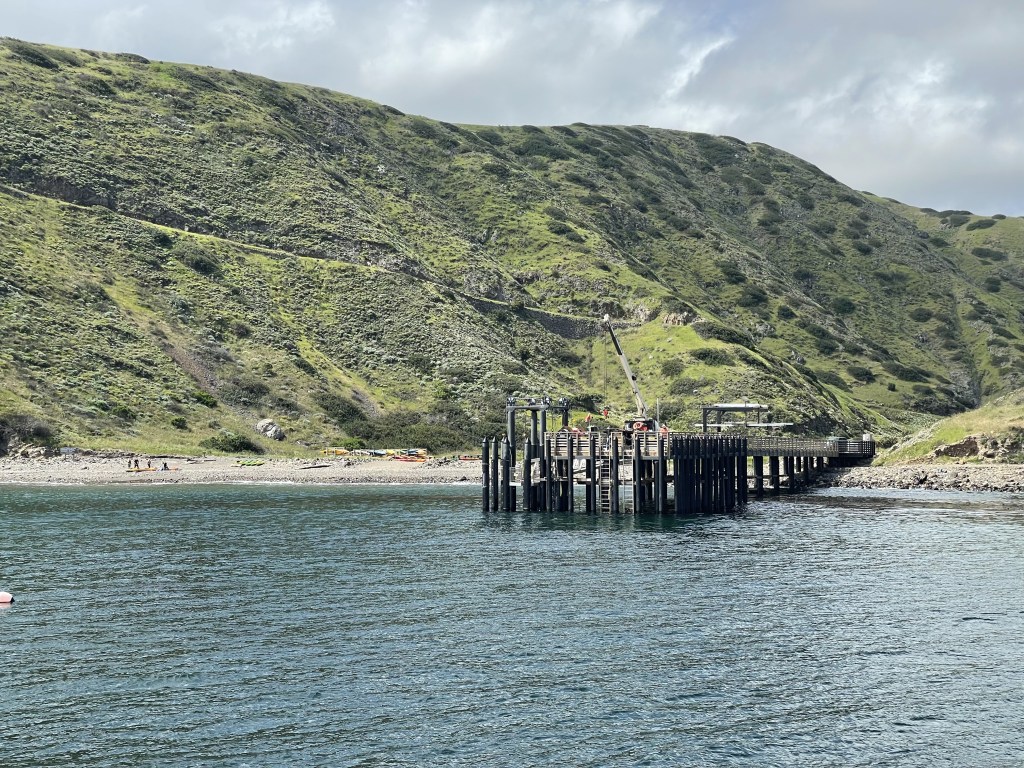
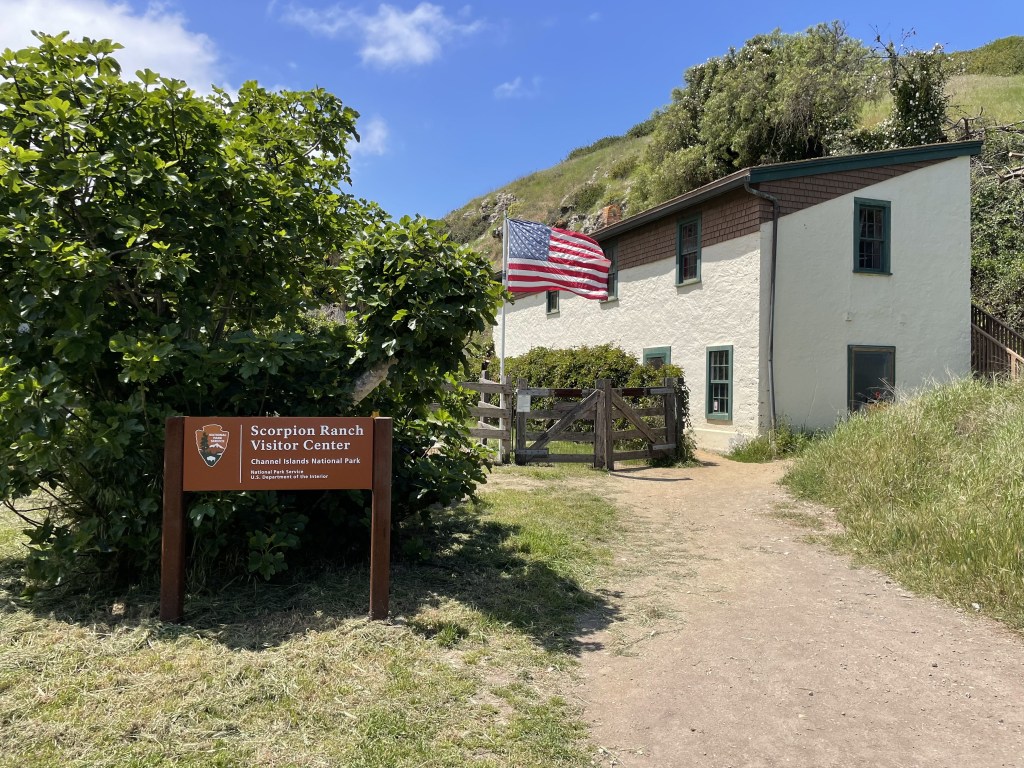
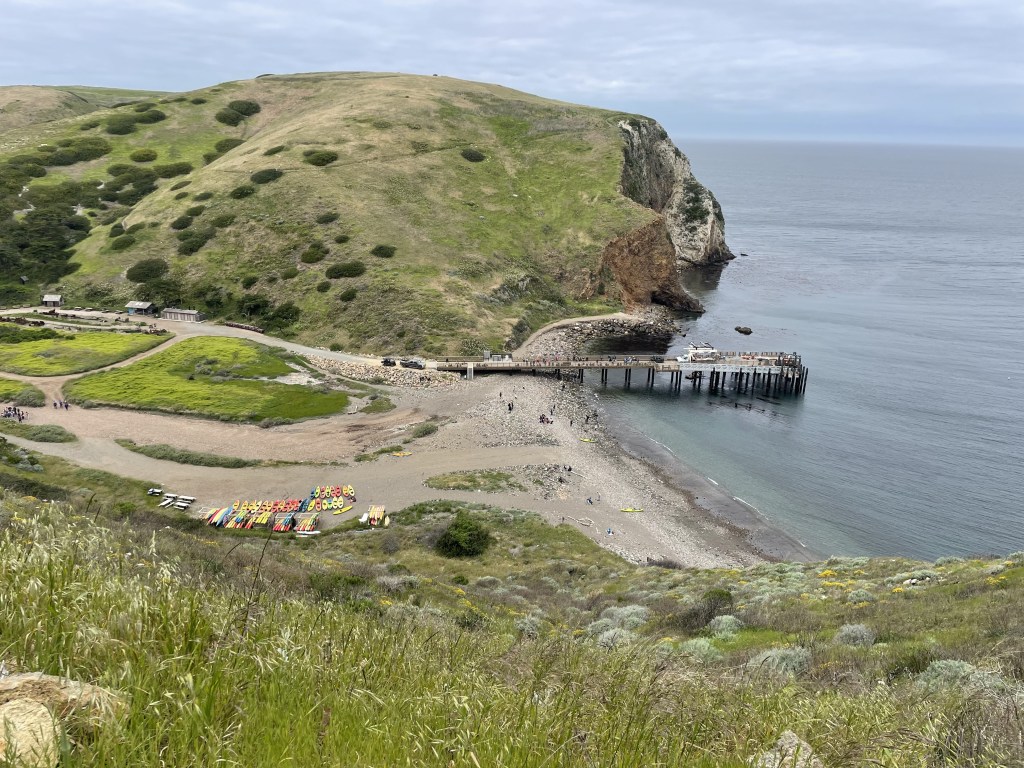
This region of the park is the most popular and has the most amenities, which are very minimal. Aside from the campground, there is a small visitor center, water refill stations, and pit toilets, as well as a privately owned and operated tour company. Cell reception is spotty but you can usually find a signal somewhere near the shoreline at Scorpion around the pier, and there is Wifi available at the visitor center during its operating hours (830a-5p).
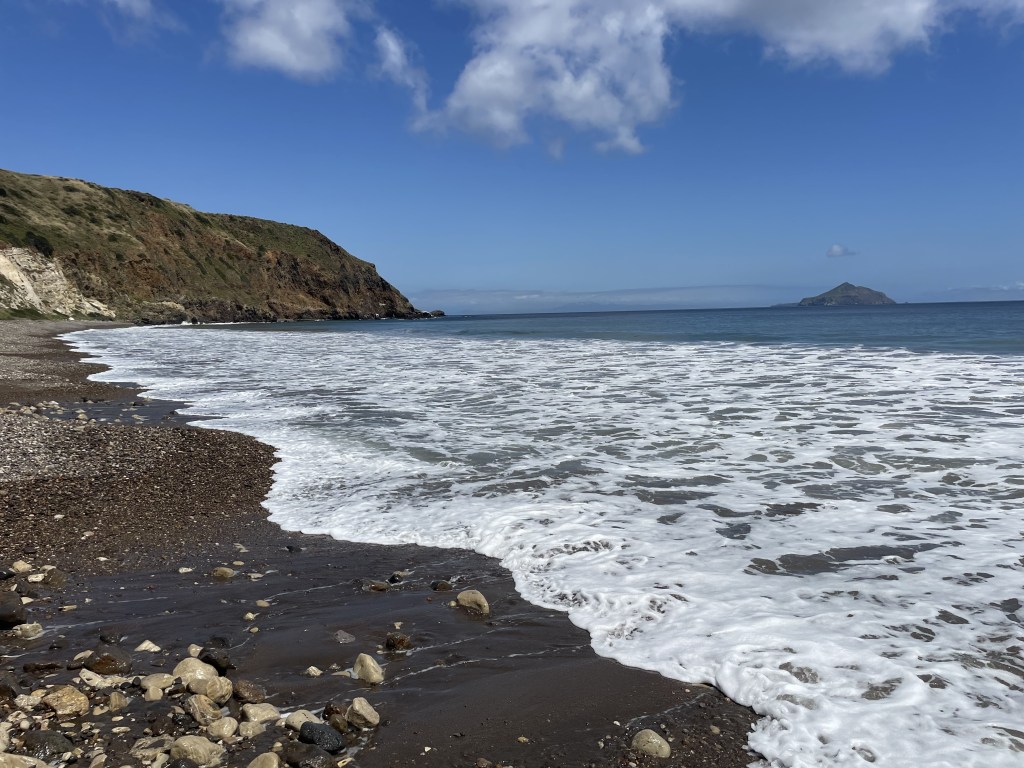
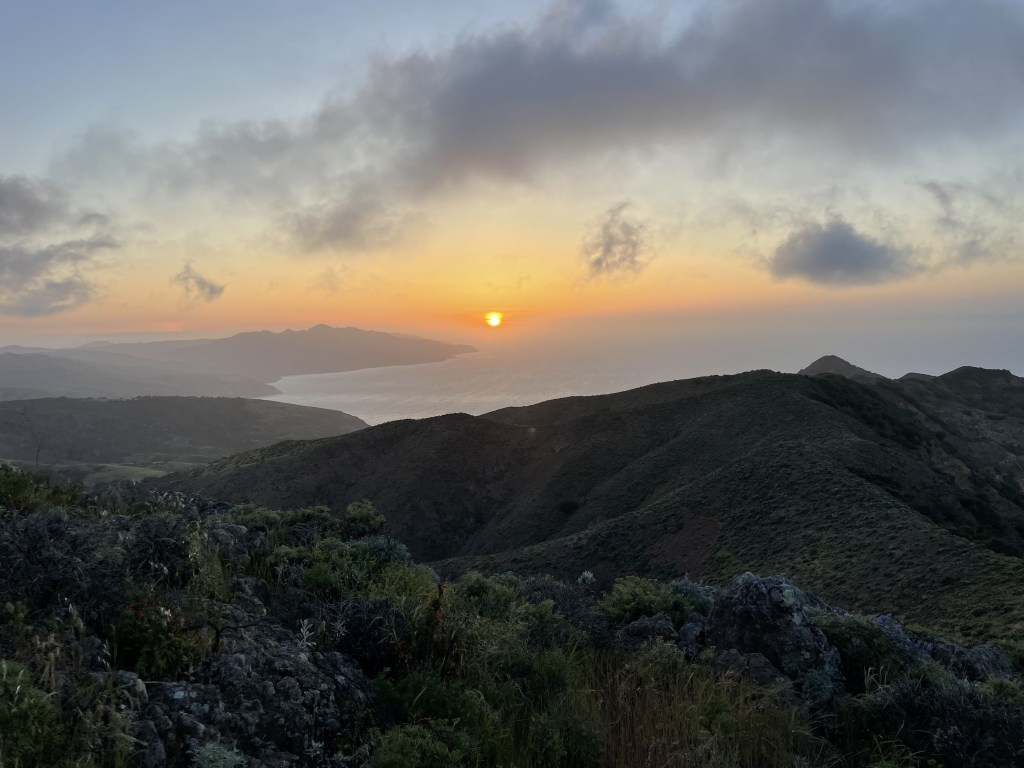
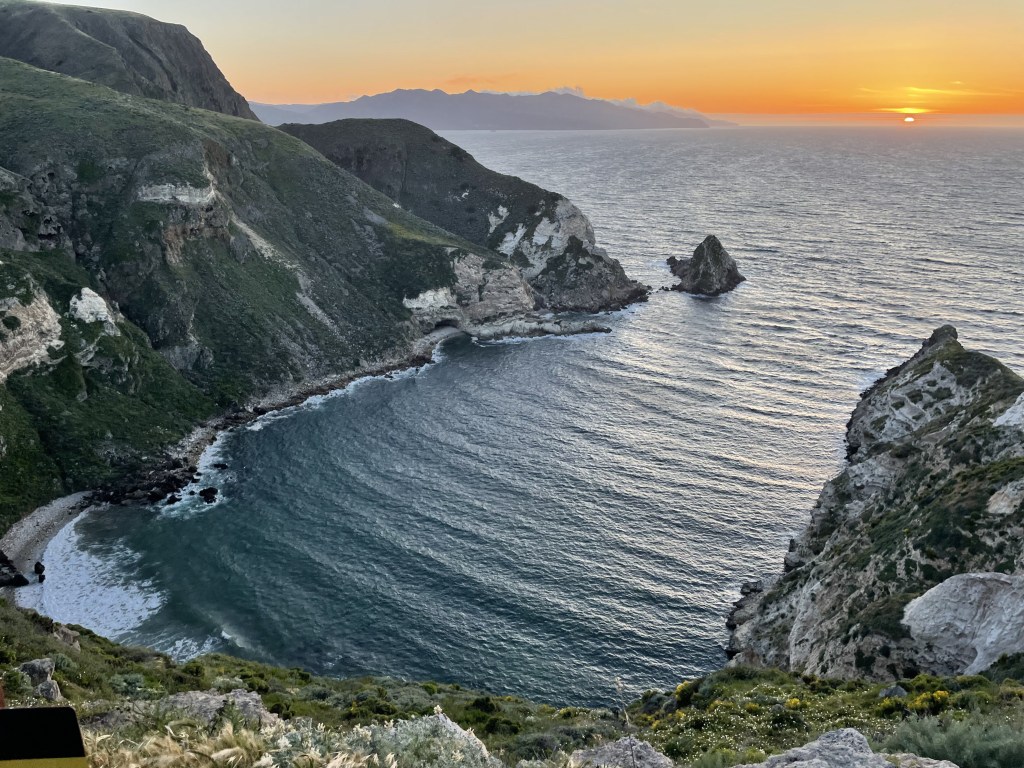
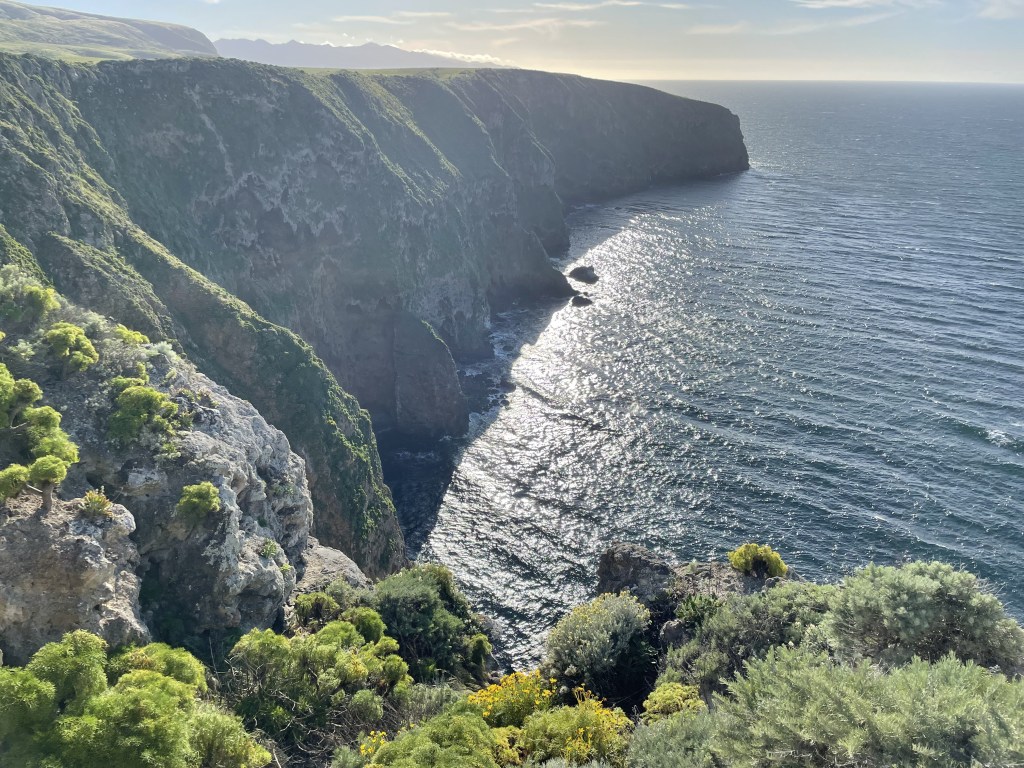
Hiking around the Scorpion area is awesome. Potato Harbor is beautiful at any time of day and a large portion of the trail is flat (5 miles round-trip). If you don’t mind walking back around dusk, it makes for a remarkable spot to sit and enjoy a sunset, as does Montañon Peak (the highest publicly accessible peak on the island, the trail is steep and technical, and about 9 miles round-trip). The Cavern Point Loop is a perfect trail to watch the sunrise due to its close proximity to the campground, and makes a good shorter hiking option for same-day trips (2 mile loop). Smuggler’s Cove is kinda far from the pier (3.5 miles one-way), but it is definitely a highlight. This beautiful secluded beach would be a great option for a full-day activity if you plan to stay on the island overnight, and also has some tide pools you can check out for a closer look into nature. While there is no camping near Smuggler’s Cove, there are a few other trails you can choose to venture off on which would add a few extra miles to your hike (Yellowbanks, San Pedro Point, and Smuggler’s Canyon). The trail to Smuggler’s also has several cliff view outlooks that branch off along the way.
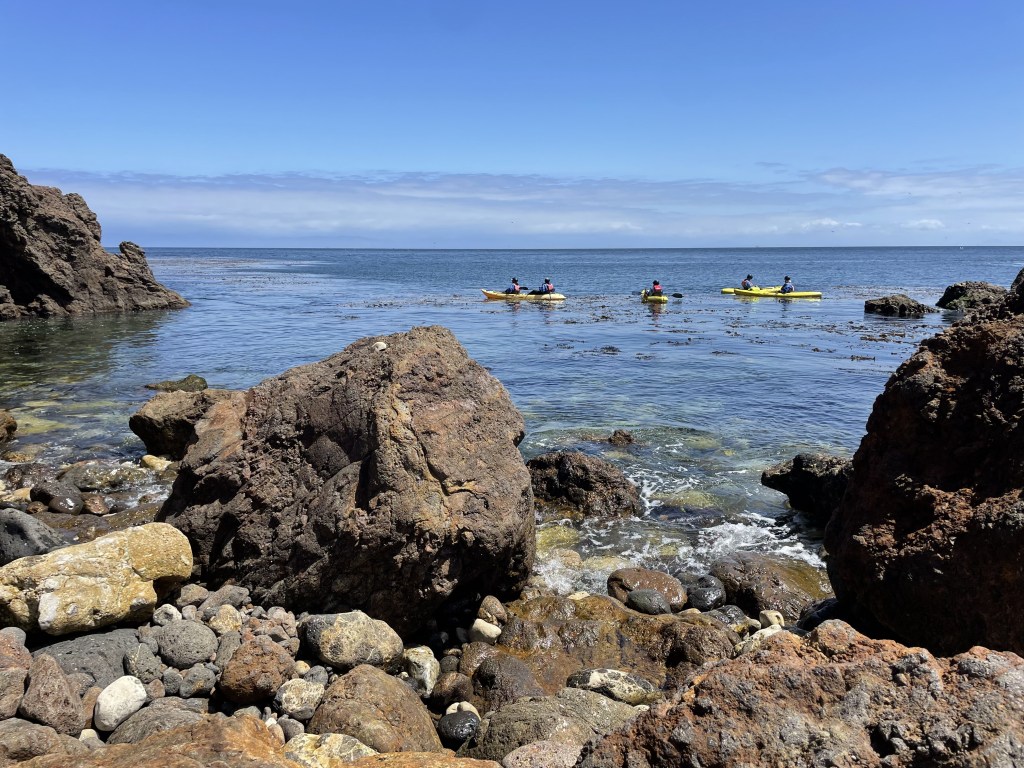
The Santa Barbara Adventure Company runs both guided snorkeling and kayaking tours out of the Scorpion area. Snorkeling equipment can be rented on its own from the office on the island with no tour purchase, but kayaks cannot and are available for the guided tours only. Kayaking is an extremely popular draw to these islands, and tours of varying duration and skill level are available. Sea caves are scattered all along the coastline, making this a very unique spot for exploring. Due to the timing of the boats with Island Packers, longer tours are only possible if you are camping on the island, but there is absolutely enough time for some of the shorter tours if you are just planning a same-day departure/return trip.
*Prisoners Harbor (Central Santa Cruz Island)*
There are no park services in the Prisoners Harbor area, so you really are on your own out here for just about everything. All you have waiting for you at the pier are pit toilets, wide open trails, and a beautiful beach. The only nearby campground (Del Norte) must be backpacked to and is a total distance of 3.5 miles from the harbor, but can also be accessed by Scorpion from the east (about 12 miles). You could potentially turn this into a cross-island backpacking trip and camp one night here (Del Norte) and one at Scorpion.
Trail options for day-hiking in the Prisoners Harbor area are longer in distance than those in the Scorpion area. Notable attractions include Chinese Harbor Overlook, China Pines, and the Navy Road/Del Norte Loop which can also be used to reach Montañon Ridge and Peak. Pelican Bay Trail is a guided hike only (inquire through Island Packer boat staff) and is shorter than the other trails I just mentioned.
You will have to bring your own kayak if you are interested in exploring the sea side of this area. There are a bunch of caves and arches around this region you are able to paddle through and around. You are responsible for your own safety.
The famous Painted Cave sits on the northwestern side of Santa Cruz Island and is one of the largest known sea caves in the world. It gets its name from the multicolored walls that enclose the space which is large enough for a motorized boat to maneuver through. The cave can be visited with a private boat or the Island Packers boating company (offered as an excursion on certain trips, limited availability). No guided kayak tours go out this far (it’s miles away from the centrally located Prisoners Harbor, and Scorpions Cove is on the opposite side of the island), and unless you’re a long-distance kayaker it’s not realistic to attempt to visit by kayak. You are not allowed to exit your boat or kayak at any time. Sea lions, seals, and birds will likely be resting on the rocks.
For the most part, the entire western part of the island is closed to the public (with the exception of guided tours along the Pelican Bay Trail) and is part of a Nature Conservancy rather than the NPS. This encompasses about 3/4 of the entirety of Santa Cruz Island.
What to do around Santa Rosa Island
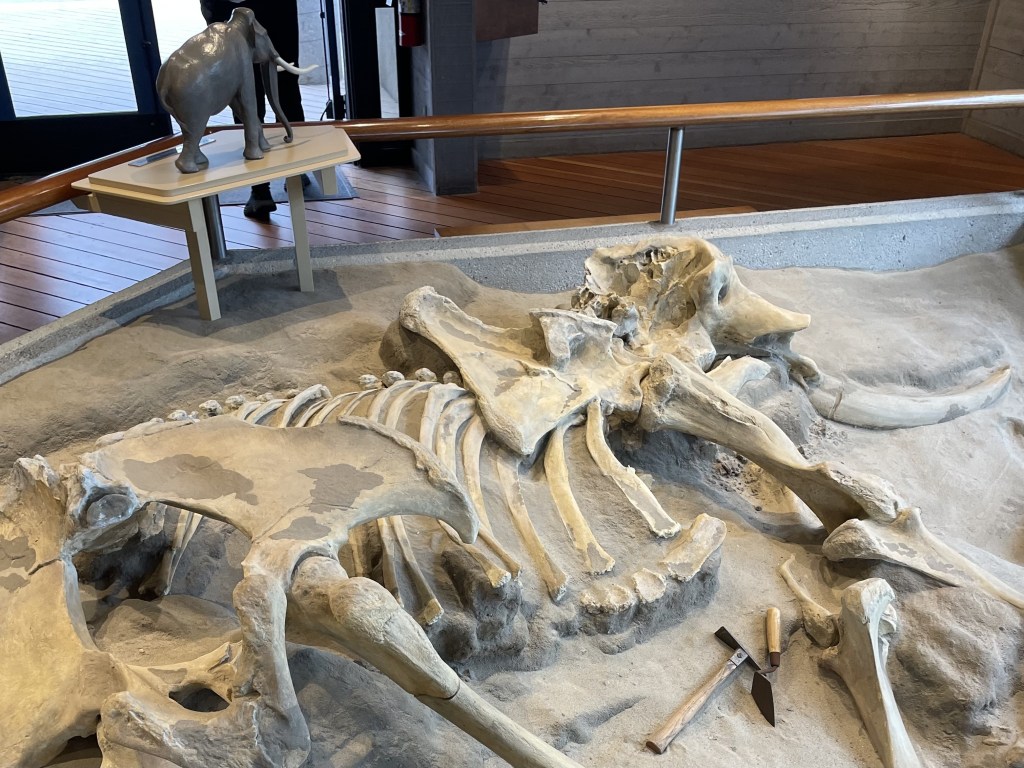
Although I have not been here yet, I was told by a park ranger on SCI that this place was best known for its beautiful wildflowers, pristine white sand beaches, and canyon views, as well as having some of the most diverse flora and fauna of all the islands. This island specifically is where remains of a Pygmy Mammoth were found, a uniquely small species of mammoth who lived here until their extinction.
Visiting Santa Rosa Island takes a lot more planning than Santa Cruz Island because many areas experience seasonal closures due to animal breeding patterns. Always check to make sure you are allowed to explore specific areas on the island before you start making reservations and planning your trip. There are no services here, just a historic ranch you can check out. There is no visitor center on this island.
Right as you arrive in Becher’s Bay, you are greeted with sandy beaches, beautiful views, and even some tide pools to check out. Albeit a (very) long hike away from the bay, East Point also offers some more tide pool viewing spots.
The campground at Water Canyon is the only major one on the island. It is less than a mile from a beach and about 1.5 mile from the pier. Visits to this island are primarily multi-day due to the boat schedule.
Hiking trails and back roads are everywhere. Check out this map of Santa Rosa Island from the NPS which shows you the options available to hikers. Because I haven’t yet visited, I can’t really offer any additional information at this time, but some things I want to check out when I visit include the natural bridge at Carrington Point, Lobo Canyon, sand dune fields, and fields of wildflowers.
Kayaking here requires you to bring your own kayak. This is recommended for experienced sea-kayakers only, especially because it is even further off the mainland than Santa Cruz Island!
Backpacking and kayaking are great ways to experience more of Santa Rosa Island due to how remote it is. The dispersed beach camping areas (seasonal availability only) may be difficult to plan around, but they offer unmatched solitude. Imagine having your own private beach for a day!
What to do around Anacapa Island
Anacapa Island is known for its outlooks, natural bridges, sea caves and cliffs. It may be small but it packs a punch. Technically there are three islets that may or may not appear to be attached depending on the rising or receding tides, and only the eastern portion is accessible to the public. The trail that loops around this islet is 2.5 miles and takes about an hour to walk around. Inspiration Point provides a great view of all the islets, and Arch Rock on the far east side is one of the park’s most iconic features. Aside from those, there is a small visitor center that covers some of the island’s unique history and geology, and one small campground. This island makes for a perfect day-trip.
Per my conversations with staff and my other research, this island belongs to the birds. They swarm this place like a beehive and poop everywhere, but the views and outlooks are still uniquely beautiful. It currently remains on my bucket list for another time.
The remaining islets of Anacapa Island (central and west) can only be reached by private boat.
What to do around San Miguel + Santa Barbara Islands
Nothing, because you can’t currently go there unless you have a private boat. Congrats if this is you! 👏
Most of San Miguel Island is closed due to trail damages and will not reopen until emergency repairs are made, and at this time it doesn’t seem like there is a timeline for that. Island Packers is not currently running trips there. If you have a private boat, it seems that the white sandy beaches of Cuyler Harbor are still accessible if you are craving solitude… (and there are some more tide pools there to check out.) One day I hope to also check out the Caliche Forest.
Santa Barbara Island is not accessible due to damages to the dock, so Island Packers is not making trips there at this time. Aside from that, this island experiences regular seasonal closures to protect breeding animal populations.
*I will update these sections ^ after I visit the other islands or hear about any official park updates regarding non-seasonal closures.*
Other stuff you should know before you go
Don’t even try to bring your pet. They aren’t allowed anywhere near the islands or on the boat, although service dogs are permitted in some areas.
Kayak at your own risk. Ocean kayaking is a completely different animal than doing so in a still body of water (like a lake). You are really in the unpredictable hands of nature out here, as the fierce winds can change in direction or strength throughout the day and waves may knock you over if you aren’t paying attention. If you are not participating in a guided tour, it is recommended that you only take on this challenge if you have previous sea kayaking experience. Keep in mind that it is illegal to exit your kayak while inside any sea cave.
You can pretty much go swimming anywhere you can access the water from a beach, but it will probably be too cold to do so unless you’re there during the summertime.
Many of the surrounding waters can be explored if you have diving equipment and experience, but you will have to bring your own scuba gear. This area is home to some of the most impressive kelp forests along the California shoreline.
No medical services are present on the islands, so be careful and cautious. If you get seriously injured, park rangers are available to help orchestrate a rescue but it will be a while before you receive medical attention!!
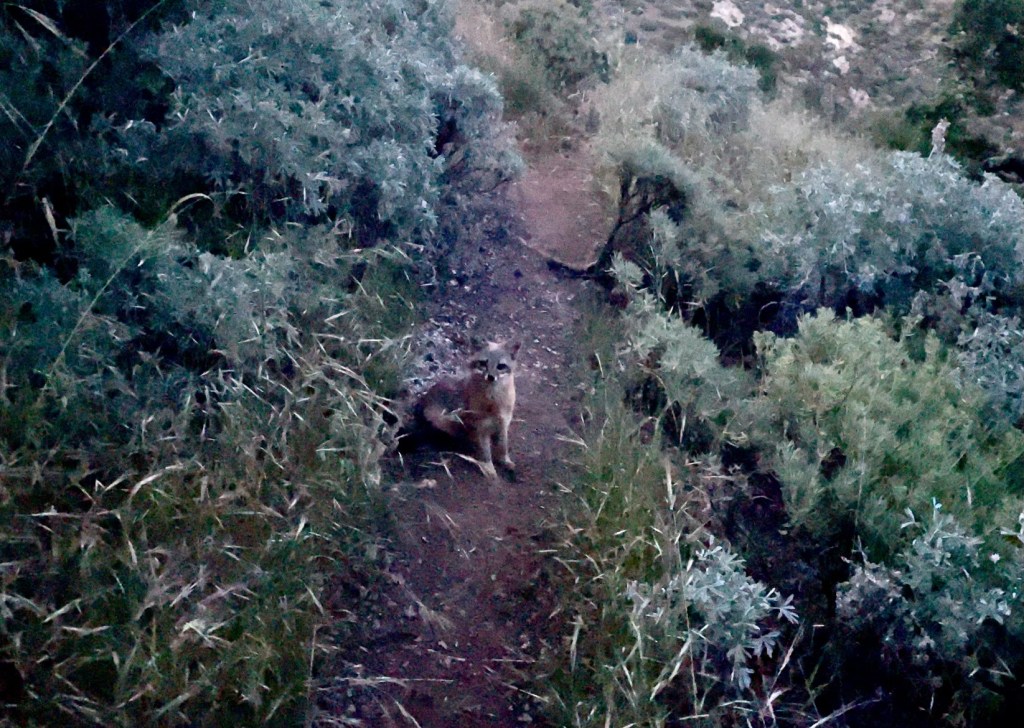
Beware of island foxes and ravens. Foxes are cute but they will eat all your food if you walk away from it. Ravens are so smart they literally know how to unzip zippers (this literally happened to me on the first day when I turned around for less than a minute on the beach!). Keep all your belongings on you at all times, or store them in the animal-proof lock boxes located at the island’s campsites and near the harbors.
There are no trash cans on the islands. While the rangers and boat staff will tell you this upon your arrival, people still don’t listen and occasionally choose to leave their garbage behind on the grounds of these beautiful lands. The disrespect is depressing. Pack out what you pack in. You must carry your trash with you back to the mainland. Littering is not an option!!! #leavenotrace
Visiting any of these islands for multi-day trips requires a lot of planning to make sure you have everything you need, but also that you aren’t bringing more stuff than you can carry. Most campgrounds are a minimum of a 10-15 minute walk away from where the boats drop you. Some are miles away and must be backpacked to. It’s worth the effort though!
To go fishing in the park, you will need a California fishing license, and you can’t go fishing everywhere. Much of the park area is protected from that. Check the NPS website to see where you are allowed to throw out a line and any other steps that you may need to take prior to your trip. To my understanding you will probably need a private boat to reach most of the spots where fishing is allowed.
Surfing isn’t super common, but some people do bring their boards with them. Again, Island Packers will charge an additional fee to transport your equipment. Per the NPS website, north facing shores are the best spots for this. Unless you are getting to the islands by private boat, you may have to hike to those spots carrying your board.
You cannot ride a bicycle. No bikes allowed. Period.
My thoughts
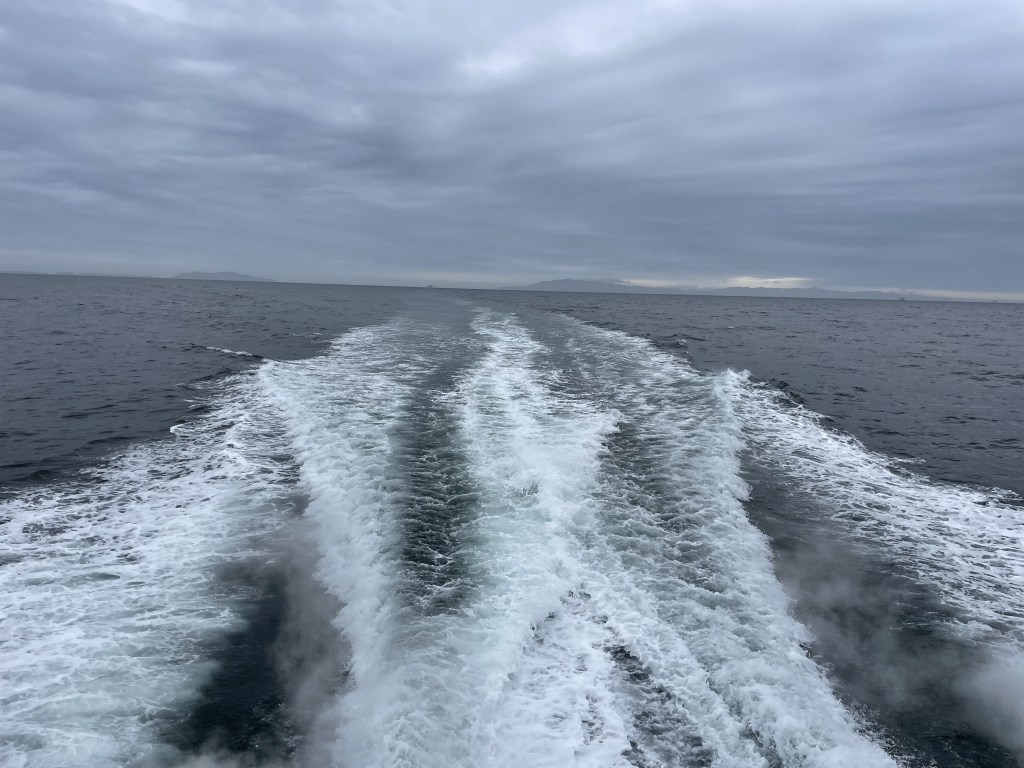
This national park really is the embodiment of “choose your own adventure,” with a variety of activities both above and below sea level. During my 3-day visit to Santa Cruz Island, I had an absolute blast. The hiking trails are all very well maintained and the green hills during the month of April were absolutely stunning. Some memorable moments for me were dolphin watching on the boat ride to/from the island, witnessing the sunset from Potato Harbor Overlook and enjoying the dark sand beach and solitude at Smuggler’s Cove. There’s a lot to see and I would love to return to explore some more. Lucky for me, this is the closest national park to Los Angeles so I could easily go again tomorrow.
However, a few things that bothered me are 1.) that no food is available for purchase on the islands (it’s not really a big deal though), 2.) that people litter, maybe because there are no trash cans on the island (🤔), and 3.) how expensive the kayak tours are. It would be nice to see kayak rentals on the island as well instead of just guided tours so visitors can enjoy the sea side of things without decimating their wallet.
Have you been to Channel Islands National Park yet? Did you have a favorite island? What would you consider to be a must-see? Let me know in the comments below!
Happy traveling! 😊
(And always remember to follow #leavenotrace principles!)
💙




 Laura the explora: the blog
Leave a comment