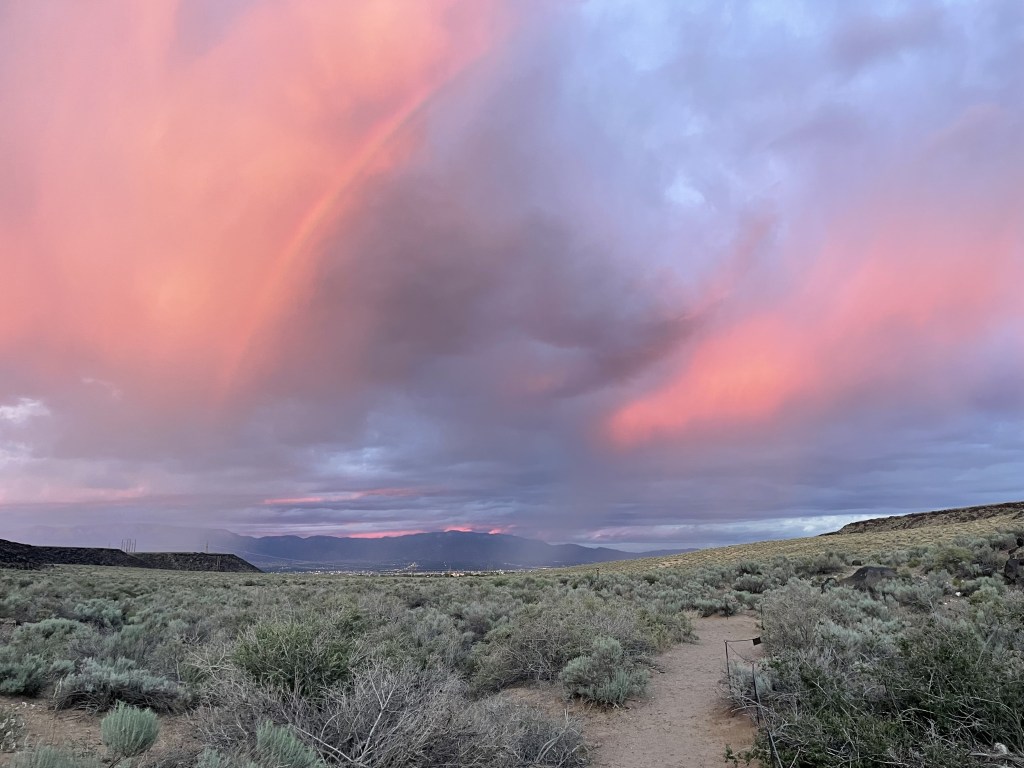
These two major metropolitan cities are just under an hour apart. Whether you’re diving deep into the history of the people who have lived here at one of the many museums, or instead into a margarita in a restaurant or by a pool, you can expect there to be something that suits you. And if margs aren’t your cup of tea, enjoy an ice cold beer in the presence of live music, a steaming cup of hot chocolate at the top of a mountain surrounded by snow, or your favorite latte accompanied by a joint ripe with a cherry. Escape any kind of weather and seek refuge or knowledge at one of the many art or history museums where you have the opportunity to learn more about the indigenous roots planted here thousands of years ago. If being inside isn’t your thing, there are so many outdoor adventures to choose from, you’ll have a hard time deciding on just one. Your opportunities are vast.
This area of New Mexico is a special kind of time capsule. The city of Santa Fe was established in the early 1600s, although the native people had already been thriving on this land for many centuries before this city was designated as such. Santa Fe is the oldest state capital in the country and was originally established by Spanish colonizers atop the ruins of a pueblo village during a very bloody attempt to convert them, which then became part of Mexico in the kingdom of New Mexico, and finally handed off to the United States along with the other southwestern states in the treaty of Guadalupe Hidalgo in 1848.
Both Santa Fe and Albuquerque are unique because they reflect the native peoples, the Spanish, the old western and now modern western influence. Balance the old with the new as you find ways to learn about the past, enjoy your current adventure, and dream about the next one. Albuquerque was officially established in the early 1700s and although it too was initially built by the Spanish, it has a much less bloody history as it was intended to be more of an outpost city at the time. It grew exponentially faster than Santa Fe.
Anything and everything you could ever want is available somewhere around either of these two cities. While you could absolutely just fly in for a few days, this is a great destination for a longer road trip which will provide you much greater opportunity if you are passing through the area. Albuquerque is pretty central in the state geographically, making it a convenient location for connecting to other tourist destinations in the southern half of New Mexico.

When to go and how long
While every season has something unique to offer, it seems that many would argue that early fall is the best time to visit the area. Spring and fall are usually great times of the year to visit both places weather-wise because the temps are more mild. Summers and winters are also good options but they yield limited but different opportunities.
Each season varies drastically around here, and the two cities exist at different elevations, and therefore have slightly different climates.
Summers are warm and occasionally wet, and temperatures may climb all the way up to 100 F (about 38 C) in Albuquerque. Santa Fe is slightly cooler and averages don’t often exceed 90 F (about 32 C). Afternoon thunderstorms are a possibility in both areas.
Winters in Albuquerque do get cold but snow is unlikely (average winter temps are 50/25 F, or 10/-4 C). Santa Fe resides 1000 ft higher in elevation and sees average temperatures drop slightly lower (40/15 F, or about 4.5/-10 C), and even gets a little bit of snow throughout the winter. The surrounding mountain ranges receive many feet of annual snowfall, and there are several ski resorts nearby (more on this later).
Spring can unpredictable, but you can expect temperatures to increase from winter lows as summer approaches. This is a good time for some outdoor activities because there are more enjoyable temperatures in Albuquerque. Spring is also more breezy than the rest of the year.
Fall also seems to be more mild in temperature, although significantly cooler in Santa Fe where snow is totally possible by the end of the season. Some argue the fall is the best time to visit this general region of New Mexico. There are plenty of places for viewing fall foliage all over, around, and outside of the cities.
A couple days is plenty to do a few activities in each city area; however, this makes a great base camp for exploring a number of other attractions in the surrounding part of the state. Depending on your activity level, you could easily spend 4-7 days in this part of New Mexico and not run out of things to do.
Where to stay
Both cities have a variety of hotels in different price ranges and at different quality levels. There are a high concentration of lodging options surrounding the downtown areas and airports. Just north of Santa Fe city there are some casinos which also offer lodging.
With so many activity options, where you stay really depends what you are planning for and where those things are located within the area. If you have a larger budget and you’d like to be somewhere with walking options and stuff to do, consider staying in either of the cities’ downtown areas, or somewhere along Route 66 in Albuquerque.
There are options for camping all over the place. Amenities and prices vary widely.
How to get to and around the area
Airports: Albuquerque International Sunport (ABQ) and Santa Fe Regional Airport (SAF)
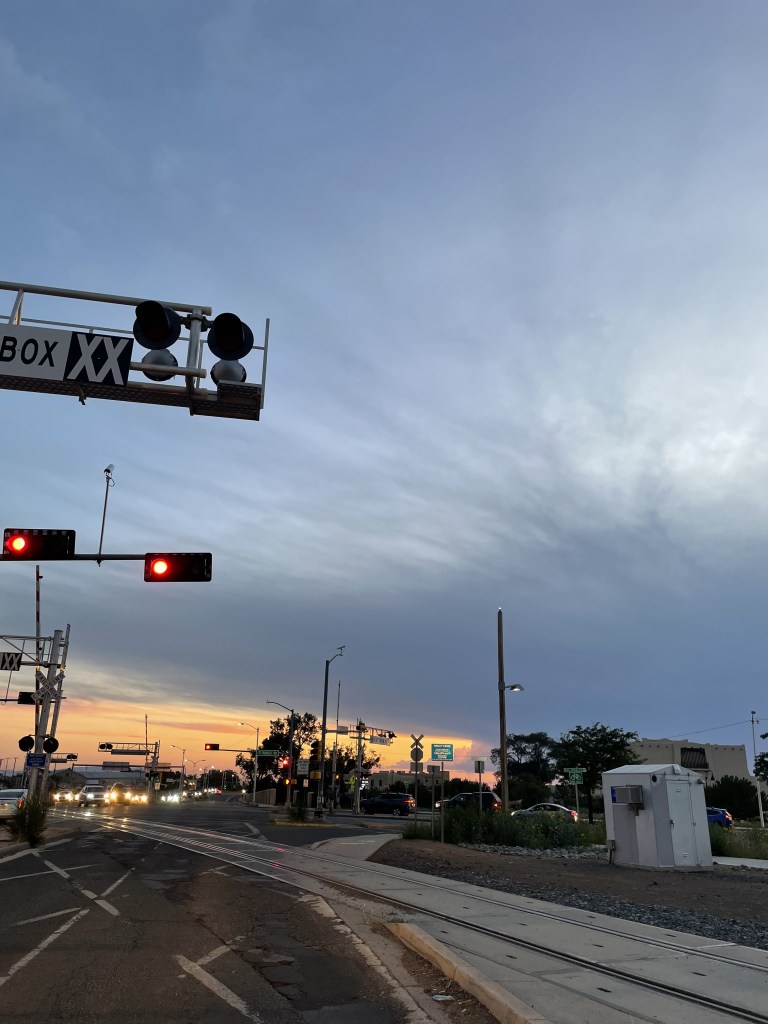
There is a train called the Rail Runner Express that runs between Albuquerque and Santa Fe. The journey takes 1.5 hours one-way.
Public transportation busses will get around most of the city area, as well as between the two cities and some surrounding areas.
Ride shares and taxis are available in both major city areas.
Cars for hire are available at either airport and if you are planning to do a lot of activities outside the main city area, I would consider this to be your best option.
The Grand Enchantment Trail is a long distance backcountry hiking trail that connects Phoenix, Arizona to Albuquerque, New Mexico, and runs 770 miles between the two cities on a beautiful scenic route through the American Southwest. This entire trail is also said to be mountain-biker friendly.
Biking around the cities is an option if you’re into that, and there are some trails both around the city and in the mountains.
Food and money
Tons of options.
Average pricing, nothing out of the ordinary for a major city. You have the flexibility to make this destination a more luxurious vacation or into an inexpensive escape from your reality. Lodging may be more expensive in either downtown region and along some parts of Route 66 through Albuquerque.
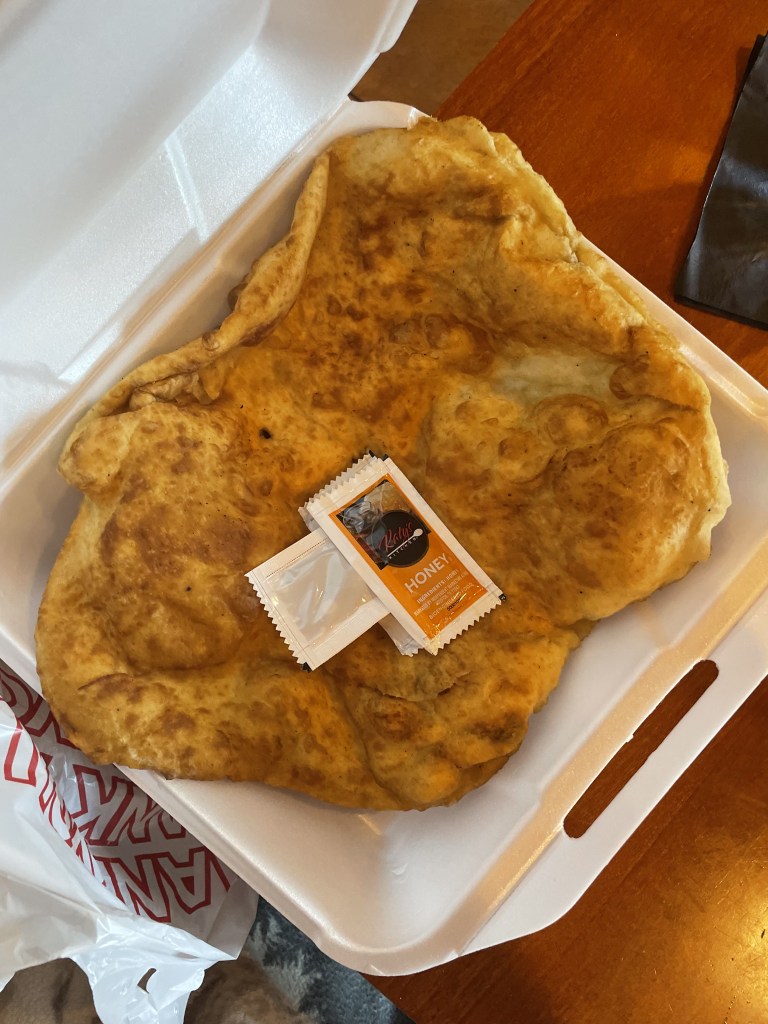
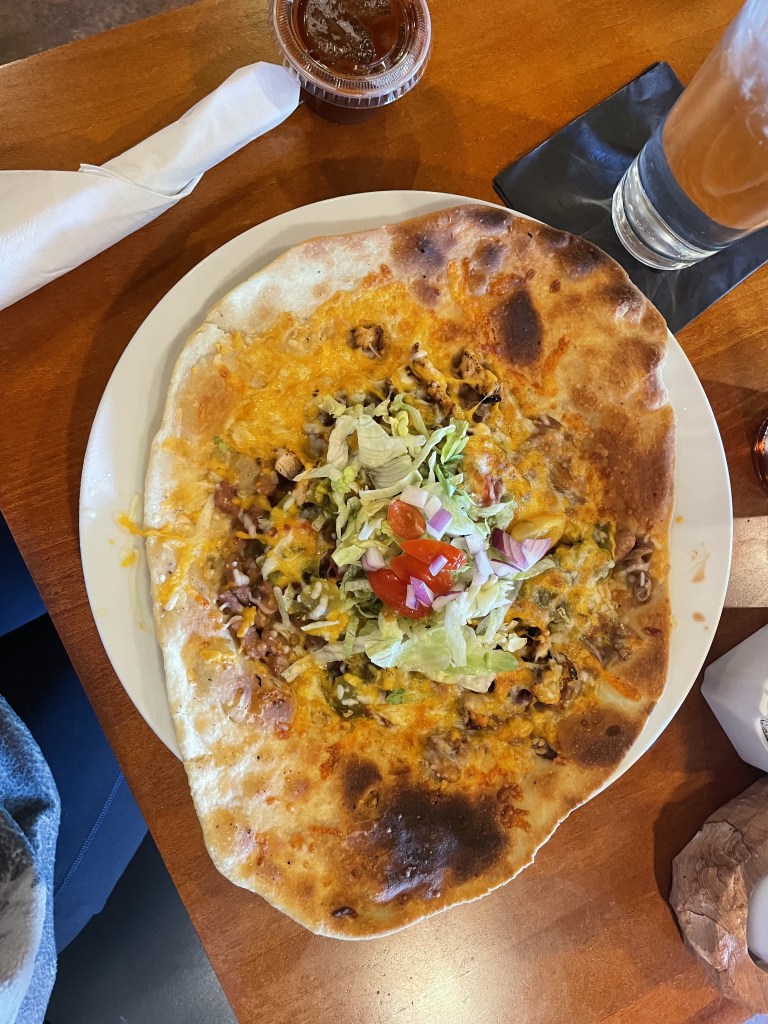
Lots of Mexican food and restaurants. Native American dishes are also served in some of them. Try a Navajo Taco (also sometimes called an Indian Taco) as well as fry bread (usually a dessert, often served with honey).
Santa Fe is also famous for its margaritas (more on that later).
Enjoy a burger with fries and a milkshake at a small local diner somewhere along historic Route 66 for a classic experience and a blast from the past. (The official highway route is now called Central Avenue as it passes through Albuquerque.)

What to do in Albuquerque
This city (est. 2024 population of 560k) has everything you could ever want to do, but attractions are pretty far apart from each other. The Historic Route 66, now called Central Avenue, runs right through the middle of the city, and there are tons of really cool historic buildings and developments along this road. Some notable things you will pass include the Nob Hill Historic District, the University of New Mexico, Downtown Albuquerque, the KiMo Theater, and Historic Old Town. Follow this link to learn more about Route 66 on the official Visit Albuquerque website.
Some major festivals that take place annually in Albuquerque include the largest pow wow in North America called the “Gathering of Nations Pow Wow” (April), the Great New Mexico Beer Festival (June), New Mexico State Fair (September), and the largest annual ballooning event in the world– the “Albuquerque International Balloon Fiesta” (October), which is extremely famous.
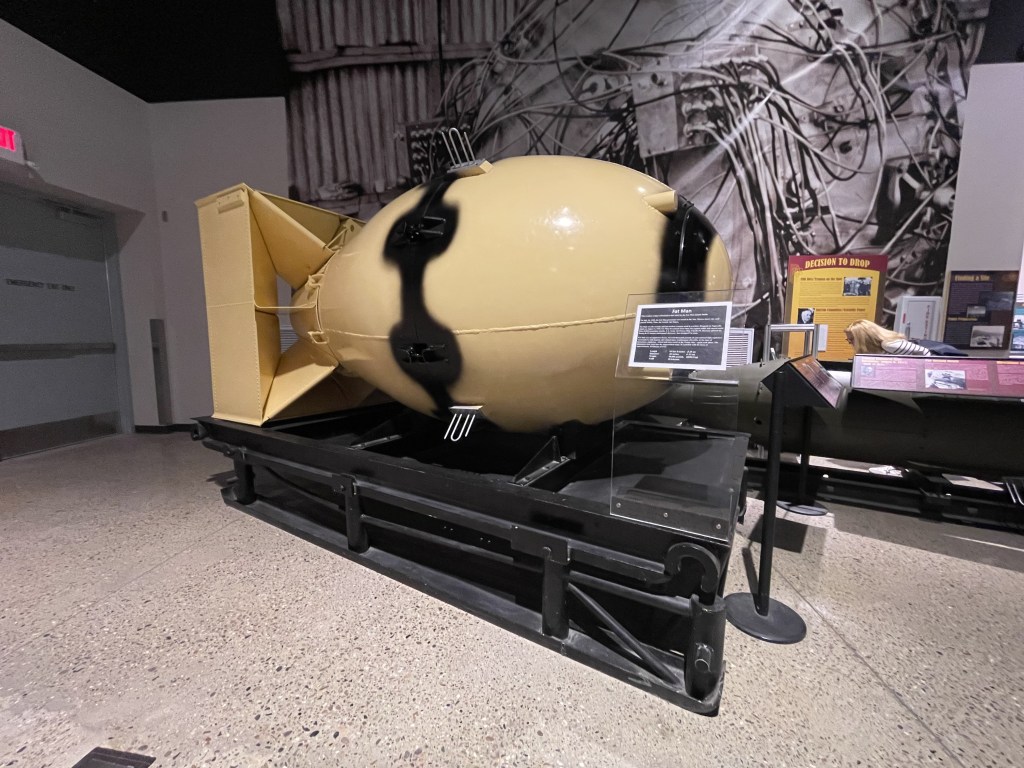
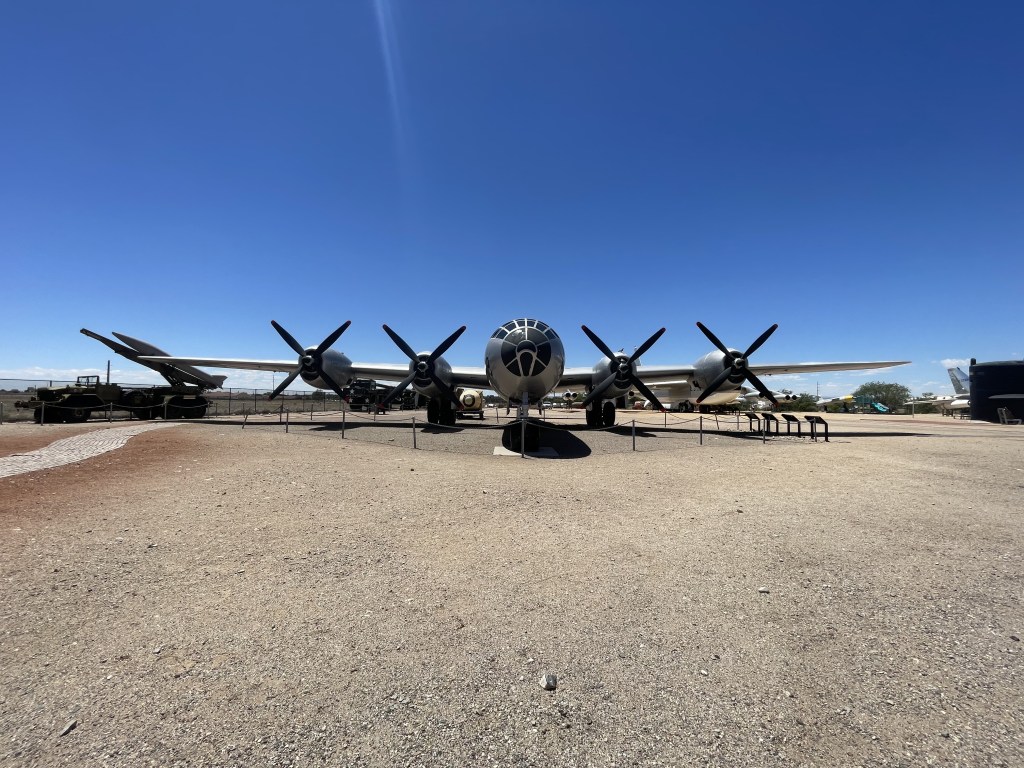
There are a few big museums in the city including (but not limited to) the National Museum of Nuclear Science and History (an official Smithsonian Affiliate, open daily 9a-5p), the New Mexico Museum of Natural History and Science (9a-5p, closed Tuesdays), and the National Hispanic Cultural Center (hours vary by day, closed Mondays).
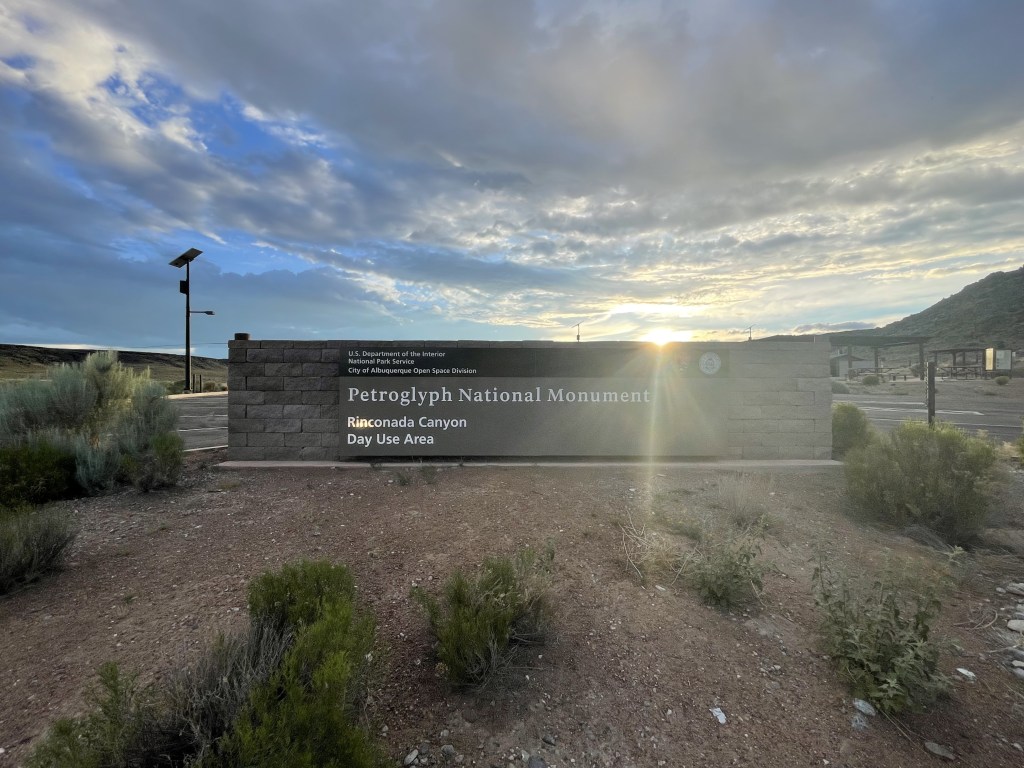
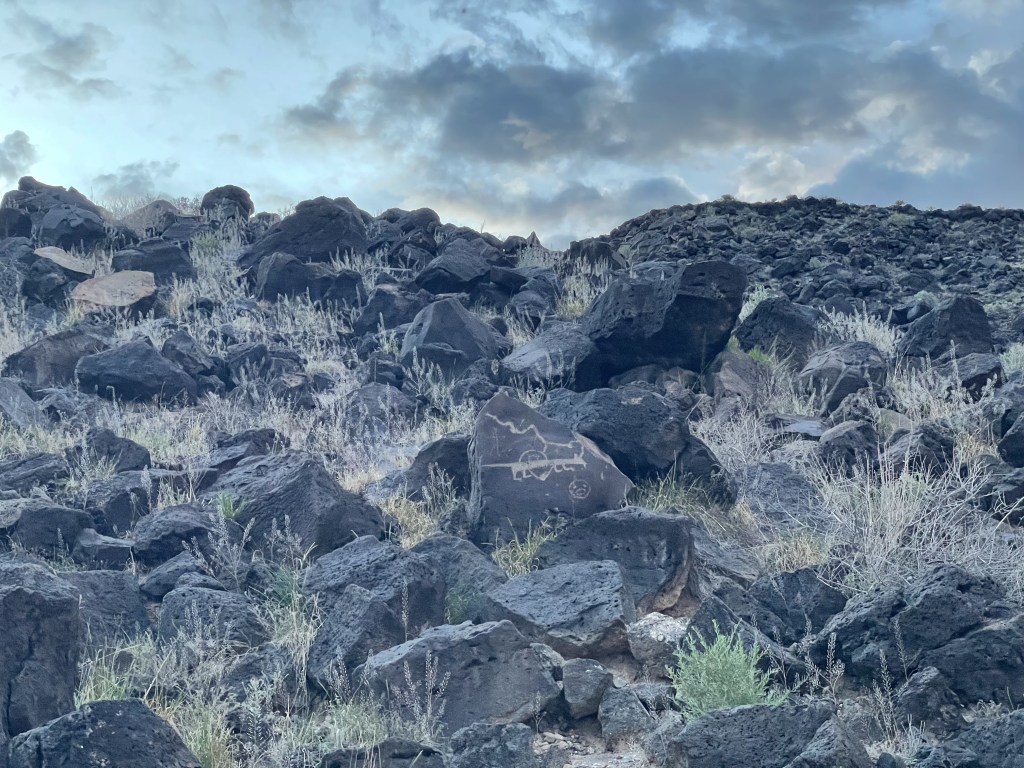
Petroglyph National Monument contains thousands of rock markings from former residents and people who passed through this land long ago. There are several hiking trails here of varying distance and difficulty that lead to fields of petroglyphs and inactive volcano remains.
The city is also home to an aquarium, the Rio Grande Botanic Garden, and the Rio Grande Zoo, all part of the ABQ BioPark (daily 9a-5p).
The Rio Grande Nature Center State Park is day-use only and offers some unique opportunities for viewing wildlife in their natural wetlands habitat as well as a small educational building and visitor center. Birdwatching, biking and picnics are popular activities here.
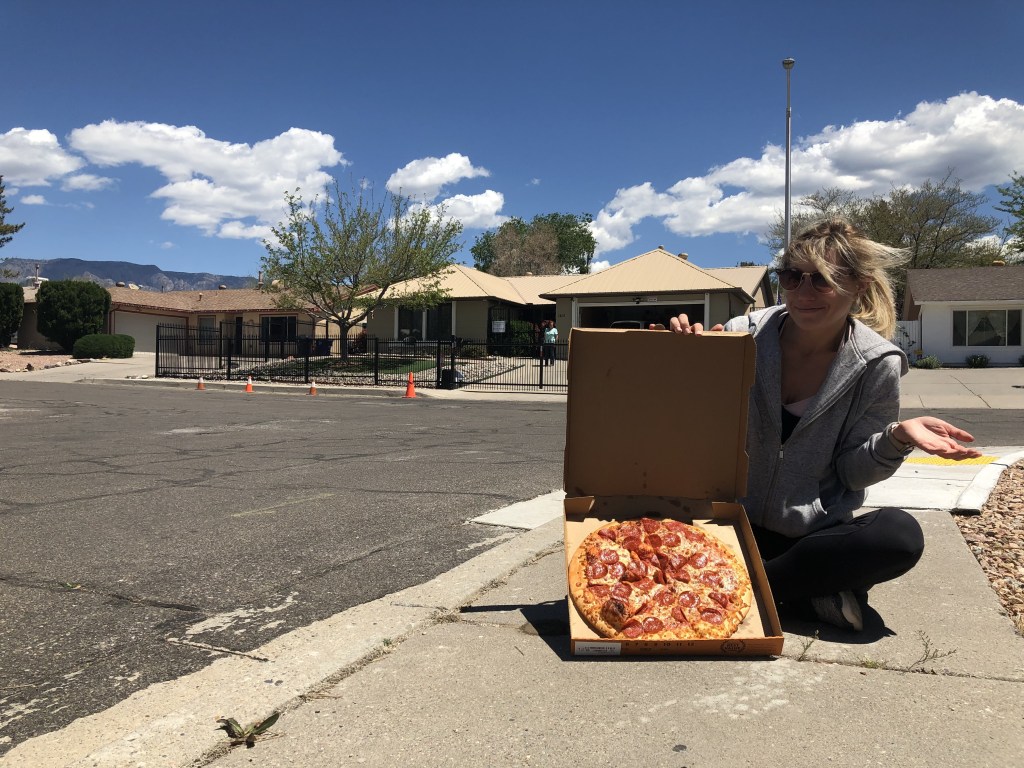
If you watched Breaking Bad, this city was technically the plot location for the majority of the series and there are several tourist attractions related to the show, as well as a tour company that offers guided tours. If you are planning to visit the original Walter White House, please be respectful of the current owners and give them their privacy. (I recommend taking your photos from the opposite side of the street if you must go.) Honestly, these people should put a gratuity tip jar out in their yard because I feel like people would totally drop money in there all the time (I would). After the show started airing, the residents were having problems with tourists taking photos and throwing pizza on their roof (recreating a scene in the movie), and as a result they constructed a fence around the property. Pizza is better in your stomach rather than on the roof!

What to do outside Albuquerque
Just nextdoor to the city are the Sandia Mountains, and the Sandia Peak Ski Area is a quick getaway from the city. This is definitely not the largest of snow parks; there are only 34 runs and 5 lifts, but it is also less expensive than some of the larger options. Rentals and lessons are available.
The Sandia Peak Aerial Tramway offers a beautiful opportunity to reach the top of the mountain without any strenuous activity. Stare out the glass windows of your weather protected box car as you float thousands of feet into the sky, but keep in mind it will be much colder once you get up there! Bring an extra layer. (Operating hours vary by day and season, so do double check on their website to plan your visit in advance.)
Hiking in the Sandia Mountains is a very popular way to explore them. There are tons of trailhead options that climb up from the outskirts of the city.
Albuquerque is one end-point of the Grand Enchantment Trail, a 770 mile thru-hiking trail that is considered to be more of a “wilderness route” through the backcountry that requires advanced navigation skills. It offers some incredible scenic landscapes that few ever get to see as it weaves its way towards Phoenix, Arizona to the west.
El Malpais National Monument reveals evidence of some crazy, Hawaiian island-style volcanic eruptions in the form of hardened lava flows, as well as some beautiful red rocks typically associated with Arizona and Utah. At only a 1+ hour drive to the west of Albuquerque, this place provides a beautifully unique option for geology lovers, nature immersion, and camping.
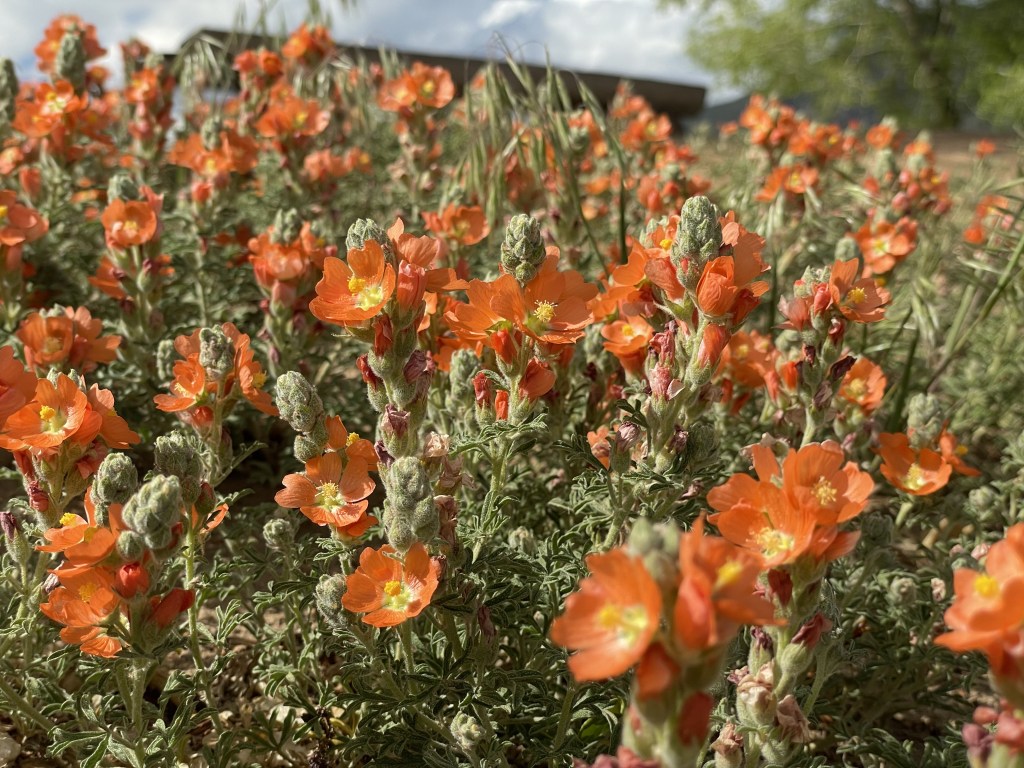
What to do in Santa Fe
Much like Albuquerque, Santa Fe (est. population of 50k) is a smaller city but holds just as many opportunities, and they are closer together. As the capital of New Mexico, this destination is highly frequented, well-developed, and packed with stories. Check out the unique New Mexico State Capitol Building and the Palace of the Governors, and learn about this beautiful state at the New Mexico History Museum.
Spend a few hours at the Santa Fe Plaza shopping around at the small vendors and try some local street food. You can also check out the Railyard Arts District for more opportunities like this. On Saturdays, the Santa Fe Farmers Market takes place around this region of the city.
Thirsty travelers can embark on the famous Santa Fe Margarita Trail, which is not a hike! It consists of 50+ restaurants with unique margaritas, and you can download and use your margarita passport to save $1 on each beverage. It is not recommended that you attempt this in one day, but rather something that can be done throughout a longer visit. Santa Fe also has a few breweries, which also make great options for those with different preferences.
Take a gamble on a casino in the area, Las Vegas isn’t the only place in the country where you can participate in this activity! There are a handful to choose from just north of the main city, and a couple of them are accompanied by some pretty fancy looking resorts.
Attend a musical performance at the Santa Fe Opera House, or come through the city during the summertime to enjoy the Santa Fe Summer Scene, which consists of live free concerts that take place in various popular areas like Santa Fe Plaza or the Railyard Park. Performance Santa Fe may also have various live performances going on throughout the year. Check the calendars for each individual entity in advance to see if anything will be happening during your visit. For some more casual listening opportunities, follow this link to the official Santa Fe webpage on bars and other venues that frequently have live music performances.
Film lovers can also appreciate the Santa Fe International Film Festival which is held annually during the month of October.
Check out some of the old churches like the Cathedral Basilica of St. Francis of Assisi, the Loretto Chapel, or the San Miguel Chapel (considered to be the oldest church in the country). There is a heavy Spanish influence in this area as it has been in the hands of a few different empires over the years. The Cross of the Martyrs Park was created to honor the settlers lost in the Pueblo Revolt of 1680, and is also a popular spot for watching a sunset.
Learn about the indigenous people local to this area and from other parts of the world at the Museum of Indian Arts and Culture or the Museum of International Folk Art. While you’re there, also check out the rotating exhibits at the Wheelwright Museum of the American Indian or Museum of Spanish Colonial Art. This area is very appropriately called “Museum Hill,” and you can also get a different “passport” stamp for all the museums.
This city is a really great place to visit if you enjoy art as there are a handful of museums and exhibits around the city such as the Georgia O’Keefe Museum or at Canyon Road. If you’re looking for something a little more quirky, you might enjoy Meow Wolf Santa Fe. If you want to make some art of your own, consider enrolling in a pottery or glass-blowing class.
Find peace at the Santa Fe Botanical Garden, Allan Houser Sculpture Gardens and Gallery, or Nedra Matteucci Galleries. These spots exist at the intersection where art and nature meet. Nature enthusiasts can also make a quick stop at the Santa Fe Reptile and Bug Museum to see a variety of species taxidermy.
Bicycle riders and joggers can both appreciate the Nine Mile Road “RailTrail” on the southwest side of town.
Hiking trails are everywhere. The east side of the city that borders the mountains has trailheads every few miles.
Some other places to check out within one hour of Santa Fe
In the winter, Ski Santa Fe is a very popular destination for skiers and snowboarders. There are 89 trails and 7 lifts. Rentals and private lessons are available. (about a 30-minute drive northeast)
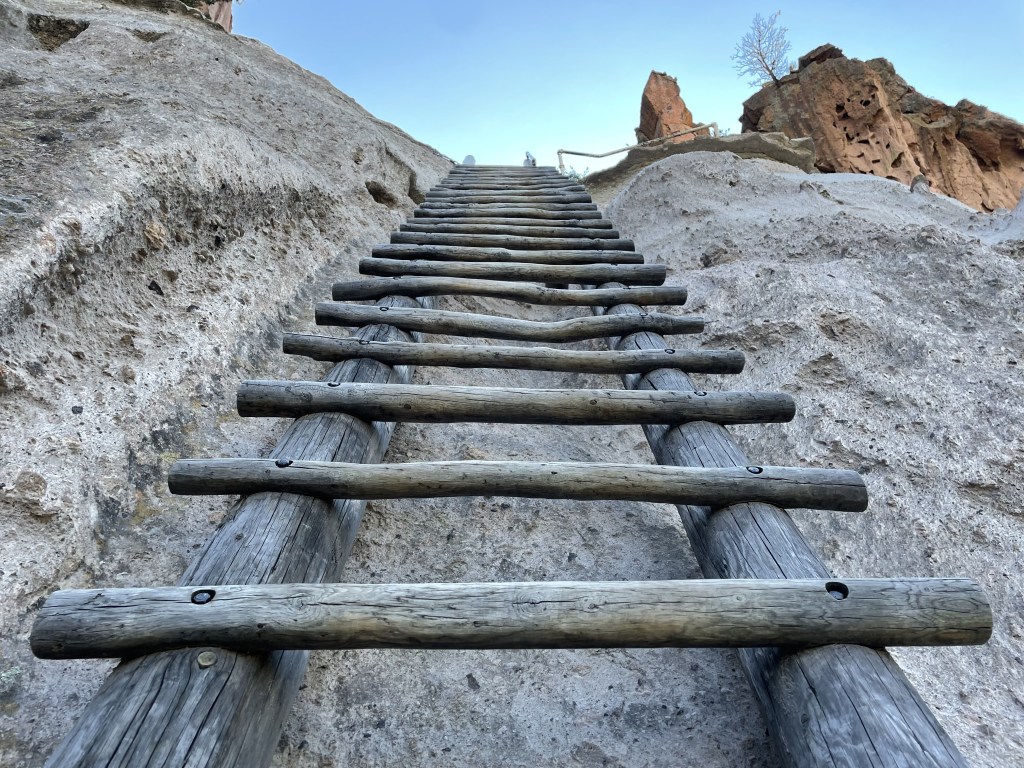
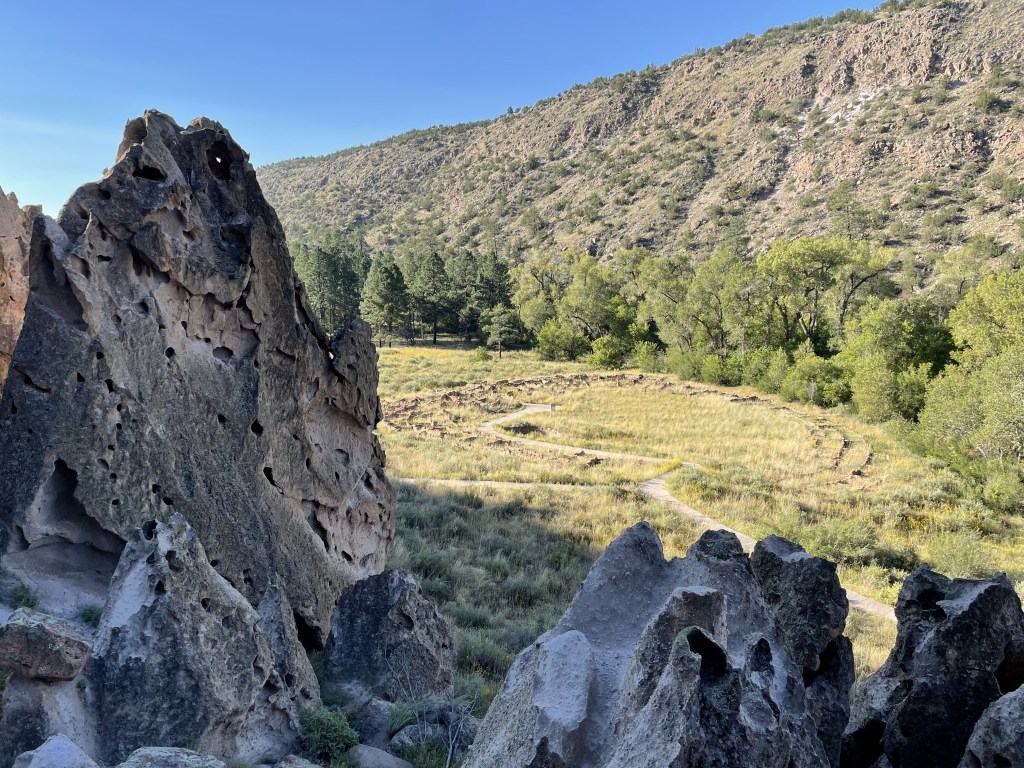
Bandelier National Monument offers some formerly occupied cliff dwellings as incredible interactive exhibits. Visitors can wander around the area on their own and even climb into some of the dwellings (where permitted). The trails are not paved and guests will need to climb up ladders/stairs to reach them. (1-hour drive northwest)
The Puye Cliff Dwellings are a similar option, but they also offer tours that don’t require hiking (guests can get transport by van), and are more inclusive for those with limited mobility. Both van- and hiking-tours are guided and most of the trails are maintained, although there are still uneven parts and ladders to get up to the dwellings. (45-minute drive northwest)
Kasha-Katuwe Tent Rocks National Monument is an epic display of Mother Nature’s sculpting abilities. (But unfortunately it is currently temporarily closed to the public… although it is expected to reopen at some point…) These unique hoodoos are pointy on top (like a tent) and are absolutely beautiful on a clear day! Because of erosion, this volcanic creation is changing rapidly as the towers slowly disintegrate with each storm that passes through. (45 minutes southwest from Santa Fe/less than 1-hour north of Albuquerque)


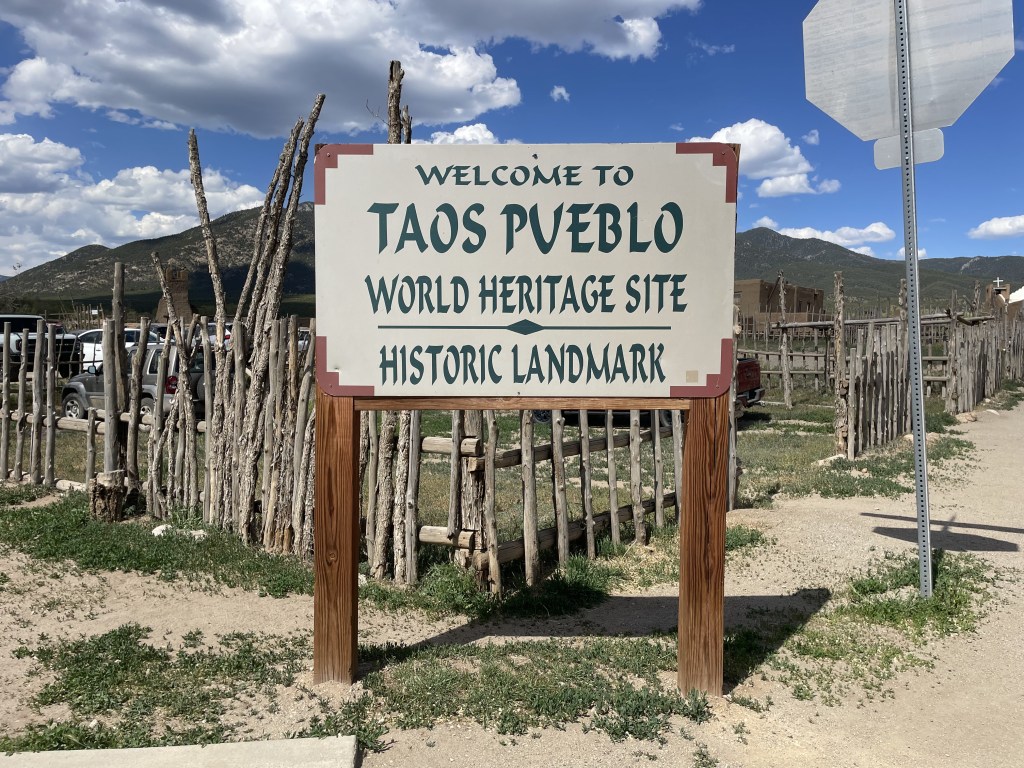
Major nearby landmark: Taos (city) and Taos Pueblo, UNESCO World Heritage Site
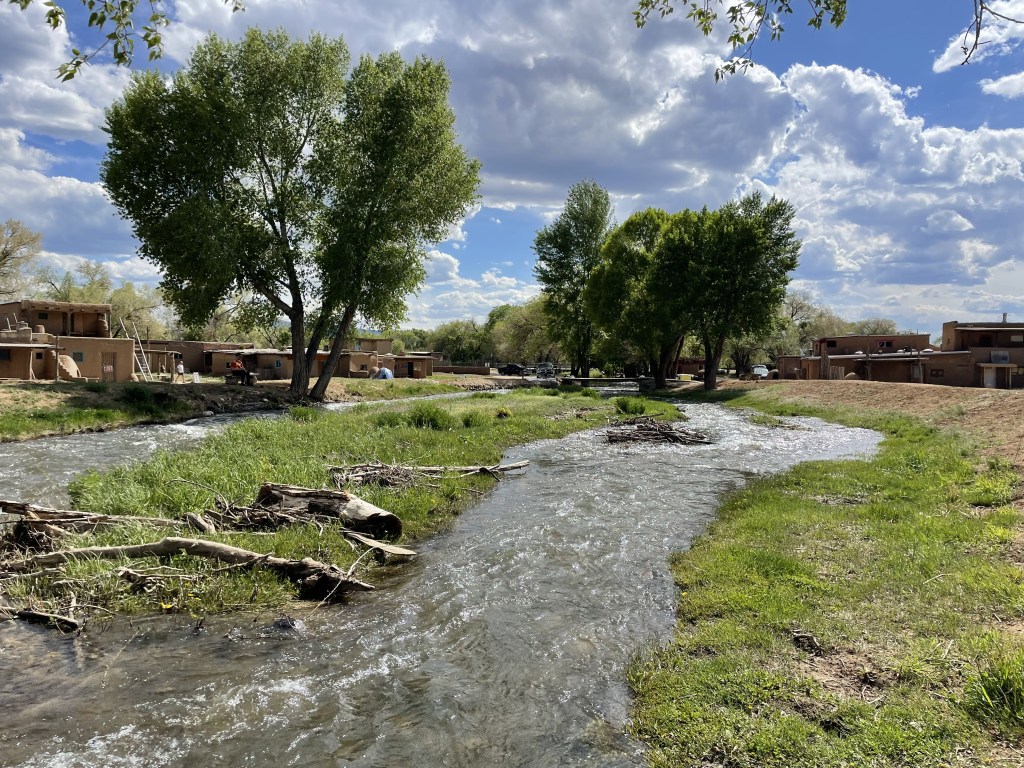
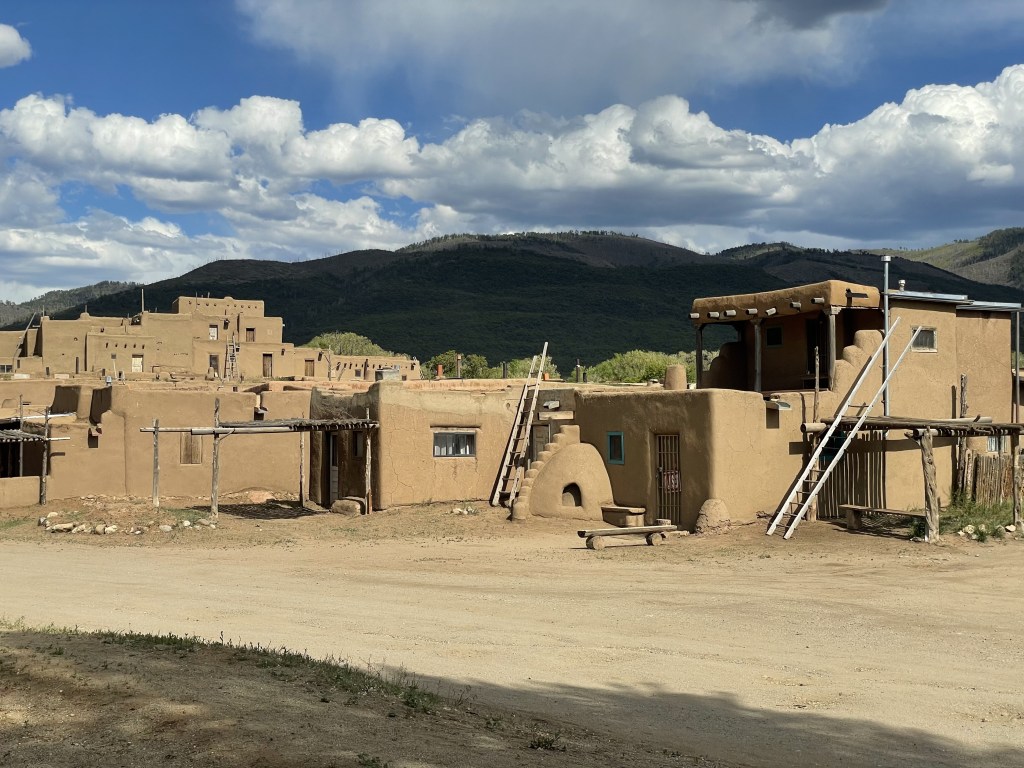
Living in a still-standing pueblo is a community of people whose ancestors have resided on this land for many centuries. They lived without electricity and plumbing, surviving off the land and thriving thanks to the river that runs right through the middle of town like one giant vein. While some older members of the community are metaphorically still holding down the fort, the younger generations are more often than not choosing to live outside the pueblo and instead in the city of Taos and beyond with modern amenities like air conditioning and fully functioning bathrooms.
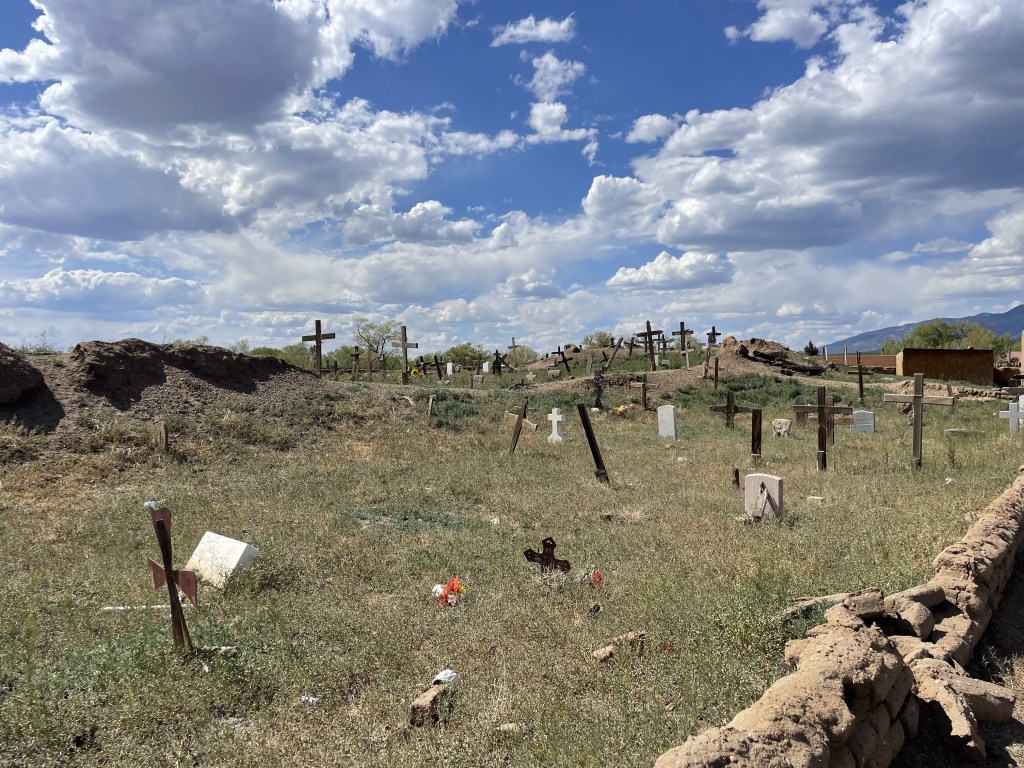
Despite the population choosing to live elsewhere, this place has remained incredibly well-maintained due to its continued occupation of the people rooted here. Admission is a bit expensive, but a tour with an official guide can be included in your admission, and you have the opportunity to ask them questions as you go. Guides are volunteers from the community and earn only tips as compensation. A brief tour will help you to understand how this place came to be, its complicated and bloody history with the Spanish as well as other empires, and how they now govern themselves. It is helpful to have context about the buildings and what they are used for, as they vary in size, design and age, as well as about the history of the people from one of the individuals who is connected to this special place.
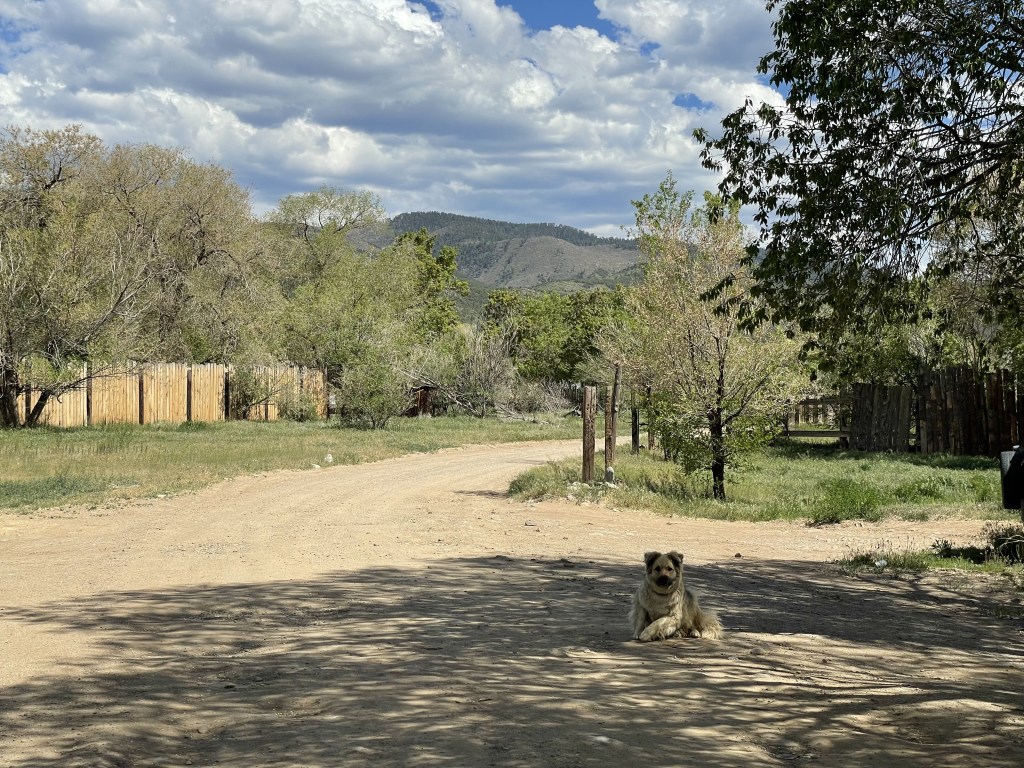
This historic region is about a 2- to 2.5-hour drive to the northeast of Santa Fe. The final couple miles cross maintained dirt roads through a residential community. Watch out for livestock and other pets.
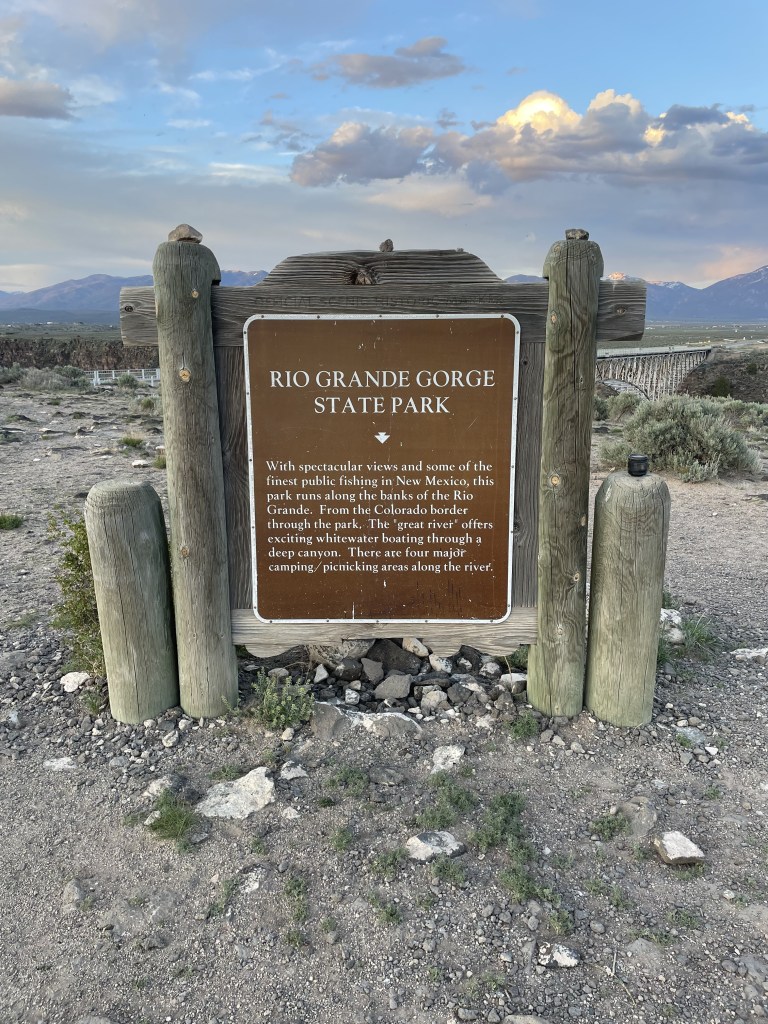
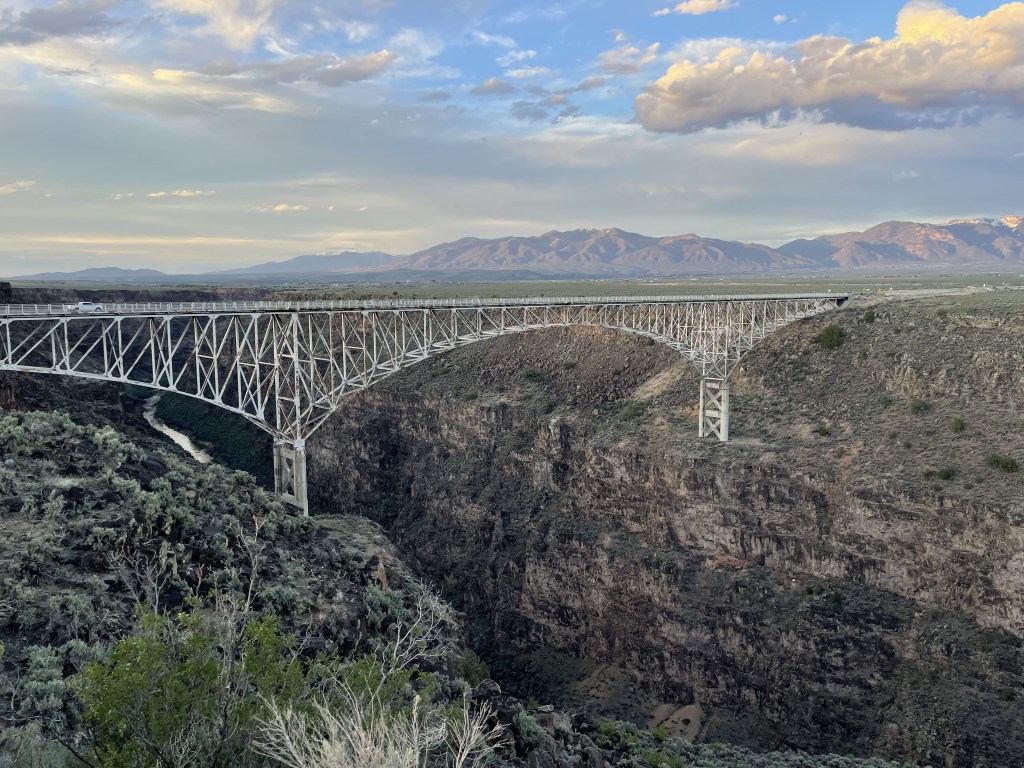
On your way there to/from Santa Fe, you pass by Rio Grande Gorge State Park (about 1.5-2 hours northeast of Santa Fe, close to Taos/Taos Pueblo). This can be a quick or longer stop on your trip, and there are also many camping options in this area. A quick detour to the north will bring you to Rio Grande Gorge Bridge, where you can enjoy really incredible views of this famous river from above. There is a small roadside rest area there with parking making this a very convenient pit stop.
Taos is also a major point on the Enchanted Circle scenic drive, an 84-mile loop that passes through a few other small communities and offers beautiful views of the mountains. There are several trailheads for hiking around this loop, as well as around the general Taos area.
This area is also home to Taos Ski Valley, a famous destination for snow lovers. Here you will find 110 trails and 14 lifts, and is the largest of the three parks mentioned in this post. Rentals and lessons are available. The park also offers summer lift rides up the mountain.

Other stuff you might want to know about the area
Listed throughout this post are area-specific ideas only. Because these destinations are both major cities, you have plenty of non-location specific activity options such as day spas, golf/mini-golf, art studios, escape rooms, movie theaters, and so on. These types of activities can be great ways to fill in the time gaps between major highlights and provide a nice break from being a full-time “tourist.”
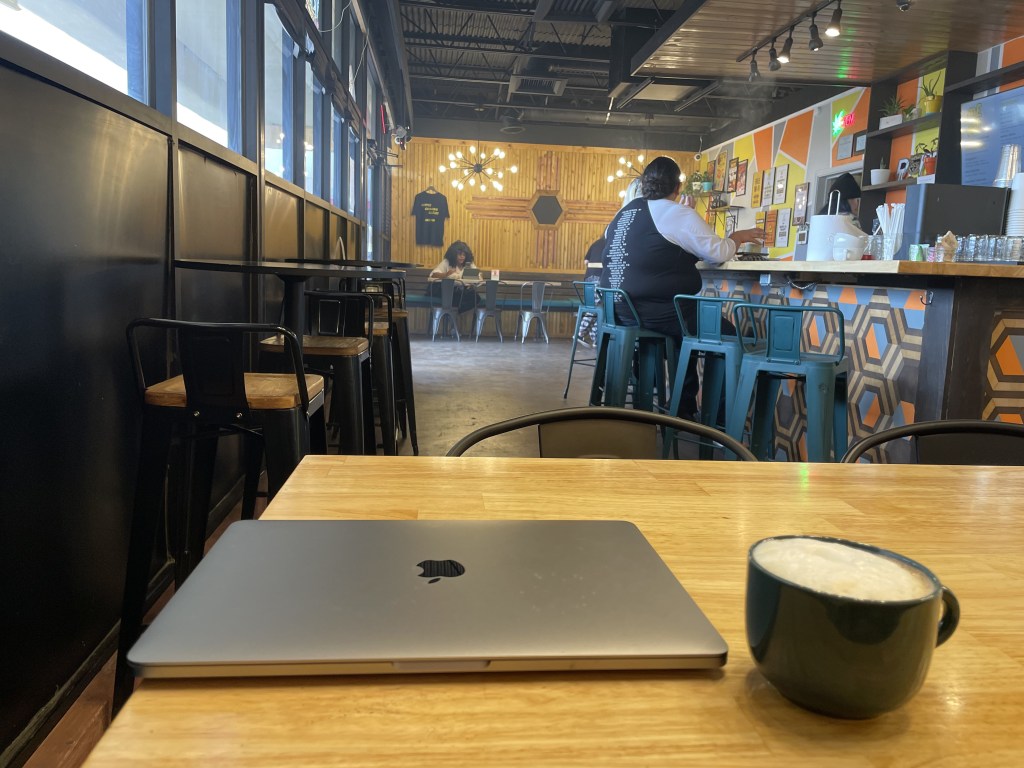
New Mexico is a marijuana-friendly state. Weed tourism continues to grow in popularity and it seems that this state has cannabis laws most similar to those I recall from Amsterdam, Netherlands (as of May 2024). You can literally legally sit in a cafe and order a latte while you smoke a joint at a coffee bar. (Shoutout to LazyDaze in Albuquerque, I love you!)
Other destinations to consider for a longer road trip (within 5 hours)
Because honestly, this is just a really great part of the country for road-tripping.
New Mexico is full of surprises and southern Colorado has some gems, too. In my opinion, this area is probably best enjoyed as a road trip in general. It’s the Wild West out here and we can cover so much more ground now with today’s cars than we could with yesterday’s horses…
Find some new spots or check out some of these ones!
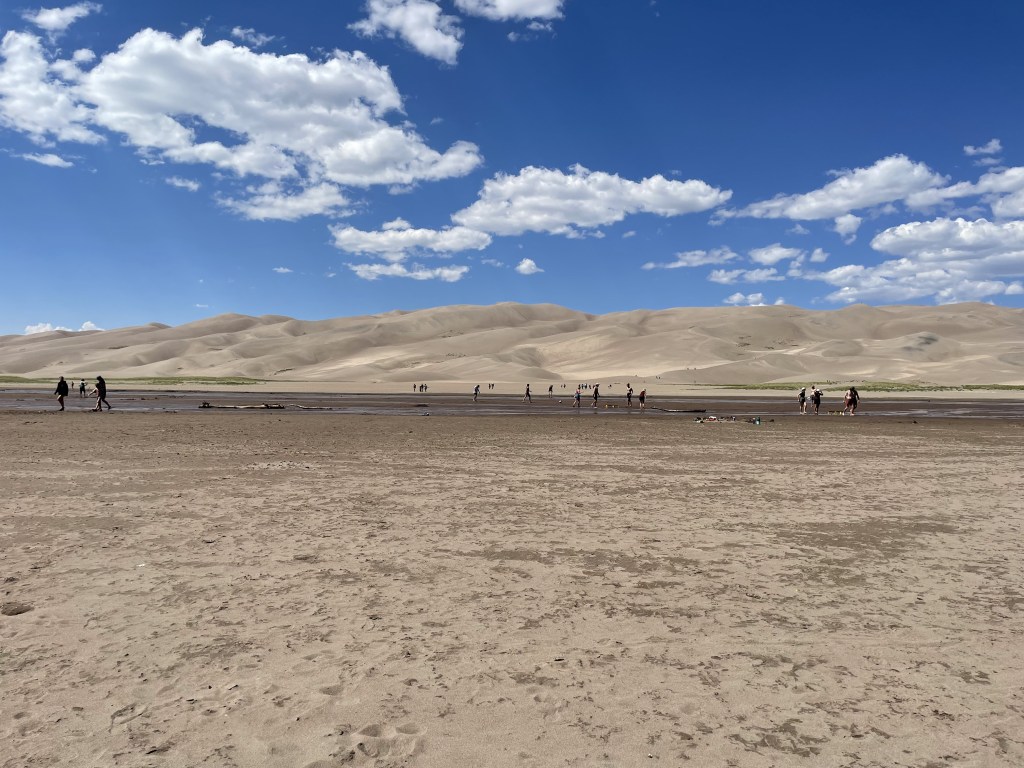
Great Sand Dunes National Park, Colorado
🩵
largest sand dunes in the country, popular for some beach-like activities
3-hours north of Santa Fe, 4-hours from Albuquerque
nearest city: Alamosa, Colorado
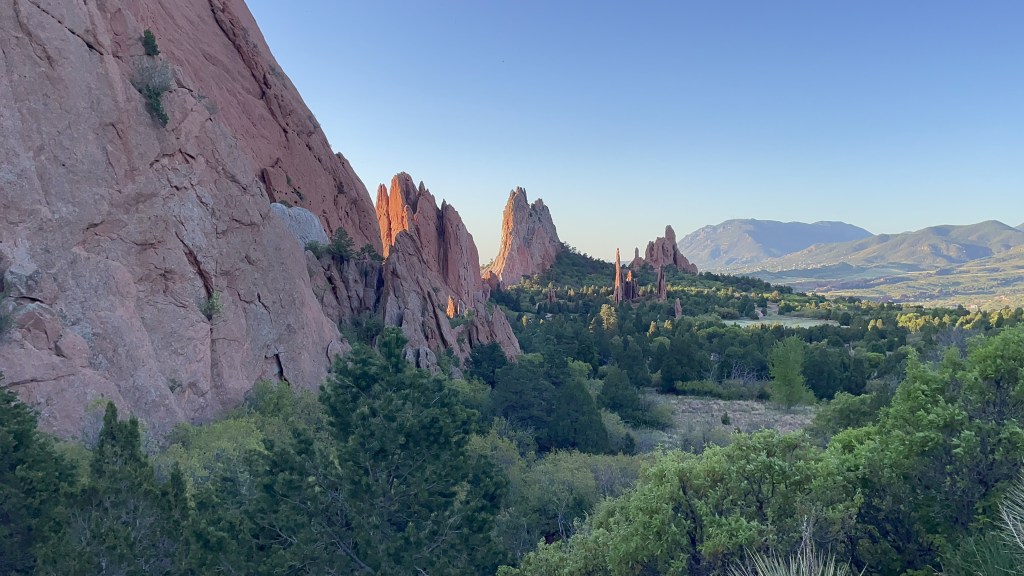
linked here is my detailed post about Colorado + Manitou Springs
Colorado Springs + Manitou Springs, Colorado
🧡
family-friendly destination, also great for hikers
4.5-hours north of Santa Fe, 5-hours from Albuquerque
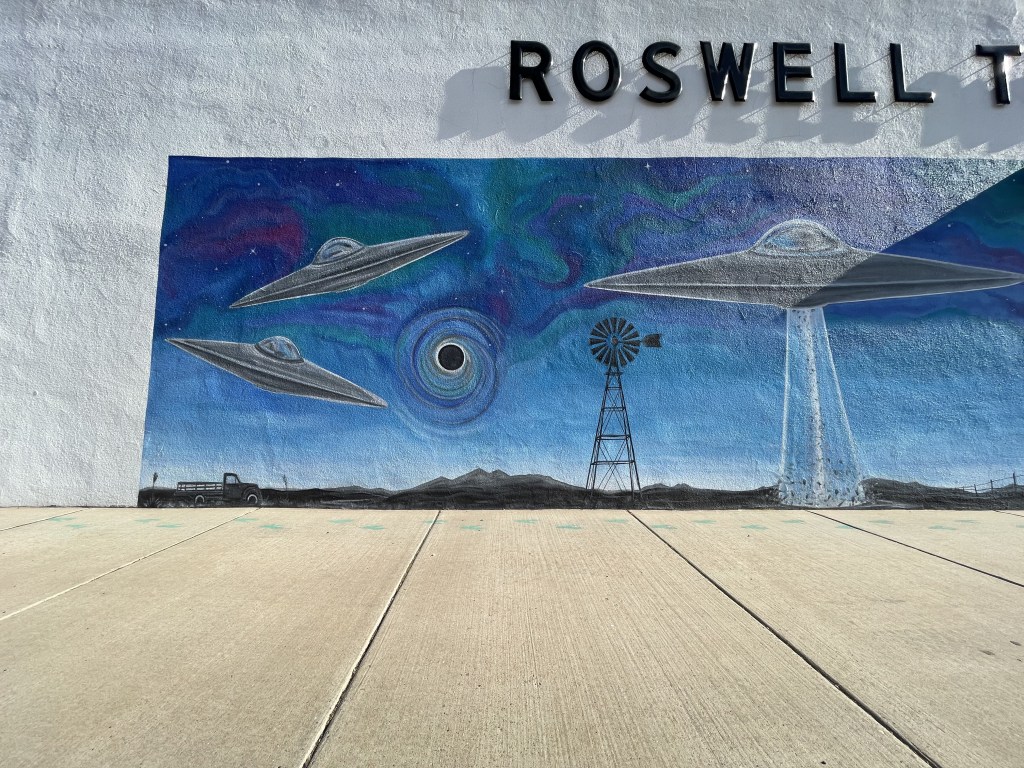
Roswell, New Mexico
💚
perfect for the alien-enthusiast or quirky pitstop for those who are just supernatural-curious
3-hours southeast of Albuquerque and Santa Fe
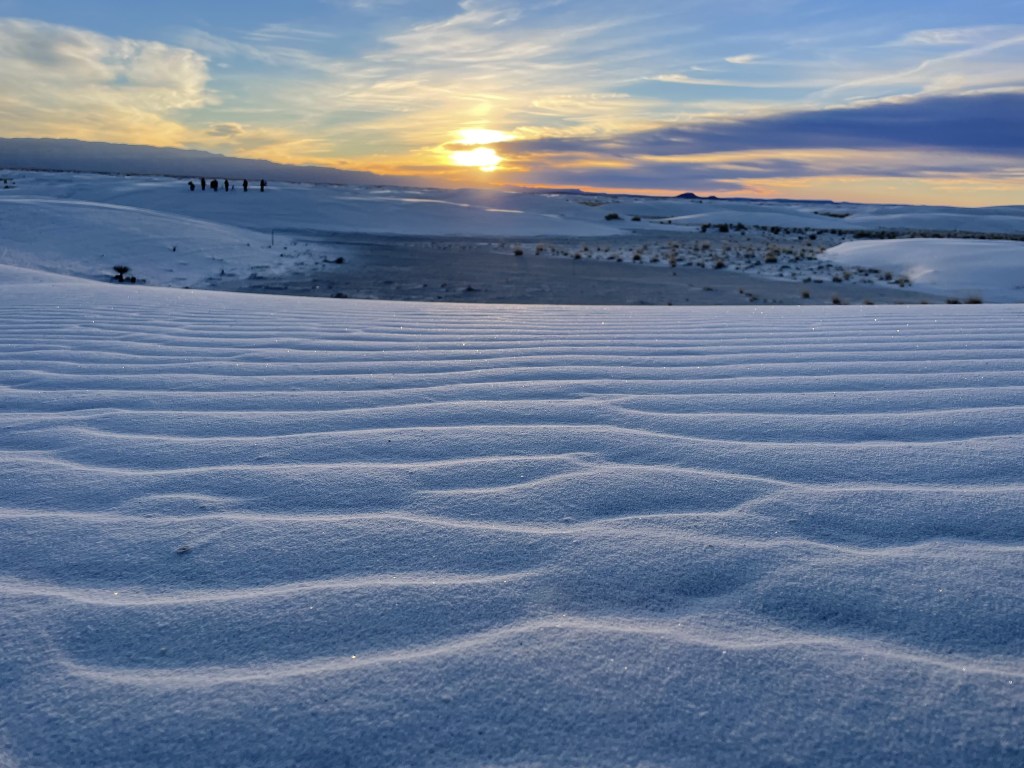
White Sands National Park, New Mexico
🤍
beautiful pristine white sand dunes popular for photographers and sunset-lovers
3.5-hours south of Albuquerque, 4-hours from Santa Fe
nearest city: Alamogordo, New Mexico
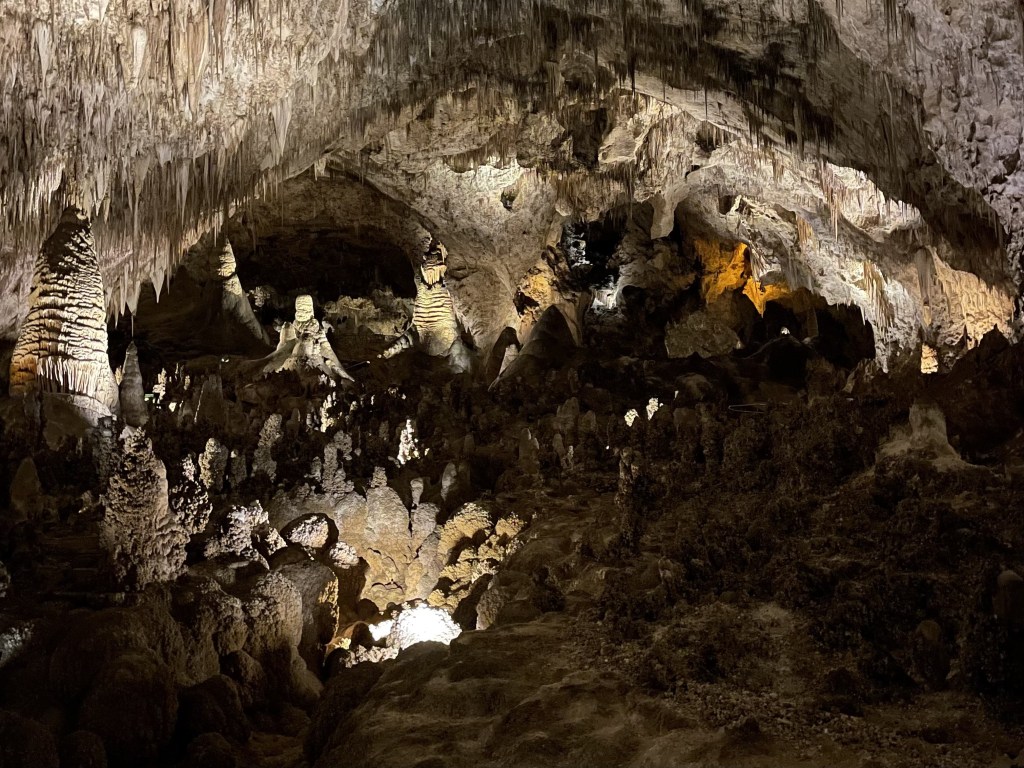
linked here is my detailed post about visiting Carlsbad Caverns
Carlsbad Caverns National Park, New Mexico
🖤
incredible displays of the inner workings of our planet
5 hours south/southeast of Albuquerque and Santa Fe
nearest city: Carlsbad, New Mexico
My thoughts
I don’t think I ever really considered these cities to be a tourist destination at all until I spent a little bit of time in New Mexico, and I am very much intrigued and look forward to my next visit as I learn new things about it. Most of my time in either city thus far was briefly in passing. This is such a unique region of the country and in my opinion, totally deserves more attention!
I love learning about the unique indigenous history of the people who lived here before those who call it home today, and all the different ways to immerse yourself in it as a visitor. I also love the fact that weed is as acceptable as it is here. Going to the International Balloon Fiesta is really high on my bucket list, and I’d love to check out El Malpais National Monument and ride the aerial tramway up into the Sandia Mountains, or all the way to the top of Taos Ski Valley. The Grand Enchantment Trail has certainly grabbed my attention as well, and maybe one day I’ll thru-hike it but that’s definitely on the back burner for the foreseeable future.
Have you been to Albuquerque and/or Santa Fe? Did you have a favorite margarita at any specific restaurant? Did you do any outer city exploring or hiking? What would you consider to be a must-see? What did I miss??? Let me know in the comments below!
Happy traveling! 😊
(And always remember to follow #leavenotrace principles!)
💚



 Laura the explora: the blog
Leave a comment